
Hospitality and Catering Staff Training
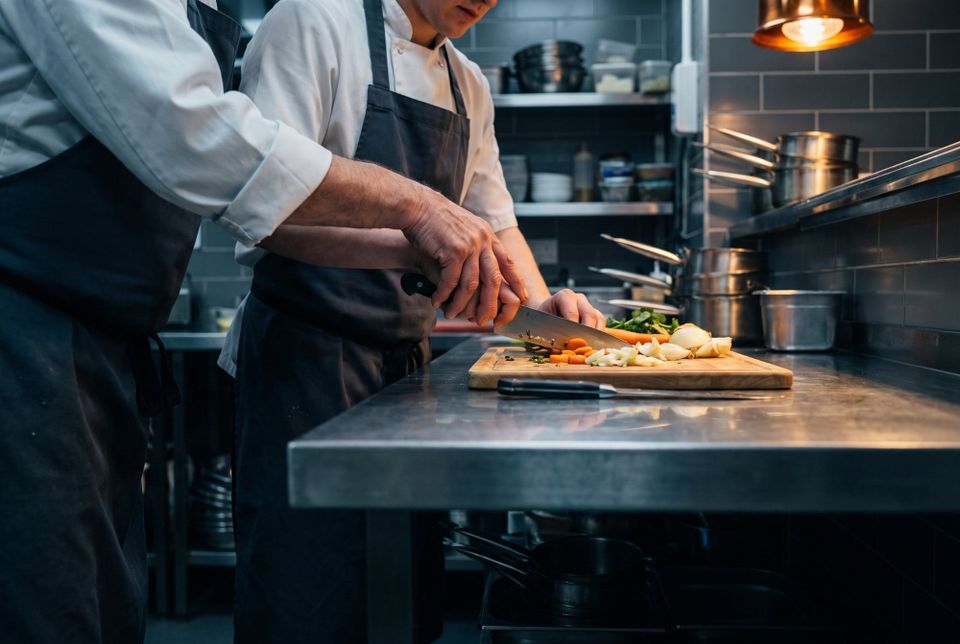
Your team is the single biggest variable in your business. The menu can be right and the kit can be right, and a service still falls apart because two people on a section are not talking to each other, or because the new starter on the floor cannot answer a question about allergens without leaving the table to go and find someone.
I train front of house and back of house teams across Cardiff, Newport, Swansea, Bristol and Gloucester. Not a course off a shelf. I have spent 35+ years in the hospitality sector, in kitchens and front of house, and what I deliver is built on your operation, after I have stood through one of your services.
Why off-the-shelf training rarely changes anything
Most hospitality training is written so it can be delivered to any business anywhere. It covers food hygiene, service standards and allergen awareness, and it covers them adequately. Your team sits through it, signs the sheet, and on Saturday night does exactly what it did the week before.
That is not the team's fault. Generic training answers questions nobody in your building was asking. It has nothing to say about the fact that your pass has no landing space, or that your two strongest chefs de partie have never been shown how to brief a section, or that the floor checks back on every table except the ones where it matters.
I watch a service before I design anything
The first thing I do is come in and watch you work, at your busiest, not on a quiet Tuesday. I talk to the team, follow the flow from delivery through prep to the pass, and find where the friction actually is rather than where you think it is.
I am also looking for what your best people already do well. The quickest improvement you can buy is usually getting everyone else doing what those two already do without being asked.
That assessment is what makes everything after it land. Skip it and you are buying the same off-the-shelf course with your logo on the front.
Back of house
Kitchen workflow and mise en place, so the prep front-loads the week instead of firefighting every morning. Consistency, so a dish leaves the pass the same way whoever is on the section. Portion control and waste, which is where most kitchens are quietly giving away four or five points of gross profit. And kitchen communication: calling, checking back, handing over. The habits that make a section faster under pressure without anybody raising their voice.
Front of house
Service standards and how the team talks to guests. Menu and allergen knowledge held to the point where nobody has to go and ask. Recommending and upselling in a way that sounds like help rather than a script, because guests can hear the difference. Handling a complaint at the table, while it is still a conversation and not a review. And the floor management habits that separate a team that copes with a full book from a team that runs it.
Getting the two halves talking
The worst services I have seen were not caused by bad cooking. They were caused by front and back of house working off different information and then blaming each other for the result. Guests feel that, even when they could not tell you what was wrong.
I work with both teams in the same room. Handover, timings, what a table actually needs to know, what the kitchen actually needs to be told. It is not a team-building exercise. It is agreeing how information moves during a service, and then holding everyone to it.
Section leaders and supervisors
For your senior people: leading under pressure, running a proper briefing, holding a standard without it turning into a row, and the day to day judgement that decides whether the business still works on a night you are not in the building. In my experience that last one is the real reason most owners call.
Technology, only where it earns its place
Where it is genuinely useful I will train your team on the systems you already run or are about to buy, whether that is demand forecasting, a kitchen display system, or stock and ordering. Most of these tools do less than the brochure promises, and a team that does not trust a system will have worked around it inside a fortnight. More on where AI actually helps a kitchen.
How it works
Every programme starts with a free conversation about your business, your team and what is actually going wrong. From there I design something proportionate to the problem, not to my invoice.
I deliver on site, around your service, at times that do the least damage to your week. Short sessions across several visits rather than one long day. A full day off the floor is expensive, and very little of it survives to the following weekend.
Who I work with
Independent restaurants, bistros and cafés. Hotels and hotel food and beverage teams. Pub groups and food-led bars. Contract catering. Care home and healthcare kitchens. Education catering.
If you have a team and you are not getting the same standard out of every service, this is worth a conversation. If the problem turns out to be the room rather than the people, I will say so, and that is a kitchen design conversation instead.
Get in touch
If your team is capable but the service is not consistent, get in touch for a free initial consultation.
I deliver hospitality training in Bristol, Cardiff, Newport and Gloucester, plus Swansea and the surrounding areas.