Benefits Of The Cook-Chill Process In Catering
Unlocking Benefits for Maximum Productivity and Cost Reduction in the Catering Industry
In the fast-paced world of catering services, where tight deadlines and slim margins define success, finding ways to boost efficiency without compromising quality is a game-changer. Picture this: a high-volume corporate catering event where your team is overwhelmed by last-minute demands, leading to rushed preparations, increased food waste in catering, and skyrocketing labour costs in catering. It's a common challenge for event catering professionals, but there's a proven solution—the cook-chill system. This innovative cook-chill process allows caterers to prepare meals in bulk ahead of time, chill them rapidly for safety and freshness, and reheat on demand, delivering the benefits of cook-chill like never before.
At On The Pass Consultancy, we specialise in helping catering companies harness the cook-chill benefits in catering to maximise productivity and reduce running costs and labour expenses. Whether you're handling wedding catering, office lunch catering, or large-scale banquet services, the cook-chill production method—pioneered in the 1960s for institutional feeding—offers unmatched advantages. It involves cooking to perfection, portioning, blast-chilling, and storing for up to 30 days, all while maintaining nutritional value and taste. In this in-depth guide, we'll explore the cook-chill advantages, from slashing catering waste to streamlining operations, with actionable insights to implement it in your foodservice setup. Discover how cook-chill catering can transform your business, making it more competitive in searches for "efficient catering solutions" and "cost-effective event planning".
What is the Cook-Chill Process? A Comprehensive Breakdown for Catering Efficiency
To reap the full benefits of the cook-chill system, understanding its core mechanics is essential. The cook-chill method separates production from service, enabling bulk food preparation during off-peak times—a boon for busy caterers juggling corporate events and private parties. This cook-chill production unfolds in four streamlined stages, each optimised for food safety, quality retention, and operational efficiency in catering.
The first stage, bulk cooking, uses high-capacity equipment like combination ovens or large kettles to heat food above 85°C, pasteurising it thoroughly. This cook-chill technique shines in catering kitchens by allowing massive batches—think litres of sauces, stews, or vegetable medleys—prepared once instead of repeatedly during service rushes. Unlike traditional à la carte cooking, which ties up resources during peak hours for wedding receptions or business meetings, cook-chill shifts the heavy lifting to quieter periods, directly enhancing productivity in the catering industry.
Following cooking comes portioning and packaging. Hot foods are divided into precise, sealed pouches or trays (from 2-litre to 10-litre capacities) using oxygen-barrier materials. This step is crucial for extended shelf life in cook-chill foods, preventing contamination and extending usability to 30 days at 0–4°C. It's particularly valuable for catering services near me targeting last-minute catering needs, as pre-portioned items reduce on-site prep time.
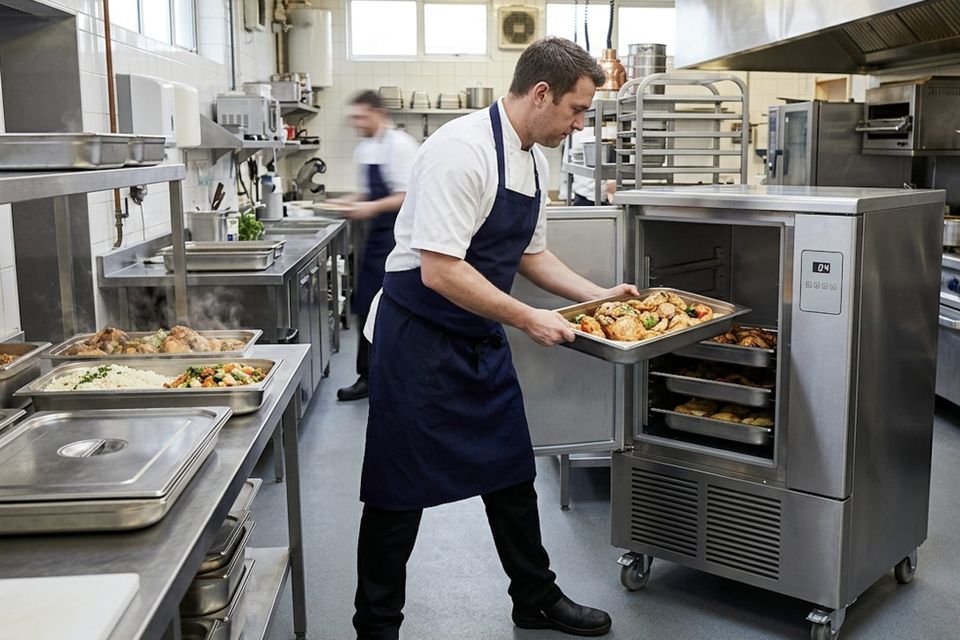
The pivotal rapid chilling phase employs blast chillers to drop temperatures below 4°C in under 90 minutes, preserving texture, flavour, and nutrients. Modern systems can handle 75kg of proteins or 120kg of starches swiftly, aligning with HACCP guidelines and minimising the risk of bacterial growth in the 5–60°C danger zone. For catering businesses focused on reducing food waste, this efficiency means less shrinkage—often just 2–3% compared to 15–20% in conventional methods.
Finally, storage and reheating keep chilled products compact in refrigeration units, using 50–60% less space than traditional pots. Reheating via bain-marie, steamers, or low-temp ovens restores that fresh-cooked appeal in minutes, ideal for on-site catering at remote event venues. Versatile for diverse menus—from vegan catering curries to hearty roasts—the cook-chill system in foodservice supports central production hubs supplying multiple catering outlets, ensuring brand consistency across corporate catering packages or birthday party catering.
With entry-level cook-chill equipment costing from £1,200, it's an accessible upgrade for small to mid-sized catering operations, often recouping costs through labour savings in catering within months. By integrating cook-chill benefits, you position your catering company as a leader in sustainable, high-efficiency food production.
Maximising Productivity with Cook-Chill: Streamline Your Catering Workflow
Productivity in catering isn't just about speed—it's about smart, scalable output that elevates service quality. The cook-chill process revolutionises this by enabling proactive planning over reactive chaos, a key advantage of cook-chill systems for event caterers. Preparing in advance during low-demand windows frees your team for value-added tasks like custom plating or client consultations, directly addressing common pain points in busy catering schedules.
In traditional setups, catering production involves redundant tasks—chopping, simmering, and saucing multiple times daily—which inflate running costs in catering. Cook-chill production, however, centralises these in a dedicated facility, using digital recipes for exact yields and traceability. This bulk cooking method optimises equipment utilisation, cooking to forecast rather than whim, and allows menu innovation without overload. A single base batch can fuel varied dishes, from pasta primaveras to shepherd's pies, boosting creativity in corporate event catering while cutting prep cycles by up to 70%.
Beyond the kitchen, cook-chill benefits extend to supply chain mastery. With a 30-day shelf life extension, accurate demand forecasting minimises stock issues, supporting seamless catering logistics for off-premise events like wedding catering services. Transport chilled packs in insulated coolers, reheat on-site via portable units, and serve piping hot—perfect for outdoor catering or multi-location conference catering. In sectors like airlines or hospitality chains, where space is scarce, this cook-chill efficiency handles high volumes with minimal footprint.
Food safety and uniformity further amplify catering productivity. Rapid chilling locks in vitamins (retaining 90% versus 70% in slow cooling) and reduces weight loss, enabling healthier menu options for catering that attract eco-conscious clients searching for "sustainable catering near me". For institutions serving 10,000+ meals, cook-chill systems scale effortlessly, expanding offerings like gluten-free catering without extra hires.
The broader impact? Smoother workflows reduce burnout, improving staff retention—a subtle yet powerful productivity booster in catering. As industry leaders affirm, cook-chill reorients from menu-driven stress to schedule-driven success, empowering catering firms to tackle bigger events catering with poise.
Cutting Running Costs: How Cook-Chill Delivers Tangible Savings in Catering Operations
Running costs in catering—from ingredients to utilities—can devour profits, but the cook-chill system embeds cost controls at every turn, offering financial benefits of cook-chill that stack up quickly.
Waste minimisation leads the charge. Precise portioning and long storage curb overproduction and spoilage, with cook-chill catering users reporting 25–35% drops in food waste reduction in catering. For a 150-guest banquet, pre-filled exact servings eliminate trimmings and leftovers, trimming raw material expenses. Yields improve too: cook-chill production slashes evaporation losses to 2–3%, versus double in hot-holding, inflating usable portions and margins on staples like meats or veggies.
Energy optimisation is another win. Consolidated bulk cooks shorten heating durations, while targeted blast chilling outperforms constant cooling. Align production with off-peak electricity rates, and slash cleaning—once per batch, not per service—for lower water and chemical bills. Multi-venue catering companies benefit from fewer deliveries via centralised cook-chill hubs, curbing fuel and logistics outlays.
Leverage bulk purchasing advantages with reliable 30-day planning: secure volume discounts on commodities, buffering against price swings. Stabilisers in cook-chill recipes enhance yields without added spend, potentially lowering per-plate costs in catering by 10–20%.
Real savings shine in examples: A school catering operation cut waste by 30%, saving £10,000 yearly; scale that to corporate catering events, and the ROI is compelling. Cook-chill benefits convert overheads into manageable variables, liberating funds for growth in competitive niches like affordable wedding catering.
Labour Cost Reductions: Optimise Staffing with Cook-Chill in Foodservice
Labour costs claim 25–35% of catering budgets, peaking during rushes and idling in lulls. Cook-chill systems reallocate effort, delivering 30–40% labour savings in catering through smarter deployment.
Centralise expertise: Chefs focus on commissary batches, while outposts use entry-level staff for simple reheats—no advanced skills needed. This curbs duplication, like venue-specific chopping, and compresses service gaps; a chilled Ragu’s reheats in 10 minutes, not an hour from scratch.
Freed time cascades: Off-peak prepping spares peak staff for guest-facing roles, saving 20–30 hours weekly in high-turnover event catering. Reduced pressure lowers attrition, cutting recruitment and training drains.
For variable loads like last-minute corporate lunches, lighter crews suffice—reheat-focused teams slash overtime. Cook-chill advantages yield leaner, happier payrolls, scaling catering services ambitiously without burnout.
Case Studies: Real-World Cook-Chill Success in Catering
A UK catering chain integrated cook-chill for Mexican event catering, halving labour costs and waste while standardising across sites. A university commissary upgraded to cook-chill production, supplying diverse campus catering with 25% efficiency gains.
In healthcare, hospital catering via cook-chill serves 15,000 meals daily, trimming prep by 40% for compliant nutrition. These stories highlight cook-chill benefits across scales, from boutique weddings to volume business catering.
Getting Started with Cook-Chill: Implementation Tips for Caterers
Audit your catering menu for cook-chill suitability (braises excel over crisps), budget for a chiller (£4,000+), and train on protocols. Pilot recipes, tweaking for reheat textures. Overcome hurdles like upfront costs with phased rollouts; consult On The Pass Consultancy for tailored catering consultancy.
Conclusion: Embrace Cook-Chill for a Thriving Catering Business
The cook-chill process is more than a technique—it's a catalyst for maximising productivity in catering, reducing running costs, and minimising labour expenses through waste cuts, energy savings, and workflow smarts. With 30%+ efficiencies and consistent quality, it's essential for forward-thinking caterers.
At On The Pass Consultancy we guide catering companies to unlock these cook-chill benefits. Book a call today to hear more about our efficiency audit today so we can work on helping you elevate your event catering game to help maximise productivity and profitability for your Catering Business.
Cook chill stands or falls on the kit behind it. More on specifying catering equipment.