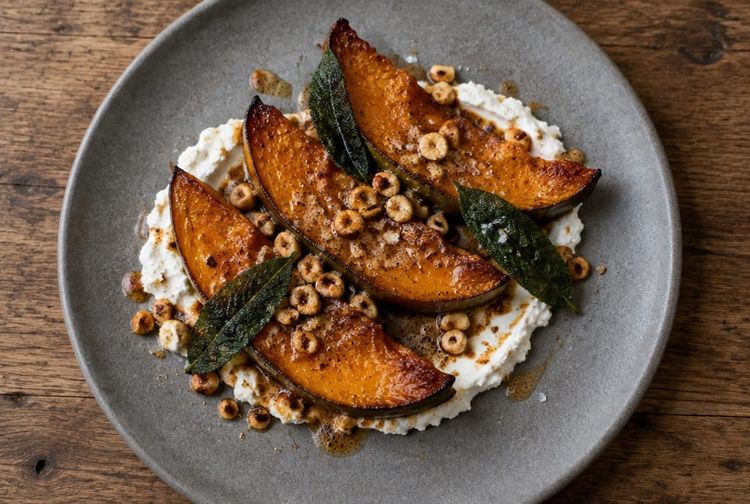
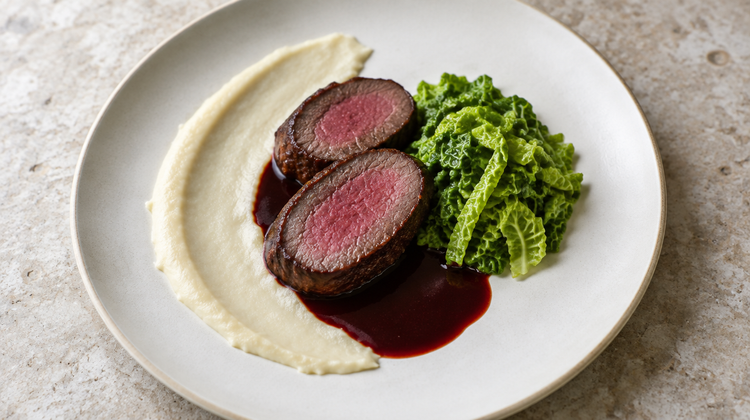
Braised Pork Cheeks, Celeriac Purée, Pickled Apple and Cavolo Nero
Pork cheeks need time, not skill. This is a dish the oven cooks for you.
Why This Dish and Why Now
The pork cheek is one of the most underused cuts in the commercial kitchen. It is all collagen, which means it converts to gelatine under slow heat and gives you meat that falls under a spoon, sauce that coats the plate with its own body and virtually no technical intervention required at service. You braise it, you hold it, you plate it. There is no carryover panic, no temperature probing, no batch-searing anxiety. The oven does ninety per cent of the work.
October is when this dish makes the most sense. The temperature drops, the customer wants something warming and the celeriac that is sitting beautifully on your order sheet this week needs a partner that will hold its own. The pickled apple is the move that stops the dish from sitting heavy. Pork and apple is not a new idea, but a quick pickle sharpens the apple into something that cuts through the braising fat and leaves the palate clean between bites. The cavolo nero is exactly where you want it right now: dark, slightly bitter, chewy in the right way and priced low.
For a startup kitchen this dish is close to ideal. The preparation happens two days before service if needed and the braised cheeks actually improve with a night in their liquor. The fridge does the work while you sleep. The only elements cooked to order are the cavolo nero, which takes three minutes and the garnish assembly, which takes ninety seconds.
Serves 50 | Prep: 45 minutes | Cook: 3 hours 30 minutes (overnight resting recommended)
Ingredients
Braised Pork Cheeks
| Ingredient | Quantity |
|---|---|
| Pork cheeks, trimmed (as prepared weight) | 7.5kg |
| Rapeseed oil | 100ml |
| Onions, roughly diced | 800g |
| Carrots, roughly diced | 500g |
| Celery stalks, roughly diced | 400g |
| Garlic cloves, halved | 8 |
| Tomato purée | 80g |
| Red wine | 1 litre |
| Chicken or pork stock | 3 litres |
| Thyme sprigs | 10 |
| Bay leaves | 4 |
| Black peppercorns | 1 tsp |
| Plain flour, for dusting | 100g |
| Fine salt | 30g |
| Black pepper, coarsely ground | 10g |
Celeriac Purée
| Ingredient | Quantity |
|---|---|
| Celeriac (as purchased) | 5kg |
| Whole milk | 1 litre |
| Unsalted butter | 300g |
| Double cream | 200ml |
| Fine salt | to taste |
| White pepper | to taste |
Pickled Apple
| Ingredient | Quantity |
|---|---|
| Cox or Braeburn apples | 1.5kg |
| Cider vinegar | 300ml |
| Water | 300ml |
| Caster sugar | 150g |
| Fine salt | 1 tsp |
| Yellow mustard seeds | 1 tsp |
| Allspice berries | 6 |
Cavolo Nero
| Ingredient | Quantity |
|---|---|
| Cavolo nero (as purchased) | 3kg |
| Unsalted butter | 100g |
| Garlic cloves, finely sliced | 4 |
| Chicken or vegetable stock | 200ml |
| Fine salt | to taste |
| Lemon juice | to taste |
Method
Stage 1: Braised Pork Cheeks (two days before, or the day before)
-
Trim the pork cheeks of any excess sinew or silverskin but leave the fat cap on. Season generously on both sides with salt and pepper, then dust lightly in plain flour. The flour is not a coating. It is a light veil that helps the browning and gives the braising liquid something to cling to as it reduces. Shake off any excess.
-
Heat the rapeseed oil in a wide, heavy-based braising pan or rondeau over high heat. Brown the cheeks in batches, three or four at a time, for 3 to 4 minutes per side until deeply coloured. Do not crowd the pan. Crowding drops the temperature and the cheeks steam rather than brown and the Maillard reaction you are building here is the flavour foundation of the entire dish. Lift browned cheeks into a gastronorm and set aside.
-
Reduce the heat to medium. Add the onions, carrots and celery to the same pan and cook in the remaining fat for 8 to 10 minutes until softened and beginning to caramelise. Add the garlic and cook for a further 2 minutes. Stir in the tomato purée and cook for 3 minutes, stirring frequently, until it darkens slightly and loses its raw smell.
-
Pour in the red wine and bring to a boil, scraping the base of the pan. Reduce by half, then add the stock, thyme, bay leaves and peppercorns. Bring to a simmer and taste. The liquid should be well-seasoned and lightly reduced, not bland. Adjust with salt.
-
Return the pork cheeks to the braising pan in a single layer. The liquid should come roughly three-quarters of the way up the cheeks. If it does not, add more stock. Cover with a lid or tightly with foil, transfer to an oven at 160°C (fan 140°C) and braise for 2 hours 30 minutes to 3 hours. They are ready when a probe or spoon meets no resistance. The meat should yield completely, not flake. If it flakes, it has gone a little past, which is fine for holding but less ideal for the plate.
-
Carefully lift the cheeks into clean gastronorms using a slotted spoon. Strain the braising liquid through a fine sieve into a wide saucepan, pressing on the vegetables. Discard the solids. Reduce the liquid over medium-high heat until it coats the back of a spoon generously and has the consistency of a light sauce. Taste and adjust. Pour this reduced braising liquor back over the cheeks. Cool at room temperature for 30 minutes, then refrigerate overnight, uncovered for the first hour then covered. The fat will rise to the surface and can be skimmed before reheating.
Stage 2: Pickled Apple (the day before)
-
Combine the cider vinegar, water, caster sugar, salt, mustard seeds and allspice in a saucepan. Bring to a simmer over medium heat, stirring until the sugar dissolves completely. Remove from the heat.
-
Core and quarter the apples but do not peel them. Slice into thin crescents, approximately 3mm, on a mandoline. The skin adds colour and holds the slice together. Working quickly, pack the apple slices into a clean container or sterilised jar and pour the hot pickling liquor over them. The heat softens the apple gently without cooking it. Leave to cool at room temperature, then refrigerate. The pickle is ready after two hours. It improves overnight and holds for up to four days refrigerated.
Stage 3: Celeriac Purée (the day before, or morning of service)
-
Peel and dice the celeriac into 2cm cubes. Work quickly and keep the cut celeriac in cold water with a splash of lemon juice to prevent browning.
-
Drain and combine with the milk and 200g of the butter in a wide saucepan. Bring to a simmer over medium heat, cover and cook for 20 to 25 minutes until completely tender.
-
Transfer to a blender in batches and blitz until smooth, adding the cooking liquid gradually. Add the remaining butter and the double cream with the blender running. Season with salt and white pepper. Pass through a fine-mesh sieve. Adjust seasoning. Refrigerate if making ahead, reheat in a bain-marie at service.
Stage 4: Cavolo Nero and Service Assembly
-
Strip the cavolo nero leaves from their central ribs and discard the ribs. Tear or cut the leaves into manageable pieces, roughly 6cm. Blanch in heavily salted boiling water for 90 seconds, then transfer to iced water. Drain and squeeze out excess moisture. The blanched cavolo nero can be refrigerated for up to 24 hours before finishing.
-
To reheat the pork cheeks, transfer them and their liquor to a wide pan over gentle heat. Baste the cheeks in the liquor as they warm through. This takes 12 to 15 minutes for a full batch, or 6 to 8 minutes per cheek if reheating to order in smaller portions. The liquor should be glossy and thick enough to coat the cheeks as it heats. If it looks thin, reduce it slightly before adding the cheeks.
-
At service, heat the butter in a wide pan over medium-high heat. Add the garlic and cook for 30 seconds until just beginning to colour. Add the cavolo nero and a splash of stock, toss to coat and cook for 2 to 3 minutes until tender and lightly glossed. Season with salt and a squeeze of lemon.
Plating
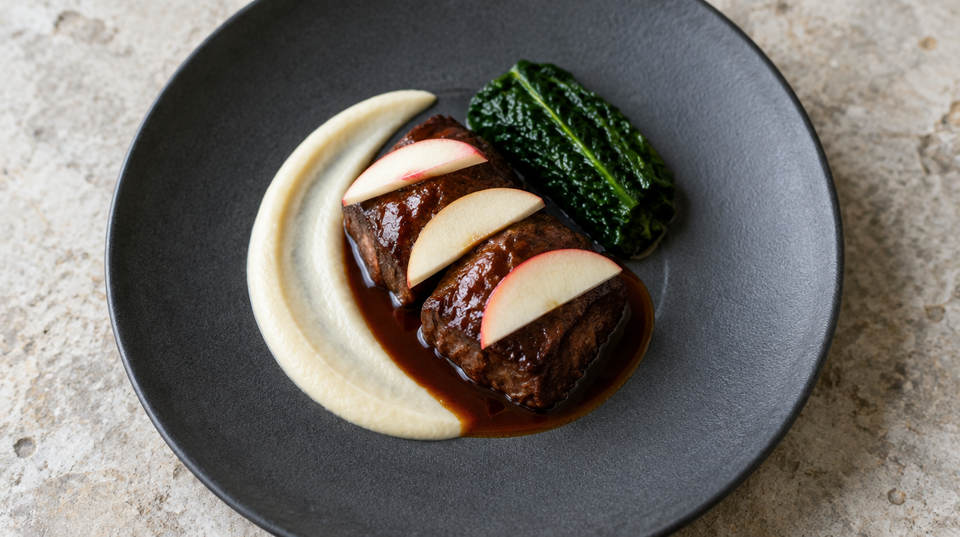
Spoon a generous portion of celeriac purée onto the plate and draw it to one side. Place one or two pork cheeks alongside, depending on portion weight and spoon braising liquor generously over the meat. Arrange a small pile of cavolo nero to the side of the cheeks. Lay three or four slices of pickled apple across the top of the pork, not the purée. The apple should be visible, not buried. The dish should read rich and dark with brightness from the apple and green from the cavolo. Do not over-sauce. The liquor should pool around the cheeks, not flood the plate.
Chef's Notes
On sourcing: Pork cheeks come in at around £4 to £7 per kg at wholesale depending on supplier and volume. They are not always on every butcher's regular cut list, so place your order two or three days ahead. Ask for trimmed weight when you can. Untrimmed cheeks carry a membrane on the outside that does not break down in braising and needs to be removed before service.
On portioning: A single pork cheek can run from 100g to 200g raw depending on the pig's size. At 150g raw per cheek, figure on one to two cheeks per portion depending on yield after braising. Weigh a sample batch after cooking to establish the right cheek count per cover before committing to the menu.
On holding: Braised cheeks held in their own liquor in a gastronorm in a low oven at 80°C will stay service-ready for two to three hours without any quality loss. This makes them ideal for high-volume service where the pass needs reliability above all else. This is the dish that keeps running when the seared proteins are causing problems elsewhere on the section.
On running it at volume: The braising is entirely make-ahead. At service the only labour is reheating, cavolo nero finishing and assembly. Fifty covers is comfortable for a section of two if everything is prepped and held correctly. The pork cheeks are more forgiving than any other protein on this three-week series. If service runs long, they do not suffer for it.
On the GP: Pork cheeks at approximately £5.50 per kg average, with 150g per portion raw, gives you a protein cost of roughly £0.83 per plate. The celeriac, cavolo nero, apple and liquor components add around £1.20 to £1.60 per cover. Total food cost sits at approximately £2.00 to £2.45 per plate. At a £20 to £24 main course price, with the VAT taken out first, that is a GP of 85 to 90 per cent. This is the strongest margin of the three dishes in this series and the dish does not feel cheap on the plate. That combination is what a startup kitchen needs on the autumn menu.
Make-Ahead Summary
- Braised pork cheeks → braise the day before, refrigerate in liquor, skim fat, reheat gently at service
- Pickled apple → make the day before, refrigerate, holds 4 days
- Celeriac purée → make the day before, refrigerate, reheat in bain-marie at service
- Cavolo nero → blanch the day before, butter-finish at service
Enjoyed this recipe? Subscribe below and get a new professional recipe delivered every Friday, built for commercial kitchens and written from 35 years in hospitality.