Cep Velouté, Poached Egg, Cep and Parsley Crumb
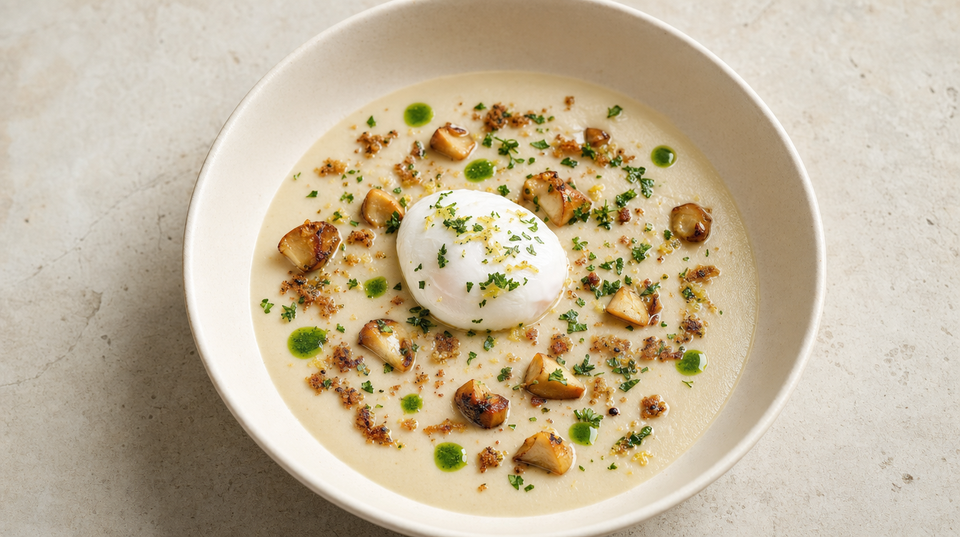
A cep velouté for 50 covers, a bright British wild mushroom starter with a soft poached egg and a toasted cep and parsley crumb, scaled for service.
Why This Dish and Why Now
The wild mushroom season is opening and the one to reach for now is the cep, not the spring morel. Ceps, the penny bun, the porcini, are at their best from now through October and the woods are giving up girolles and hedgehog mushrooms alongside them. This is the first proper wild mushroom plate of the year and a velouté is the cleanest way to put the flavour of a cep in front of a customer.
Here is the honest problem with a mushroom soup and the reason most kitchens serve a poor one. Cooked without care it turns into a heavy brown sludge that tastes flat and sits like a brick. So the whole dish is built to stay bright. The mushrooms are cooked down hard to drive off their water and concentrate, the velouté is passed to a velvet, then it is lifted right at the end with lemon and sherry vinegar. The soft poached egg gives richness, the toasted crumb gives crunch, the parsley and lemon zest keep it fresh and green. It is not a heavy soup. It is a bright one.
The commercial case is the one every operator likes. Chestnut mushrooms carry the body for very little money, a handful of dried ceps carry the depth and a little fresh cep on top does the work of looking expensive. Every element is made the day before, even the poached eggs, so service is reheat and plate. That is a high-margin starter that eats like a treat, which is exactly what the first course is for.
Serves 50 | Prep 1 hour | Cook 45 minutes
Ingredients
The cep velouté
| Ingredient | Quantity |
|---|---|
| Fresh ceps, cleaned (1.6 kg for the soup, 400 g reserved to garnish) | 2 kg |
| Chestnut mushrooms, sliced | 3 kg |
| Dried ceps, for the soup | 120 g |
| Warm water, to soak the dried ceps | 1 litre |
| Banana shallots, sliced | 800 g |
| Leek, white part only, sliced | 400 g |
| Garlic, crushed | 40 g |
| Unsalted butter | 250 g |
| Dry sherry or Madeira | 200 ml |
| Vegetable or chicken stock | 5 litres |
| Double cream | 1 litre |
| Thyme | 1 small bunch |
| Bay leaves | 3 |
| Lemons (zest and juice) | 3 |
| Sherry vinegar, to brighten | 30 ml |
| Sea salt and white pepper, to season | as needed |
The poached eggs
| Ingredient | Quantity |
|---|---|
| Large British Lion eggs | 60 |
| White wine vinegar, for poaching | 200 ml |
| Salt, for the poaching water | as needed |
The cep and parsley crumb
| Ingredient | Quantity |
|---|---|
| Panko or coarse dried breadcrumbs | 300 g |
| Unsalted butter | 120 g |
| Dried ceps, blitzed to a fine powder | 30 g |
| Flat-leaf parsley, finely chopped | 60 g |
| Lemon zest, from | 2 lemons |
| Sea salt, to season | as needed |
Method
The dish is built the day before, so service is reheat and plate. Steps are numbered straight through.
Stage 1: The velouté base (the day before)
- Soak the 120 g dried ceps in the 1 litre of warm water for 30 minutes. Lift them out and chop, then pass the soaking liquor through a fine sieve lined with a cloth and keep it. The liquor is the most concentrated cep flavour you have, but it carries grit from the woods, so it goes through the cloth and never straight into the pot.
- Melt the butter in a large pan and sweat the shallots, leek and garlic gently for 10 to 12 minutes until soft and sweet with no colour. Colour here turns the base bitter and muddies the finished velouté, so keep the heat low and take your time.
- Raise the heat, add the chestnut mushrooms and the 1.6 kg of fresh ceps and cook them down hard for 15 to 20 minutes. They will release a lot of water, then it will cook off and the mushrooms will start to catch and colour. That evaporation is the whole game. A wet mushroom soup tastes of nothing, a dry-fried one tastes of everything.
- Deglaze with the sherry or Madeira and let it reduce by half, scraping the base of the pan. This lifts the mushrooms and adds a savoury depth that stock alone will not give.
- Add the chopped soaked ceps, the strained soaking liquor, the stock, thyme and bay. Bring to a gentle simmer and hold it for 25 to 30 minutes. Lift out the thyme stalks and bay, then blend until completely smooth and pass through a fine chinois. The passing is what turns a mushroom soup into a velouté, so do not skip it.
- Cool the velouté quickly and chill below 5°C within 90 minutes. The cream, lemon and vinegar go in at service, not now, so the base keeps clean and does not split or dull on standing.
Stage 2: The poached eggs (the day before)
- Bring a wide pan of water to a bare simmer with the white wine vinegar and a little salt. Poach the eggs in batches for 2 minutes 30 seconds to 3 minutes, until the white is set and the yolk is still soft, then lift each one straight into iced water. The ice bath stops the cooking on the yolk and firms the white so they hold their shape.
- When cold, trim any ragged edges with scissors, lift the eggs into a container of fresh cold water and chill below 5°C. Poaching ahead and reheating to order is the only sane way to serve 50 soft eggs to time and it is standard practice for a banquet.
Stage 3: The cep and parsley crumb (the day before)
- Blitz the 30 g dried ceps to a fine powder. Toast the breadcrumbs in the butter over a medium heat until golden and crisp, then take the pan off the heat and stir through the cep powder and a little salt. Spread on a tray to cool completely and store airtight. Keep the chopped parsley and lemon zest separate.
- The parsley and zest fold into the crumb only at the last moment before service. Toast them into the crumb and they go dull and lose their scent, so they stay bright and raw and go in cold.
Stage 4: Service
- Sauté the reserved 400 g of diced fresh cep in a little butter over a high heat until golden and season. This is the fresh mushroom hit and the texture on top of the bowl.
- Reheat the velouté to a core of 75°C, then whisk in the cream. Brighten it with the lemon juice and the sherry vinegar a little at a time and season with sea salt and white pepper. Taste as you go. The acid and the seasoning at the end are what stop it tasting flat, so keep tasting until it lifts.
- Reheat the poached eggs in water held at about 80°C, not boiling, for 60 to 90 seconds until just warmed through, then drain on a cloth. Gentle heat keeps the yolk soft.
- Fold the parsley and lemon zest through the crumb now. Warm each bowl, set a poached egg just off-centre and ladle the hot velouté around it. Scatter the sautéed cep and a generous spoon of the crumb over the top.
Plating
Set the poached egg just off-centre in a warm shallow bowl and ladle the velouté around it, not over it, so the egg stands proud of the surface. Scatter the golden sautéed ceps and the cep and parsley crumb across the egg and the soup, letting some fall into the velouté and some sit on the egg. Finish with a fine grating of lemon zest and, if you have it, a few drops of parsley oil dragged across the surface. The bowl should look pale and creamy, flecked dark with cep and bright green with parsley, with the egg waiting to be broken.
Chef's Notes
On the mushrooms: Fresh ceps are dear and vary week to week, so do not build the whole dish on them. The chestnut mushrooms carry the body, the dried ceps carry the depth and a little fresh cep on top does the looking expensive. Clean fresh ceps with a brush and a damp cloth rather than soaking them, because they drink water like a sponge and you have just spent an hour driving water out of the soup.
On keeping it bright: This is the point of the dish. The acid, the parsley and the lemon zest all go in at the very end and raw, never cooked. A velouté that has sat blended with its cream and acid for an hour goes flat and grey, so hold the base plain and finish each batch as you need it.
On the eggs and food safety: For a soft, runny yolk served to the public, use British Lion eggs, which are vaccinated against salmonella and are the accepted safe choice for lightly cooked eggs under FSA guidance. Poach ahead, chill properly below 5°C and reheat gently to order. If your setting will not allow a runny yolk at all, poach the eggs a little firmer and say so on the menu.
On running it at volume: Everything is done the day before, so on the night you are reheating the velouté, warming the eggs and plating, nothing more. If you want the argument for building a menu around cook-ahead in the first place, I made it in the benefits of the cook-chill process in catering and this dish is that thinking on a starter.
On the GP: The cost driver is the fresh cep and there is very little of it, so this is one of the highest-margin starters you will run all autumn. Cost it to your own mushroom prices, chestnut for the body and whatever your forager or supplier wants for the ceps, then price to your target. If you want the method rather than the eyeball, I set it out in are you guessing your GP. It sits alongside the rest of the autumn larder I laid out in the British Food Fortnight menu framework.
Make-ahead summary
- Velouté base → day before, blast chill below 5°C, finish with cream and acid at service
- Poached eggs → day before, ice bath then chill, reheat gently to order
- Cep crumb → day before, store airtight, fold in parsley and zest at the last moment
- Fresh cep garnish → sauté to order at service
Allergens: Contains egg, milk (butter and cream), gluten (the crumb, use a gluten-free crumb to avoid) and sulphur dioxide / sulphites (sherry or Madeira). Check that your stock is free from celery and gluten if you need the dish to be.
Enjoyed this recipe? Subscribe below and get a new professional recipe delivered every Friday, built for commercial kitchens and written from 35 years on the pass.