British Food Fortnight 2026: Build a Menu That Sells
British Food Fortnight is a menu development goldmine for UK caterers. Here is how to turn seasonal British produce into a menu that actually makes money.
British Food Fortnight is nearly here and most kitchens will let it drift past with a chalkboard special and a Union Jack bunting order. That is a wasted opportunity. handled properly, it is one of the best menu development moments of the year and it costs you almost nothing to run.
I have spent 35 years in commercial kitchens and the operators who win in the back half of September are the ones who plan the menu in early September, not the ones who scramble on the day so let us get you ahead of it.
What British Food Fortnight actually is and why it matters for your kitchen
British Food Fortnight is the country's biggest annual celebration of British food and drink running across the back end of September into early October to line up with the traditional harvest season.
Schools, hospitals, care homes, pubs, restaurants and contract caterers all get involved, which means your customers are already primed to care about where their food comes from before they walk through your door.
For a commercial kitchen that is gold. You are not creating demand from scratch. You are meeting demand that a national campaign has built for you. The job is simply to put a well costed, well sourced, genuinely British menu in front of people at the exact moment they are looking for one.
That is menu development at its most practical and it is exactly the kind of seasonal thinking that keeps a kitchen relevant. If you want the longer argument on why menus have to keep moving, I wrote about the importance of menu development in an ever changing market earlier this year. British Food Fortnight is that principle in miniature.
Start with the produce, not the dish
Every strong seasonal menu starts the same way. You look at what is at its best and cheapest right now, then you build dishes around it. Do it the other way round, deciding on a dish and then chasing the ingredients and you will pay over the odds and fight your suppliers all fortnight.
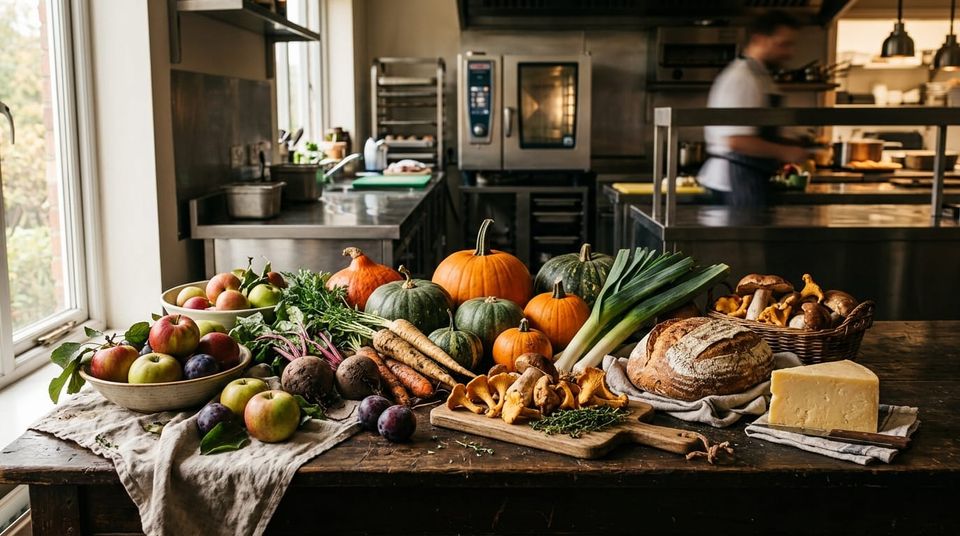
Late September in Britain is one of the richest larders of the year. Root vegetables are coming into their own. Squash and pumpkin are everywhere and cheap. Apples, pears and plums are at their peak. Game season is opening. Brassicas, leeks, wild mushrooms, cobnuts, late-season tomatoes and the last of the runner beans are all there for the taking. Add British cheese, British beef and lamb, day-boat fish and locally milled flour and you have a menu that writes itself.
The trend this autumn is refined comfort food. Diners have had enough of experimental plates for their own sake. They want warming, familiar dishes cooked properly: slow braises, caramelised roots, herb butters, proper gravy. British Food Fortnight and refined comfort food are the same brief. Lean into it !
Source local and say so on the menu
The whole point of the fortnight is provenance, so your sourcing has to be real. Do not slap "locally sourced" on a menu and hope nobody checks. Name the farm, the dairy, the butcher, the mill. In South Wales and the South West you are spoilt for choice and a customer in Newport, Cardiff or Gloucester will always spend a little more on a dish that tells them exactly where it came from.
Practically, that means having the conversation with your suppliers this week, not the day before you print. Ask what they will have in volume across the fortnight, agree pricing and lock in the two or three hero ingredients your menu will lean on. Local sourcing is only cheaper and better if it is planned. Left to the last minute it is neither. Personally I can recommend Hugo's Greengrocer for all my seasonal Fruit and vegetables.
Cost it like you mean to make money
Here is where most seasonal menus fall down. The kitchen gets excited about the produce and forgets the gross profit. A British Food Fortnight menu that loses you money is not a marketing win, it is a subsidy.
Every dish still has to hit your GP target. Seasonal and local can absolutely deliver that, because peak-season produce is at its cheapest but only if you build the dish to a food cost rather than to a whim. Portion it, cost it, price it, then check the number before it ever reaches a customer. If a dish will not make its margin change the garnish, change the protein ratio or change the price. This is the unglamorous half of menu development and it is the half that keeps the doors open.
Good sourcing and tight costing are not in tension. The caterers who run seasonal menus profitably are simply the ones who treat food cost as part of the recipe not an afterthought. If margins are the thing keeping you up at night, my menu development service across Cardiff, Newport and Swansea is built precisely around GP-driven menu design, so you get the seasonal appeal and the numbers that work.
Let your equipment do the heavy lifting
A seasonal menu adds prep. Braises, roasts, stocks and slow-cooked cuts all take time and the fortnight is not the moment to blow your labour budget. This is where your kitchen kit earns its keep.
A combi oven will let you batch-roast roots and slow-cook cheaper cuts overnight at low cost, then regenerate to order without a chef babysitting it. Good refrigeration and blast chilling let you prep ahead safely and cut waste, which matters when you are buying seasonal produce that will not sit around. Getting the most out of the equipment you already own and knowing when a new piece would pay for itself is one of the fastest ways to protect margin on a busy menu. That is the thinking behind the energy-efficient catering equipment and brand partners we recommend and it is more relevant than ever with energy costs where they are.
If speed of service is your pinch point, I covered how to keep pace without cutting corners in accelerating cooking in fast-paced catering environments.
A simple British Food Fortnight menu framework
You do not need to reinvent the whole menu. A tight seasonal add-on does the job and keeps the kitchen sane. Aim for something like:
- One seasonal starter built on a cheap hero vegetable, roasted squash or leek and potato, high GP, easy prep.
- Two mains, one meat or game and one plant dish both leaning on peak-season British produce.
- One pudding using British orchard fruit, an apple or plum something with custard or clotted cream.
- One special that changes as the produce changes so regulars have a reason to come back across the fortnight.
Five or six dishes, costed properly, sourced locally, promoted hard. That is a British Food Fortnight menu that pulls people in and still makes money.
Plan it now, run it clean
The difference between a fortnight that lifts your covers and one that just adds work is the fortnight of planning that comes before it. Talk to suppliers this week. Build and cost the dishes next week. Brief and train your team the week after. Then let a campaign that the whole country is already running do your marketing for you.
That is the same disciplined approach I bring to every kitchen I work with, from independent cafés to large central production kitchens, right across South Wales and the South West. If you would rather have an experienced pair of hands help you build a seasonal menu that sells and makes its margin, that is exactly what a catering consultant is for and you can always start with a look through the frequently asked questions if you are weighing it up.
British Food Fortnight rewards the prepared. Get your menu development sorted in early September and you will spend the fortnight taking money, not chasing your tail.
Ready to build a seasonal menu that pulls covers and protects your GP? Get in touch with On The Pass Consultancy and let us plan your British Food Fortnight menu before the produce is at its best.