4 to 6 UK Hospitality Businesses Close Every Day

What the Survivors Have in Common !
UK hospitality is closing at a rate of 4 to 6 venues per day. The businesses that stay open aren't lucky. Here's what they're doing differently.
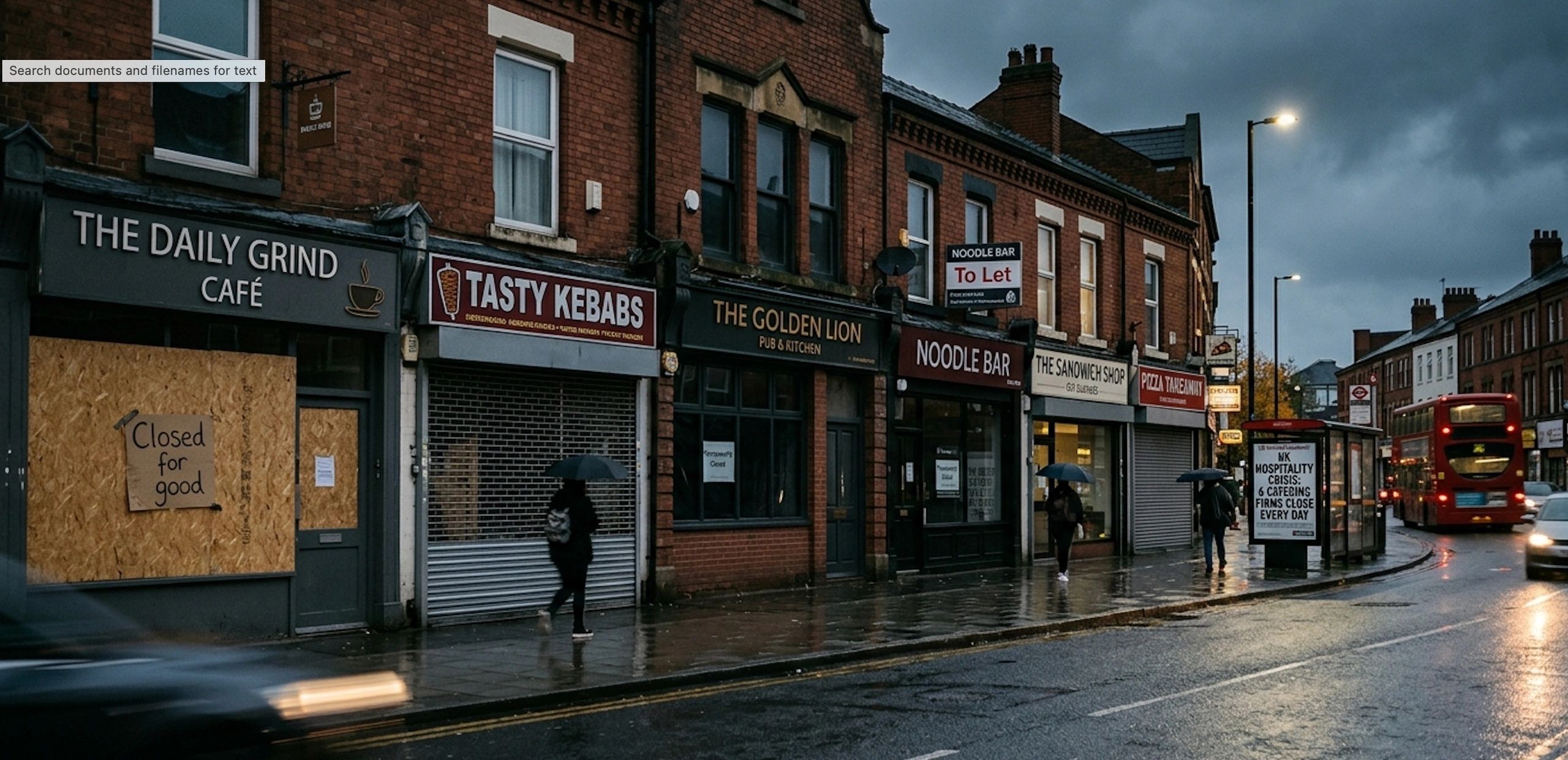
There's a number that gets quoted a lot in hospitality right now, and it should stop every operator in their tracks. Four to six UK hospitality businesses close every single day. Not a bad week. Not a difficult quarter. Every single day.
I've been in this industry for more than 35 years. I've seen downturns, recessions, foot-and-mouth, the smoking ban, COVID. I've seen kitchens I trained in close. Suppliers I built relationships with disappear overnight. Good operators — talented people, genuinely passionate about food and service — lose businesses they spent years building because the circumstances caught up with them faster than they could adapt.
But here's what I've also seen in more than 35 years: the businesses that survive aren't always the best ones. They're not always in the best locations, or serving the best food, or employing the most talented teams. They're the ones making deliberate decisions about how they run. There's a pattern to it. And if you're operating in the UK hospitality market right now, understanding that pattern is the most valuable thing you can spend time on.
So what does that actually look like in practice?
They know their numbers before they have a crisis
The operators who survive are the ones who can tell you, off the top of their head, what their labour percentage was last week. What their food cost is running at. Where they're losing money. Where the margin is tightest. Not because they're naturally financially-minded people — most of the best chefs and restaurateurs I know aren't — but because they built the habit of looking, and they built it early.
The businesses that close often know something is wrong. The signs are there: covers dropping, waste creeping up, the food bill feeling heavier than it should. They just don't look at the numbers until it's too late to act. By the time they're sitting down with their accountant and genuinely understanding the picture, there isn't enough runway left to correct course.
What does good practice look like here? A weekly numbers review that takes thirty minutes. Labour cost as a percentage of turnover. Food cost against theoretical cost. Waste log. Cash position. It doesn't need to be complicated — it needs to be consistent. The operators I work with who are genuinely in control of their business are the ones who look at these numbers every week, not every quarter when the accountant sends something over.
If you don't have visibility on these figures right now, that's the first thing to fix. Not the menu, not the marketing — the numbers. Everything else follows from understanding where you actually are.
They make menu decisions based on margin, not ego
Every menu carries dead weight. Dishes that are slow to prep, awkward to plate, expensive to ingredient, and that maybe three customers order in a whole week. The operators who survive have learned to cut them without sentimentality.
This is harder than it sounds. Chefs and operators invest in their menus emotionally. A dish can represent hours of development work, a trip somewhere that inspired it, a technique you're proud of. Cutting it feels like failure. But dead weight on a menu isn't just a lost opportunity cost — it's actively dragging on your operation. Every time that dish gets ordered, your team is prepping components that barely move, managing allergen information for something with minimal return, and slowing down the pass on the dishes that are actually selling.
A shorter menu done well will almost always outperform a longer menu done under pressure. Fewer components means less waste. Less waste means a healthier food cost. Faster mise en place means a leaner labour requirement. Better consistency on fewer dishes means better reviews, better repeat custom, better word of mouth.
The discipline is in getting there. I'd suggest a quarterly menu review as a minimum — look at what's selling, what the food cost is on each dish, and how long each dish takes in prep and on the pass. The answers are usually obvious once you're looking at them clearly. The hard part is being willing to act on what you see.
They treat their suppliers like partners, not a cost to minimise
When margins are tight, the instinct is to squeeze suppliers. Phone around, pit them against each other on price, switch at the first saving. In my experience — and I say this having spent years on the wholesale side of the industry, so I understand both sides of this equation — that strategy costs more than it saves.
The value of a good supplier relationship shows up in the moments that don't make it onto an invoice. The phone call that warns you about an incoming price change before it hits your cost sheet. The substitution that lands on your doorstep when your usual product isn't available, chosen because your rep knows your operation well enough to know what will work. The priority delivery on a Friday afternoon when something's gone wrong. The credit when a box of produce isn't right.
None of that happens with a supplier who knows you'll move on the moment someone offers 50p less per kilo. It happens when you've built a relationship over time, communicated honestly about what you need, and treated their business with the same respect you want for your own.
I'm not saying you shouldn't negotiate. Of course you should. I'm saying the framing matters. Negotiate as a partner who wants a fair deal and plans to be a long-term customer. Not as someone who sees suppliers as a problem to minimise.
The operators still standing in ten years are the ones who understand that their supply chain is part of their business, not separate from it.
They invest in their people before they're desperate
Staff turnover in hospitality is catastrophic for margins and quality. The numbers are well-documented — the cost of recruiting, onboarding, and training a replacement member of kitchen staff runs into thousands of pounds when you factor in management time, agency fees if you use them, lost productivity during the training period, and the knock-on effect on the team members who are absorbing the gap.
More damaging is what happens to the people who stay. High turnover is contagious. When someone leaves, the team that remains picks up the slack, watches the cycle repeat, and quietly starts asking themselves whether they want to be next. The best people — the ones with options — are usually the first to go.
The operators who retain good people aren't always the ones paying the most. They're the ones running operations that their teams want to be part of. That means clear communication about what's expected and why. It means consistency — people perform better when they know the standards and can trust that those standards apply to everyone. It means a kitchen culture that doesn't run on shouting and blame, not because I'm squeamish about strong leadership, but because the evidence that fear-based management produces better food or better service simply doesn't exist.
None of this is soft management. It's commercial. The cost of retaining a good person is almost always lower than the cost of replacing them.
They understand what their operation actually is — and what it isn't
One of the most common things I see in struggling businesses is a mismatch between what the operation is trying to be and what it's actually capable of delivering consistently. A kitchen set up for 40 covers trying to do 80. A menu designed for a la carte service being pushed through a set-up built for volume. A concept that made sense in the owner's head being executed by a team that hasn't been given the context to understand it.
The businesses that survive tend to have a clear, honest understanding of what they do well. They've defined their offering tightly enough that they can deliver it consistently, and they've had the discipline to say no to the things that would stretch them beyond what they can reliably do.
This is as much a leadership quality as an operational one. It requires a business owner or manager who can hold a line under pressure — when a customer asks for something you don't do, when a well-meaning member of the team suggests adding something to the menu, when the temptation to chase a trend pulls at you. Clarity about what you are and what you aren't is one of the most underrated competitive advantages in hospitality.
They get outside perspective before it's an emergency
This is the one that's hardest to admit, but it matters. The businesses that pull through tend to have someone outside the day-to-day who can look at operations with fresh eyes. A business advisor. A consultant. A mentor who's been there. Not to be told what to do — operators who've been running kitchens for years don't need that, and they'd rightly push back if someone tried — but to have things reflected back clearly, without the emotional investment that makes it hard to see your own operation objectively.
I've worked with operators who were close to the edge but didn't realise quite how close. Not because they were inattentive or reckless — because when you're in the middle of running a busy kitchen, it's genuinely difficult to step outside the immediate pressure of the day and look at the structural picture. The person taking the bookings, managing the suppliers, dealing with the staffing issue, and trying to get service out can't always simultaneously see the business from the outside. That's not a failure of ability. It's just how close-up operational work functions.
The ones who wait until they're in genuine crisis before asking for help often find there's not enough runway left to act on what they learn. The conversation that could have turned things around six months earlier becomes a post-mortem.
If any of this sounds uncomfortably familiar — if you're watching your costs climb and your margin shrink and you're not quite sure where to start pulling the threads — that's exactly the situation where an honest, experienced conversation costs you nothing and could make a real difference.
The first conversation with On The Pass Consultancy is always free. No pitch, no pressure. Just a straight conversation about where you are and what your options actually look like. If there's nothing I can add, I'll tell you that too.
The hospitality industry in the UK is under real pressure, and I don't expect that to ease significantly in the near future. But a lot of the closures happening right now aren't inevitable. Some of them could have been prevented with different decisions made twelve months earlier. And some of the businesses that feel like they're on the edge right now are a lot more recoverable than they think — they just need someone to help them see it clearly.
Blog Links