Gas vs Induction: The Real Cost for UK Kitchens

Gas vs induction in a commercial kitchen? Real UK data shows a gastropub saving £8,839 a year. Here's what electrification actually costs, and who it suits.
Every operator I meet this year is looking for money that isn't there.
Business rates went up in April. Employer National Insurance sits at 15% with the threshold down to £5,000. The National Living Wage is £12.71. Research for UKHospitality found one in six venues at risk of closure within twelve months. The instinct is to cut: shorter menus, fewer hours, thinner rotas.
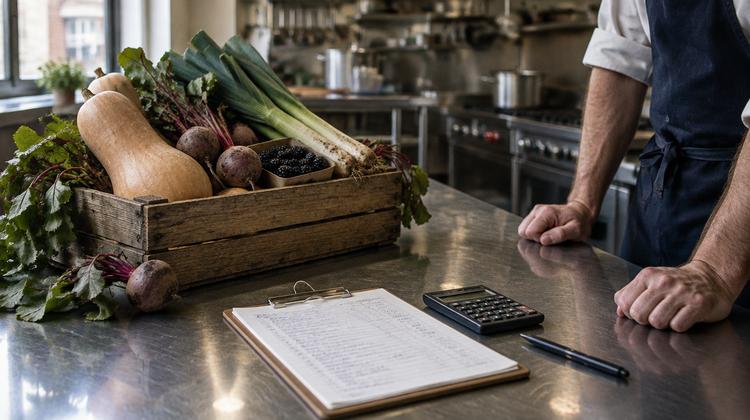
But there's a line on your P&L that most operators treat as fixed, and it isn't fixed at all. Your energy bill isn't a market price you're stuck with. It's the consequence of an equipment decision somebody made years ago, and it can be revisited.
For the first time, we have real UK numbers on what revisiting it is worth.
What the new data actually says
In March 2026, the Sustainable Restaurant Association, the Global Cooksafe Coalition and Hospitality Energy Saving and Sustainability published a guide called Making the Switch. It matters because of how it was built.
The researchers monitored three real UK businesses. They took actual operational energy data from working commercial kitchens and combined it with current performance data from commercial cooking equipment. Then they published the lot.
That's rare. Most electrification claims come from manufacturers modelling their own kit, which is roughly as useful as asking a brewer whether you should have another pint. This is equipment-level data from live kitchens, published openly. Until now, operators have been asked to electrify without any clear evidence of what it does to the bottom line.
Here's what the modelling found across the three sites:
| Kitchen type | Annual saving | % energy cost reduction | Energy use cut |
|---|---|---|---|
| Gastropub | £8,839 | 17% | 64% |
| Chinese takeaway | £4,493 | 21% | 61% |
| Indian restaurant | £2,610 | 8% | 49% |
Read that table twice, because the spread is the real story.
Why the same switch produces different answers
Three kitchens. One decision. Savings ranging from £2,610 to £8,839, and percentage reductions from 8% to 21%.
This is the part the headlines flatten. "Restaurants save 20% by going electric" is a useful sentence for a press release and a useless one for planning a kitchen.
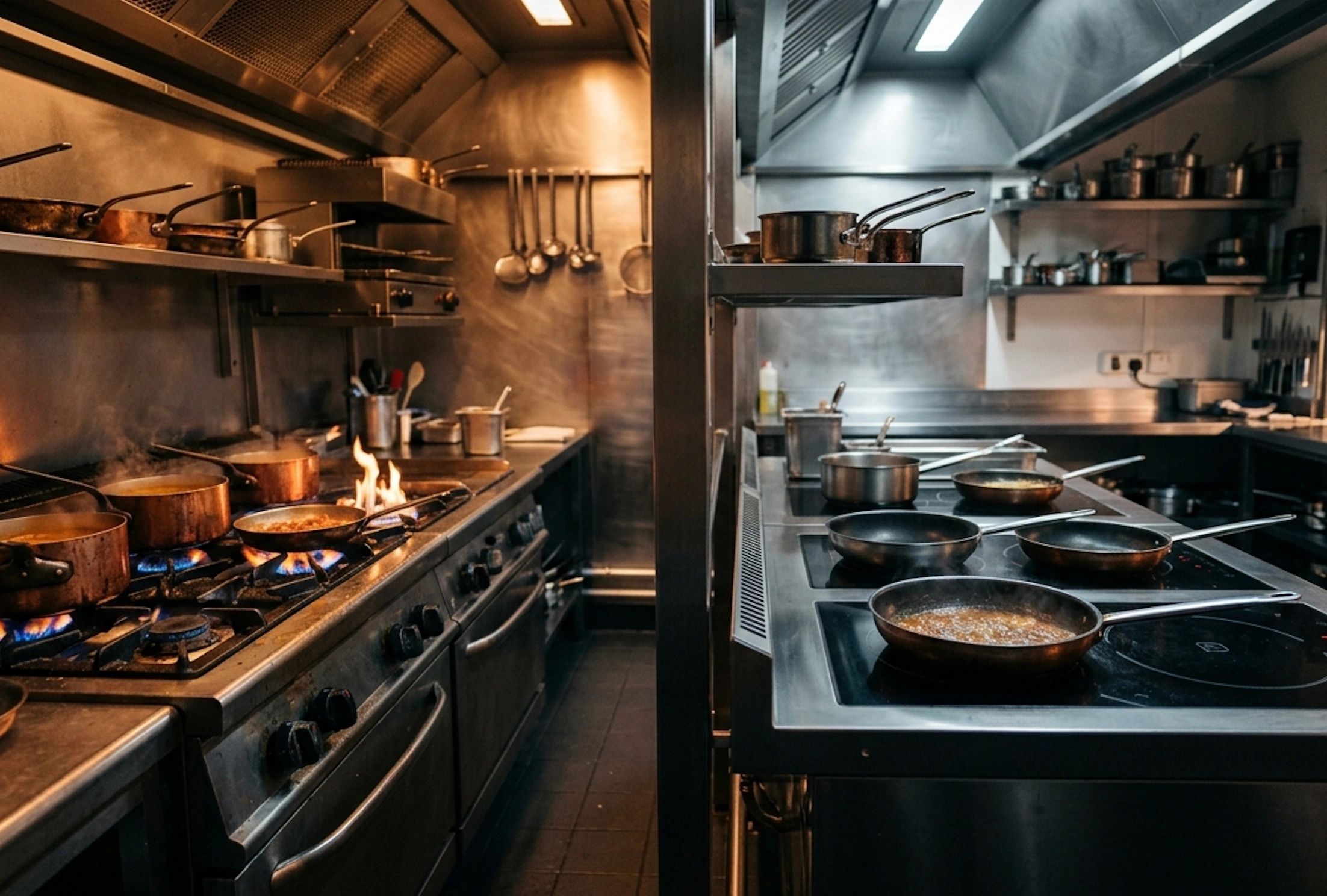
The variation comes down to what you cook and how you cook it. Gas is wasteful in a specific way: it heats the air around the pan as much as the pan itself. Stand next to a range in August and you can feel exactly where your money is going. The more of your cooking that happens over an open flame with a pan on it, the more of that waste you're paying for, and the more induction hands back to you.
A gastropub runs a lot of pans on a lot of burners for long services. It has the most to gain in cash terms. A Chinese takeaway runs hard, hot and fast on woks — enormous energy intensity, and the highest percentage saving of the three at 21%.
The Indian restaurant saved least, at 8%. That's not a failure of the technology. It reflects a kitchen where a significant share of the cooking happens in a tandoor, and a tandoor is not a pan on a hob. You cannot induction a tandoor. The equipment has to match the food.
So the honest answer to "should I go induction" is: it depends entirely on your menu. Anyone who gives you a straight yes without asking what you cook is selling something.
The upfront cost objection is the fair one
I've stood in commercial kitchens for over 35 years, and I've heard every objection to induction.
Most of them don't survive contact with a modern unit. "You can't feel the heat" was a fair criticism in 2010 and it isn't now. "My chefs will hate it" tends to last about three weeks, which is roughly how long it takes a team to stop fighting the thing and start using it.
But the upfront cost objection is legitimate, and it deserves a straight answer rather than a dodge.
Here it is. In the gastropub modelling, factoring in the cost of the new electrical equipment, the retrofit returned its investment by year three. Over a ten-year period, the potential saving exceeded £65,000.
Year three. Not year one.
That timeline is the whole decision, and it cuts both ways.
If you are genuinely fighting to survive the next twelve months, a retrofit is not your answer and I won't pretend it is. Go and fix your labour model and your menu engineering first. Come back to this when you're breathing.
But if you are fitting out a new site, replacing a suite that's near the end of its life, or planning capital spend for 2027, then year three sits comfortably inside your horizon. Specifying gas into a new build in 2026 is a decision you will be paying for every single service for the next decade.
That's the real cost of gas. Not what it costs to run. What it costs to have chosen.
What induction actually changes on the pass
The financial case is one thing. What it does to a service is another, and it's the part chefs care about.
Speed is the first thing you notice. An induction hob puts energy into the pan almost immediately, with no ramp-up while a burner heats a ring of air first. Water boils faster. A pan comes up to temperature in a fraction of the time. Across a full service, those seconds compound in a way that's difficult to appreciate until you've worked it.
Control is the second, and it's the source of most of the resistance. Gas gives you a visible flame, and generations of chefs learned to read it — you know what a dish needs by looking at the burner. Induction gives you a number instead. That's a genuine adjustment and it's why experienced chefs push back hardest.
But once a team stops trying to read induction like gas and starts trusting the setting, consistency improves. The same number gives you the same result at 11am and at 9pm on a Saturday. Gas doesn't quite manage that, because gas pressure varies with demand across the building.
The third change gets badly underrated. Heat that doesn't go into the pan goes into your kitchen. That's the air your extraction system then has to remove, at a cost you're already paying. A cooler kitchen isn't only more comfortable, it reduces the load on ventilation.
And a cooler kitchen isn't a soft benefit in a chef shortage. Kitchen roles remain the deepest staffing gap in UK hospitality. If your pass is ten degrees cooler in August, that's a retention argument, and retention is cheaper than recruitment every time.
The genuine trade-offs are real and worth naming. You need ferrous pans, so bring a magnet when you audit your existing batterie — if it sticks, it works. Wok cooking needs purpose-built induction wok units rather than a flat hob, and they're a specific spec at a specific price. And direct-flame work, charring a pepper or flashing a dish, needs a different solution.
Most kitchens keep a small amount of gas or a salamander for exactly this. Going electric doesn't have to mean going 100% electric, and the modelling above reflects realistic mixed kitchens rather than purist ones.
The savings that don't show on the energy bill
Focusing purely on kilowatt hours understates the case.
The researchers made a point worth sitting with: electrification often lets a business replace several pieces of equipment with a single more efficient appliance. That produces savings well outside energy — maintenance, space, cleaning and labour.
Space is the one operators consistently underestimate. In a tight kitchen, floor area is your scarcest asset. Consolidating three units into one doesn't just save energy, it changes what's possible in the layout, and layout is what determines how many covers you can actually turn.
Cleaning is the other. A flat glass surface wipes down. A gas range has burners, pan supports and drip trays, and every one of those is time at close. Multiply that across a year of services and it stops being trivial.
The health case nobody mentions in the sales pitch
The guide also raises something rarely discussed on a showroom floor. Gas cooking produces nitrogen dioxide and benzene, both associated with respiratory disease and, in the case of benzene, cancer. Gas hobs can leak methane even when switched off.
You can manage this with proper ventilation, and any competent commercial kitchen design already does. But it belongs in an honest comparison, because your team breathes that air for fifty hours a week.
What I'd actually tell you to do
If you're weighing gas versus induction for a commercial kitchen, work through this in order.
Start with your menu, not your equipment. Break your cooking down by method. How much is pans on burners? How much is tandoor, char-grill or solid fuel where induction simply doesn't apply? If most of your energy goes through pans, you're closer to the gastropub case. If it doesn't, temper your expectations toward the 8% end.
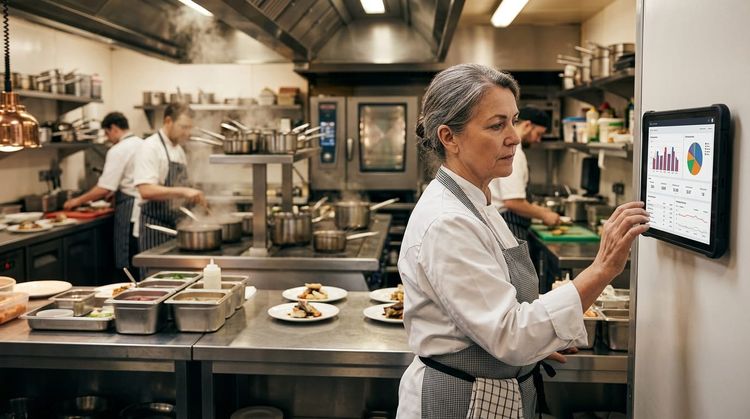
Get your actual consumption data. Not an estimate. Half-hourly data from your supplier tells you where your energy really goes. You cannot model a saving without a baseline, and most people guess.
Time it to your capital cycle. The strongest case is always at refit or new build, when you're buying equipment regardless and only the incremental cost is in question. Ripping out a healthy five-year-old gas suite rarely stacks up.
Check your three-phase supply early. This is where electrification projects die. If your incoming supply won't carry the load, you're looking at a distribution network operator upgrade, and that can be serious money and months of lead time. Establish this before you fall in love with a spec.
Budget for the pans. Induction needs ferrous cookware. It's a real line item and it catches people out.
Phase it. Very few operators can electrify in one go, and very few need to. Start with the units doing the heaviest pan work, because that's where the return is concentrated.
The bigger point
One in six UK hospitality venues are at risk of closure this year. The entire conversation is about cutting: costs, hours, covers, menus.
Cutting has a floor. You can only strip so much out before you're damaging the thing customers are paying you for.
Efficiency doesn't have that floor. A kitchen that uses 64% less energy to produce the same food hasn't compromised anything at all. The guest never knows. That's a fundamentally different kind of saving, and it's sitting in equipment decisions most operators haven't examined in years.
Your energy bill isn't weather. It's a choice somebody made, and you're allowed to make a different one.
Planning a kitchen build or a suite replacement in the next 18 months? On The Pass Consultancy offers a free initial consultation covering equipment advisory and kitchen design across Newport to Swansea, Gloucester to Bristol, and UK-wide. If you want the electrification maths run properly against your actual menu and your actual consumption data, get in touch.