Heritage Tomato with Whipped Feta and Basil Oil
By On The Pass Consultancy | Category: Weekly Recipe | Serves: 20 | Prep: 45 min | Cook: 15 min (crumb and basil oil) | Skill Level: Beginner | Keywords: heritage tomato recipe catering UK, Isle of Wight tomato recipe, whipped feta recipe commercial kitchen, summer starter 20 covers, vegetarian catering recipe UK
Why This Dish, and Why Now
There is a fortnight in July when British tomatoes are as good as they get anywhere in the world, and the Isle of Wight is where the best of them come from. The island's microclimate gives it more sunshine hours than almost anywhere else in the UK, and the growers there have spent decades selecting varieties for flavour rather than shelf life. Right now, in the second week of July, they are at their absolute peak. If you are going to build a dish around a tomato, this is the week to do it.
The trick with a tomato dish is knowing when to stop. A great heritage tomato does not need cooking, it does not need a dozen supporting ingredients, and it certainly does not need hiding. What it needs is salt, good oil, a little acidity and one or two things that make it taste more like itself. This plate gives it a cool, sharp whipped feta to sit against, a bright green basil oil for perfume and colour, and a garlicky sourdough crumb for the crunch that a soft tomato is missing. That is the whole idea. Four elements, each doing one job.
Commercially, this is one of the most sensible summer starters you can run. The protein cost is close to nothing, the tomato is the hero and it is cheap in season, and the perceived value on the plate is high because heritage tomatoes look expensive. Whipped feta and basil oil both prep the day before and hold well, so service is assembly, not cooking. For a kitchen looking for a vegetarian plate that sells itself and lands beautifully on food cost, this is it.
Serves 20 | Prep: 45 min | Cook: 15 min
Ingredients
Tomatoes
| Ingredient | Quantity |
|---|---|
| Isle of Wight heritage tomatoes, mixed varieties and sizes | 3.6kg |
| Flaky sea salt | to season |
| Aged sherry vinegar (or good aged balsamic) | 60ml |
| Extra virgin olive oil, to finish | 100ml |
Whipped Feta
| Ingredient | Quantity |
|---|---|
| Greek feta (block, in brine) | 800g |
| Full-fat Greek yoghurt | 300g |
| Extra virgin olive oil | 80ml |
| Lemon, zest and juice | 2 |
| Black pepper | to season |
Basil Oil
| Ingredient | Quantity |
|---|---|
| Fresh basil, leaves picked | 100g |
| Flat-leaf parsley, leaves picked | 30g |
| Neutral oil (grapeseed or light rapeseed) | 300ml |
| Fine sea salt | 5g |
Sourdough Crumb
| Ingredient | Quantity |
|---|---|
| Day-old sourdough, crusts on | 400g |
| Olive oil | 80ml |
| Garlic cloves, finely grated | 3 |
| Flaky sea salt | to season |
To Finish
| Ingredient | Quantity |
|---|---|
| Baby basil or small basil leaves | 1 punnet |
| Extra virgin olive oil | to finish |
Method
Stage 1: Whipped Feta (make the day before)
1. Drain the feta and break it into rough pieces into a food processor. Add the Greek yoghurt, olive oil, and the zest and juice of both lemons. Blitz for two to three minutes, stopping to scrape down the sides, until completely smooth and glossy. Feta whips far better than people expect, but it needs time in the machine to move from grainy to silk. Do not rush it. Season with black pepper only at this stage, because the feta brings its own salt, so taste before you add any more.
2. Transfer to a container, cover and refrigerate overnight. Resting lets the lemon and feta settle together and firms the texture to a proper piping consistency. Bring it back to just below room temperature before service. Fridge-cold feta is stiff and dull, and it will not spread or quenelle cleanly.
Stage 2: Basil Oil (make the day before)
3. Bring a pan of water to the boil and set a bowl of iced water alongside. Blanch the basil and parsley leaves for 10 seconds only, then plunge straight into the ice bath. This fixes the chlorophyll and gives you a vivid, stable green rather than the dull khaki you get from raw herbs blitzed into warm oil. Squeeze the leaves as dry as you can.
4. Put the blanched herbs, oil and salt into a blender and blitz on high for 60 to 90 seconds until the oil is warm to the touch and bright green. Line a fine sieve with muslin or a clean J-cloth over a jug and pour the oil through. Let it drip through on its own, and do not force it, or you will push sediment through and cloud the oil. Refrigerate overnight. You want the clear, jewel-green oil, not the pulp.
Stage 3: Sourdough Crumb
5. Tear the day-old sourdough into rough pieces and pulse in a food processor to a coarse crumb. You want gravel, not sand, with some texture left in it. Toss with the olive oil, grated garlic and a little flaky salt.
6. Spread across a lined tray in a single layer and bake at 170°C (fan 150°C) for 10 to 12 minutes, turning once, until deep golden and properly crisp all the way through. Cool completely. A warm crumb goes soft in the container within the hour. Once cold, it holds crunch in a sealed tub for two to three days, so this is a genuine make-ahead.
Stage 4: The Tomatoes (prep close to service)
7. This is the one component you cannot do far in advance, because salted tomato weeps. Cut the tomatoes to show off their variety: big beefsteak types in thick rounds, medium ones in wedges, cherry and plum types halved. Mixing the cuts is what makes the plate look considered rather than chopped. Keep them out of the fridge. A cold tomato is a muted tomato, and refrigeration destroys the texture and aroma you are paying for.
8. No more than 15 minutes before service, season the cut tomatoes with flaky sea salt and dress lightly with the sherry vinegar. The salt draws out a little juice and seasons from the inside, and 15 minutes is the sweet spot, long enough to season but not so long that they collapse into a puddle.
Plating
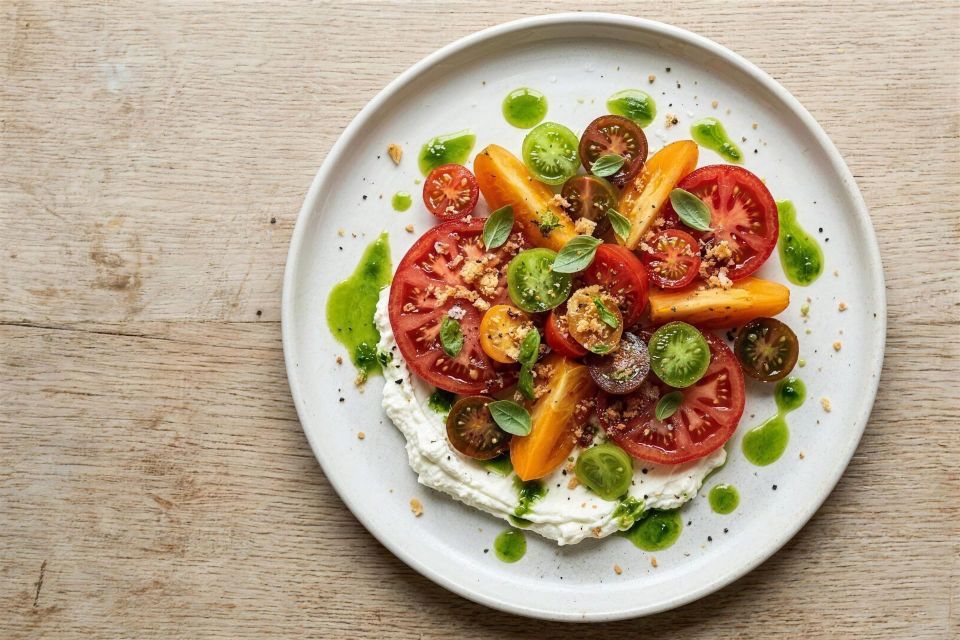
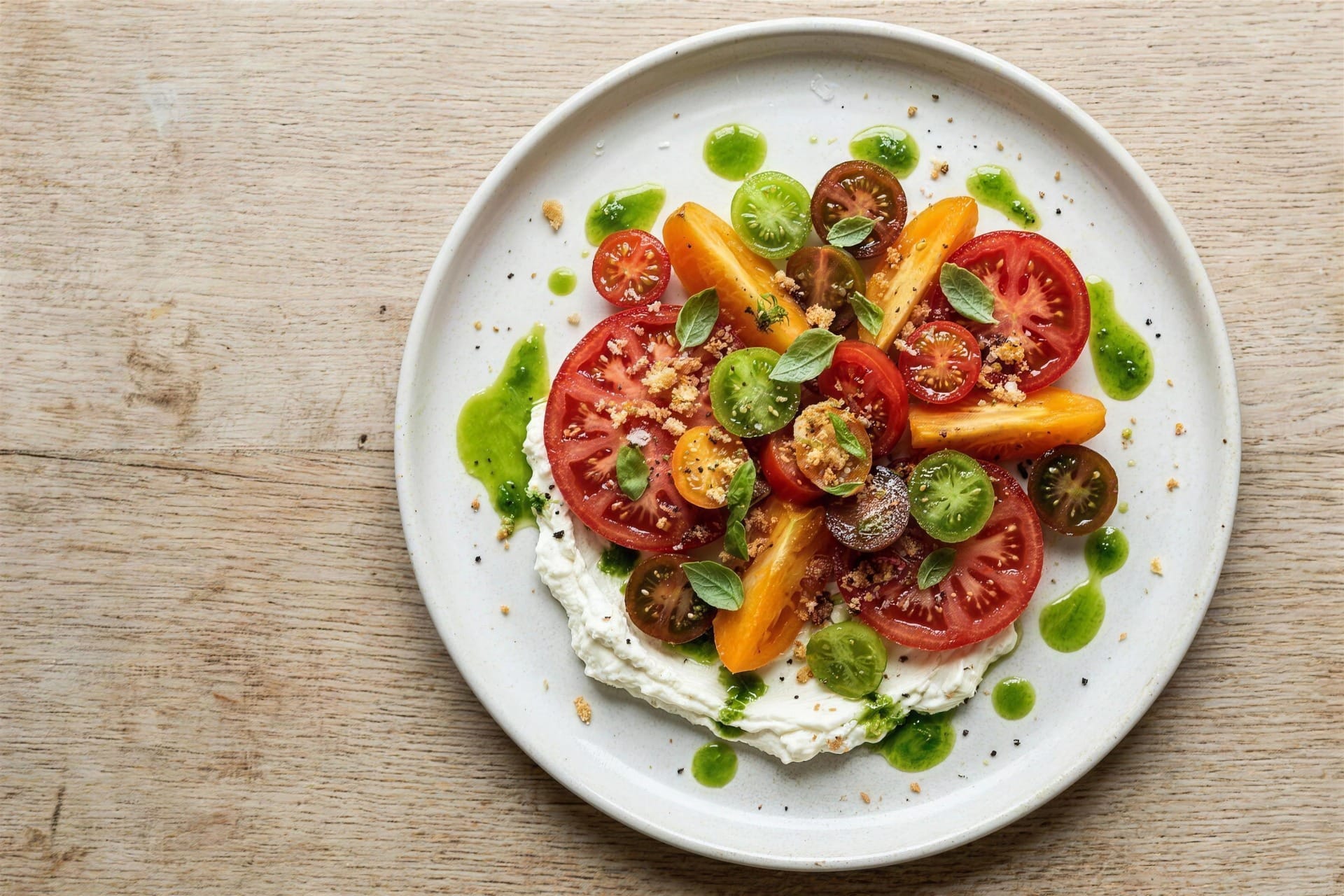
Spread a generous swoosh of whipped feta across the base of each plate with the back of a spoon. Pile the dressed tomatoes on top, stacking the different shapes and colours for height and contrast, cut faces turned outward so the colour shows. Scatter a good spoonful of sourdough crumb over and around. Spoon the basil oil around the plate so it pools against the white feta, because the contrast is half the appeal. Finish with a drizzle of extra virgin olive oil, a few small basil leaves and a final pinch of flaky salt over the tomatoes.
Chef's Notes
On sourcing the tomatoes: Ask specifically for Isle of Wight heritage or mixed heritage tomatoes, and buy a genuine mix of varieties and sizes, because the whole look of the plate depends on variety. If your supplier cannot get the island's, any good British heritage tomato at peak ripeness will work; the non-negotiable is ripeness and flavour, not the postcode. Buy them a shade riper than you think, and never store them in the fridge.
On whipping the feta: Use a block feta in brine, not the pre-crumbled stuff, which is drier and more variable. If the mix is too stiff to spread cleanly, loosen it with a splash more olive oil rather than yoghurt, which keeps the flavour sharp. It pipes beautifully from a bag if you want a neater plate for a more formal service.
On running at volume: Both the feta and the basil oil are made the day before, and the crumb holds for days, so service is pure assembly. The only live job is cutting and salting the tomatoes, and that has to happen inside the last 15 minutes. Hold whole tomatoes at room temperature and cut to order in batches during a busy service rather than dressing everything at once.
On the GP: This is about as friendly as a starter gets. The costly line is the tomato, and in July that is cheap for the quality. Feta, yoghurt, day-old bread and a bunch of basil cost very little across 20 covers, and there is no protein spend at all. Priced as a summer starter at a sensible restaurant or gastropub rate, this carries an excellent margin while looking like a premium plate. Built right, it lands very comfortably on food cost.
Make-ahead summary:
- Whipped feta → day before, refrigerate overnight
- Basil oil → day before, refrigerate overnight
- Sourdough crumb → up to 2 to 3 days ahead, store airtight
- Tomatoes → cut and salt within 15 minutes of service only
Enjoyed this recipe? Subscribe below and get a new professional recipe delivered every Friday, built for commercial kitchens and written from more than 35 years on the pass.
Feel Free to sign up for weekly inspirational menu ideas
Menu Development / vegetarian plate