Welsh Beef and Ale Stew with Caerphilly Dumplings
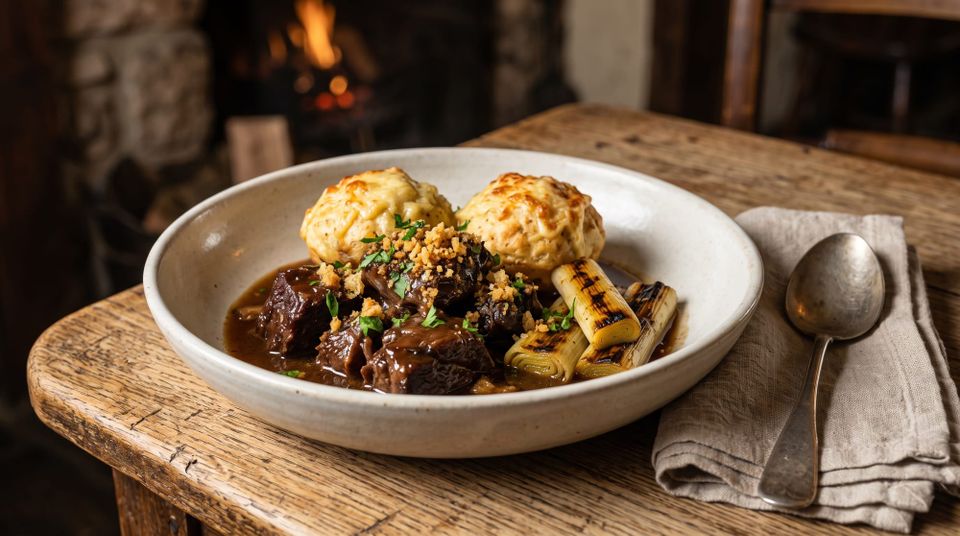
The British stew, taken up a notch with Welsh Black beef, a bone marrow crumb and dumplings made with Caerphilly.
Why This Welsh Beef Stew and Why Now
The clocks go back this weekend, the evenings are drawing in and the first proper cold of the autumn is arriving. This is the week a menu needs a beef and ale stew on it. Not a plain one, though. One that earns its place next to anything else you serve.
Start with the beef. Welsh Black cattle are a hardy, slow-growing native breed. The shin from a well-hung Welsh Black carcass has real depth of flavour. Shin is a working muscle, full of connective tissue. Three hours of slow braising turns that tissue to gelatine. The meat falls apart under a spoon and the gravy coats the plate with its own body.
Then the three things that lift it. The dumplings are made with crumbly Caerphilly cheese and fresh thyme, so they come out savoury and golden on top. The leeks are charred on the grill rather than boiled into the stew, which keeps their sweetness and adds a smoky edge. And a crisp crumb made with roasted bone marrow, breadcrumbs, parsley and lemon goes on at the last second, for crunch and a hit of richness.
The kitchen case is the strongest part. The beef is braised the day before and is better for the wait. At service it is a reheat, a steamer of dumplings, a grill tray of leeks and a spoon of crumb. Fifty covers with almost nothing cooked from raw on the day.
Where This Winter Warmer Fits on Your Menu
A beef and ale stew is the main guests reach for on a cold autumn night. It works on an à la carte menu from now until March, on a Sunday menu alongside the roasts and on a set menu for Christmas party bookings, where it holds better than a roast and plates faster.
Put Welsh produce on the menu card by name. Welsh Black beef, Welsh ale and Caerphilly tell a diner exactly where the food comes from. Only name the breed if it is what you are serving. A menu that says Welsh Black when it is not is a trading standards problem.
Serves 50 | Prep: 4 hours across two days | Cook: 3 hours 30 minutes
Ingredients
Weights for the beef and leeks are given as purchased and as prepared. Everything else is as purchased.
Braised beef shin
| Ingredient | Quantity |
|---|---|
| Welsh Black beef shin, boneless, as purchased | 11kg |
| (Trimmed weight, cut into 5cm pieces) | (10kg) |
| Plain flour, for dusting | 200g |
| Rapeseed oil | 200ml |
| Onions, roughly diced | 2.5kg |
| Carrots, roughly diced | 2kg |
| Celery, roughly diced | 1kg |
| Garlic cloves, crushed | 20 |
| Tomato purée | 150g |
| Welsh dark ale or bitter | 5 litres |
| Beef stock | 5 litres |
| Thyme | 1 large bunch |
| Bay leaves | 8 |
| Fine sea salt | 80g (half at the start, the rest to taste) |
| Black pepper, freshly ground | 20g |
Caerphilly and thyme dumplings
| Ingredient | Quantity |
|---|---|
| Self-raising flour | 1.5kg |
| Shredded beef suet | 750g |
| Caerphilly cheese, crumbled | 500g |
| Thyme leaves, picked | 20g |
| Fine sea salt | 15g |
| Cold water | about 900ml |
Bone marrow crumb
| Ingredient | Quantity |
|---|---|
| Beef marrow bones, canoe cut | 2kg |
| Fresh white breadcrumbs | 500g |
| Flat-leaf parsley, finely chopped | 60g |
| Unwaxed lemons, zest only | 2 |
| Fine sea salt | 5g |
Charred leeks
| Ingredient | Quantity |
|---|---|
| Leeks, as purchased | 5kg |
| (Trimmed weight, white and pale green, cut into 4cm lengths) | (2.8kg) |
| Rapeseed oil | 100ml |
| Fine sea salt | to season the leeks and the blanching water |
Per cover: about 200g raw trimmed shin (about 130g once braised), a ladle of gravy, two dumplings, about 55g of charred leeks and 12g of bone marrow crumb. The crumb makes about 650g, so there is a little over.
Method
The beef is braised the day before. The crumb and the leeks are prepped the day before too. On the day of service, the dumplings are shaped a couple of hours ahead and steamed in batches. Steps are numbered straight through.
Stage 1: Braise the beef (the day before)
1. Heat the oven to 160°C (fan 140°C), or a combi on combi mode at 140°C. You need about four 1/1 gastronorms, 150mm deep. Season the flour with a little of the salt and pepper and toss the beef in it. Shake off the excess. The flour browns in the pan and later helps thicken the gravy.
2. Heat a little of the oil in a wide, heavy pan or a bratt pan. Brown the beef in batches over a high heat until it is deep brown on every side. Do not crowd the pan. Crowded meat steams and goes grey. The browning is where the flavour of the whole stew comes from. Lift each batch into deep gastronorms.
3. Lower the heat. Add the rest of the oil with the onions, carrots and celery. Cook for 12 to 15 minutes until soft and starting to colour. Add the garlic for 2 minutes, then the tomato purée for 3 minutes, stirring, until it darkens.
4. Pour in the ale and bring it to the boil, scraping the base of the pan. Let it bubble for 5 minutes to cook off the raw edge of the ale. Add the stock, the thyme, the bay, half the salt and the pepper. If your stock is a commercial base, hold back more salt, because it concentrates as the gravy reduces. Bring back to a simmer.
5. Pour the liquid and vegetables over the beef in the gastronorms. The liquid should just cover the meat. Cover tightly with lids or a double layer of foil.
6. Braise for 3 hours to 3 hours 30 minutes, until a piece of shin breaks apart under gentle pressure from a spoon. Shin varies, so test a few pieces from different trays before you take it out.
7. Lift the beef out with a slotted spoon into shallow trays no more than 5cm deep and get it straight into the blast chiller. Strain the liquid and press the vegetables, then discard them with the thyme and bay. Skim off the fat and reduce the liquid in a wide pan until it coats the back of a spoon. Taste and season with the rest of the salt.
8. Pour the reduced gravy into separate shallow trays and blast chill it too. Both the beef and the gravy must reach below 8°C within 90 minutes of coming off the heat, then below 5°C. Probe and log it. A digital hygiene app such as Leafe keeps the cooling record time-stamped for an inspection. Combine them cold, cover, label with the cook date and a use-by three days later. A kitchen label printer such as Labl.it fills in the dates for you. Refrigerate. Never cool a full deep gastronorm of stew in the walk-in. The middle stays warm for hours.
Stage 2: Bone marrow crumb (the day before)
9. Roast the marrow bones cut side up at 220°C (fan 200°C) for 15 to 20 minutes until the marrow is soft and just starting to bubble at the edges. Scoop the marrow out with a teaspoon while warm. You should have about 300g.
10. Put the breadcrumbs and the marrow in a wide pan over a medium heat. Stir constantly for 8 to 10 minutes as the marrow melts into the crumbs and they turn golden and crisp. Take off the heat and stir in the lemon zest and the salt. Spread on a tray lined with kitchen paper to cool. Store in an airtight container in the fridge and use within two days. The marrow fat sets in the fridge, so re-crisp the crumb in a warm oven for 2 minutes before service and stir in the parsley then.
Stage 3: Charred leeks (the day before, finished at service)
11. Wash the leeks well, because grit hides between the layers. Blanch the 4cm lengths in boiling salted water for 3 minutes, then plunge into iced water. Drain thoroughly and refrigerate.
12. At service, toss the leeks in the rapeseed oil with a pinch of salt and char them on a hot chargrill or plancha for 2 to 3 minutes a side until marked and tender.
Stage 4: Dumplings (the day of service)
13. Mix the self-raising flour, suet, crumbled Caerphilly, thyme and salt in a large bowl. Add the cold water a little at a time and mix with your hands into a soft, slightly sticky dough. Do not knead it. A worked dough gives you heavy dumplings.
14. Divide into 100 balls of about 35g. Lay them on lined trays, cover and refrigerate. Shape them no more than 2 to 3 hours before service, because self-raising flour loses some of its lift if the dough sits too long.
15. Steam the dumplings in batches in a combi on steam at 100°C, or in a steamer, for 18 to 20 minutes until risen and cooked through. If you have a salamander, flash them under it for a minute so the cheese on top colours. Steam in batches through service, hold above 63°C for no more than 30 minutes and discard any left over.
Stage 5: Service
16. Reheat the beef in its gravy in covered gastronorms in the oven or combi until it is at least 75°C at the centre of the thickest piece. Hold above 63°C through service. Reheat only what you need and never reheat the same batch twice. Discard anything left at the end of service.
17. Plate each cover with about 130g of beef and a ladle of gravy, two dumplings, the charred leeks and 12g of bone marrow crumb, as below.
Plating
Use a warm wide bowl. Spoon in the beef and gravy and settle the two dumplings on top, golden side up. Lay the charred leeks around the side so the grill marks show. Scatter the bone marrow crumb over the beef just before it leaves the pass, so it stays crisp. Wipe the rim and send it hot.
The Make-Ahead Workflow
| When | Job | How long |
|---|---|---|
| The day before, morning | Brown the beef, build the braise | 2 hours |
| The day before, midday | Braise in the oven or combi | 3 hours 30 minutes |
| The day before, afternoon | Blast chill the beef, strain and reduce the gravy, chill it, combine cold | 1 hour 30 minutes to 2 hours |
| The day before | Bone marrow crumb, blanch the leeks | 45 minutes |
| Two to three hours before service | Make and shape the dumplings | 30 minutes |
| Service | Reheat the beef, steam the dumplings, char the leeks, plate | Under 2 minutes a plate |
Chef's Notes
On sourcing the beef: I'd ask your butcher for Welsh Black shin by name and for boneless, trimmed pieces if they will do it. If Welsh Black is not available, any good native-breed shin works, but change the menu description to match. Avoid anything labelled stewing steak with no cut named, because it is often a mix of cuts that cook at different speeds.
On the ale: Use a dark Welsh ale or a good bitter. Avoid anything heavily hopped, because the bitterness concentrates as the gravy reduces. If in doubt, taste the gravy halfway through the reduction and stop early.
On running it at volume: Fifty covers is comfortable for a section of two. One person reheats and plates the beef. The other runs the dumplings and the leeks. Keep the dumplings steaming in rolling batches so none are held long.
On allergens: This dish contains cereals containing gluten, namely wheat (plain flour, self-raising flour, breadcrumbs and the coating on shredded suet) and barley (ale), milk (Caerphilly) and celery. Ale can also contain sulphites. Check the labels on the stock and the bread for mustard, soya and further gluten. Declare all of them on your allergen matrix.
Beef and Ale Stew Recipe FAQs
What is the best cut of beef for a stew? Shin. It is full of connective tissue that breaks down into gelatine during a long, slow braise, which gives you tender meat and a rich, glossy gravy.
Can I make beef stew the day before? Yes. It is better for it. Braise the day before, chill it quickly and reheat to at least 75°C to order. Use within three days of cooking.
Can I make the dumplings ahead? Make and shape the dough in the morning and keep it chilled, but steam the dumplings during service. Steamed dumplings held for too long turn heavy.
Can I freeze the braised beef? Yes. Freeze it on the day it is chilled, in its gravy, for up to a month. Allow 24 to 48 hours to defrost a full tray in the fridge, then reheat once to at least 75°C.
Enjoyed this recipe? Subscribe below and get a new professional recipe delivered every Friday, built for commercial kitchens and written from 35+ years in hospitality.