Natasha's Law: The Essential Guide to Food Allergen Labelling
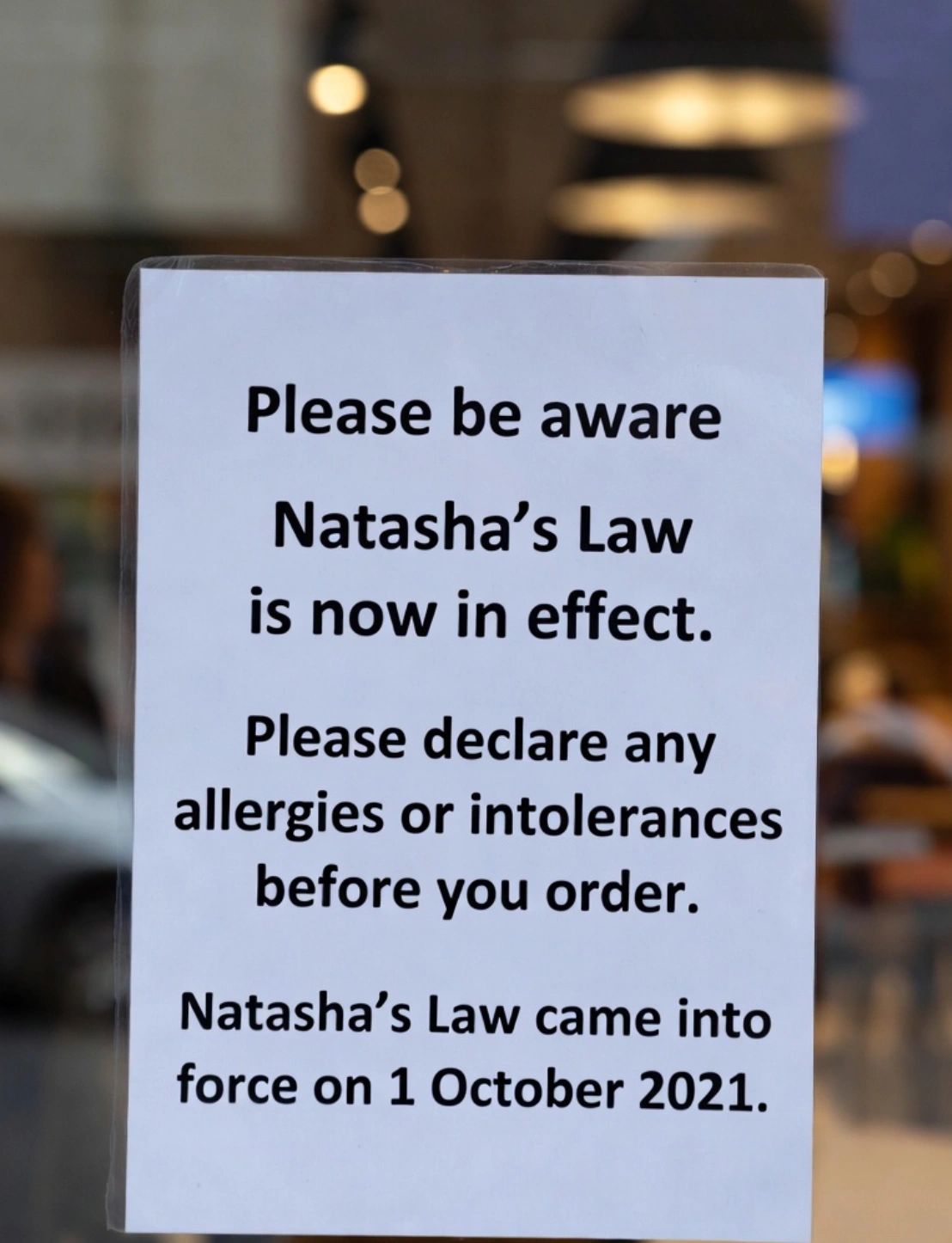
In the UK catering sector, food safety is non-negotiable. For the estimated 2-3 million people living with food allergies, a single undeclared ingredient can be life-threatening. Natasha's Law, introduced in October 2021, represents the most significant change to food labelling in a generation, specifically targeting prepacked for direct sale (PPDS) food.
Whether you run a high-street café, a busy sandwich shop, a catering company with grab-and-go boxes, a bakery, or a food truck, understanding and complying with Natasha's Law is now fundamental to operating legally and ethically in the UK.
This comprehensive guide explains everything UK caterers need to know about Natasha's Law, including practical compliance steps, labelling best practices, common mistakes, and the commercial benefits of getting it right.
The Tragic Story Behind Natasha's Law
Natasha's Law is named after Natasha Ednan-Laperouse, a 15-year-old girl who tragically died in 2016 after eating an artichoke, olive, and tapenade baguette from Pret a Manger. Natasha had a severe sesame allergy, but the sesame seeds baked into the bread were not declared on the packaging. Despite asking staff about allergens, the information was not available.
Her parents, Tanya and Nadim Ednan-Laperouse, campaigned tirelessly for change. Their efforts led to the Food Information (Amendment) Regulations 2019, commonly known as Natasha's Law. The legislation closed a dangerous loophole that previously allowed PPDS foods to be sold without a full ingredients list.
What is Natasha's Law?
Natasha's Law requires all food businesses in England, Scotland, Wales, and Northern Ireland to provide full ingredient lists with allergens clearly emphasised on any food that is:
- Produced on the premises
- Packed on the premises
- Sold from the same premises
This applies from 1 October 2021 and remains fully in force in 2026.
The law specifically governs Prepacked for Direct Sale (PPDS) products. These are items made on-site, packaged before the customer selects them, and sold directly to the consumer (e.g., pre-wrapped sandwiches, salad boxes, individual cakes, breakfast pots, or sushi sets).
What Food Products are Covered by Natasha's Law?
Examples of PPDS food in the catering sector:
- Pre-made sandwiches and wraps
- Salad boxes and grain bowls
- Cakes, pastries, and traybakes sold individually wrapped
- Breakfast pots (overnight oats, yoghurt parfaits)
- Ready-to-eat sushi or poke bowls
- Pre-portioned charcuterie or cheese boxes
- Grab-and-go soup pots or pasta salads
- Deli counter items packed in containers
Food NOT covered by Natasha's Law (but still requires allergen info):
- Food made to order (e.g., made-to-order sandwich)
- Loose bakery items displayed unwrapped
- Food served by staff directly onto a plate
- Pre-packed products made off-site (these follow full prepacked rules)
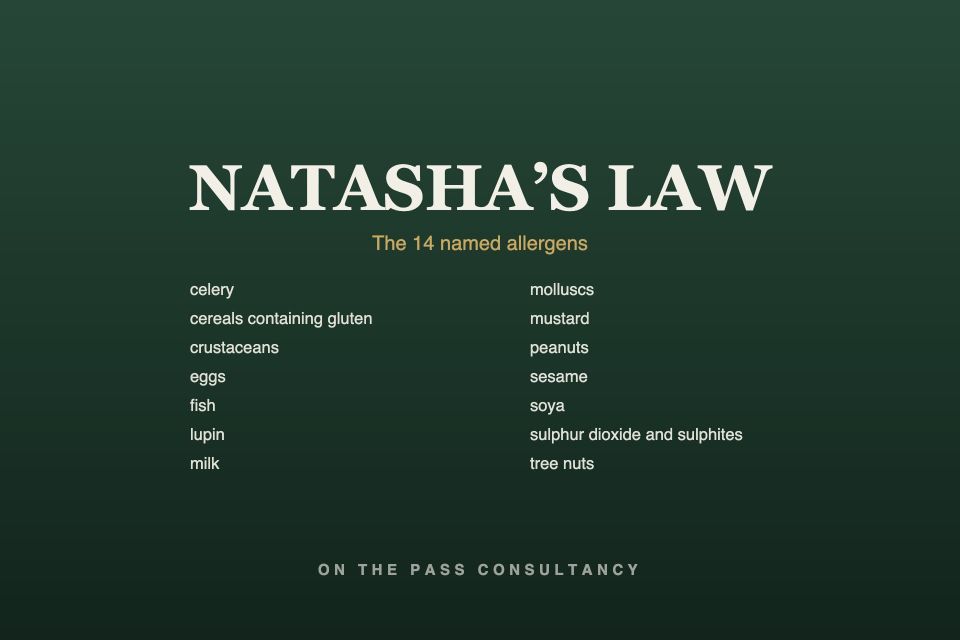
The 14 Major Allergens You Must Declare
The law requires clear declaration of the following 14 regulated allergens if they are present as ingredients:
- Celery
- Cereals containing gluten (wheat, barley, rye, oats, spelt, kamut)
- Crustaceans
- Eggs
- Fish
- Lupin
- Milk
- Molluscs
- Mustard
- Nuts (almonds, hazelnuts, walnuts, cashews, pecans, Brazil nuts, pistachios, macadamia nuts)
- Peanuts
- Sesame
- Soya
- Sulphur dioxide and sulphites (more than 10mg/kg or litre)
Natasha's Law Labelling Requirements: What Must Be on the Label
For every PPDS item, the physical label must include:
- The name of the food (e.g., "Egg Mayonnaise Sandwich" or "Vegan Falafel Wrap")
- A full ingredients list in descending order of weight
- Allergens emphasised every time they appear (using bold, italics, colour, underline, or capital letters)
- Your business name and address (a physical UK address where you can be contacted)
Recommended formatting best practices:
- Minimum font size: 1.2mm x-height (roughly equivalent to 7pt Arial)
- Allergens should be highlighted using the same method consistently
- Use "Contains [Allergen]" statements as a supplementary measure (not a replacement)
- Print labels rather than handwriting them
- Include lot numbers or use-by dates where relevant for traceability
Practical Compliance Checklist for UK Caterers
- Audit all PPDS products currently offered
- Create a master recipe/allergen matrix
- Verify supplier ingredient specifications regularly
- Implement a change management process for recipe updates
- Invest in a reliable label printer or digital labelling system
- Train all staff on allergen awareness and labelling procedures
- Review cross-contamination procedures
- Keep records of ingredient changes and label updates
- Display a notice advising customers to check labels
- Conduct quarterly internal audits
Common Mistakes Caterers Make (and How to Avoid Them)
- Using "May Contain" as the only information – This is no longer sufficient for PPDS.
- Highlighting allergens only once – They must be emphasised every time they appear.
- Forgetting the business name and address – Required even for market stalls.
- Using verbal confirmation alone – The information must be on the packaging.
- Not updating labels when recipes change – Even a minor spice blend change can introduce new allergens.
Penalties for Non-Compliance
Trading Standards and Environmental Health officers take Natasha's Law breaches seriously. Enforcement can result in:
- Improvement notices
- Unlimited fines in the Magistrates' Court
- Criminal prosecution (possible imprisonment in the most serious cases)
- Significantly lower Food Hygiene Rating Scheme (FHRS) scores
The Commercial Benefits of Robust Compliance
Businesses that excel at allergen labelling often see:
- Higher customer trust and loyalty from the allergy community
- Improved online reviews mentioning "clear labelling"
- Fewer allergen-related incidents and complaints
- Better protection against civil claims
- Stronger reputation with local authorities
Final Thoughts
Natasha's Law is now an established part of the UK food safety landscape. For catering businesses, it represents both a serious responsibility and an opportunity to demonstrate genuine care for customers.
Compliance is not just about avoiding fines—it's about protecting lives and building a sustainable, ethical business in an increasingly allergy-aware market.
If you're unsure about your current level of compliance, or if scaling up your PPDS offering feels overwhelming, working with a specialist food safety consultancy can provide clarity, practical systems, and peace of mind.
allergen labelling natasha's law, Natasha's Law, food safety, Catering Blog