Korean-Style Braised Beef Bowl: A Professional Kitchen Take
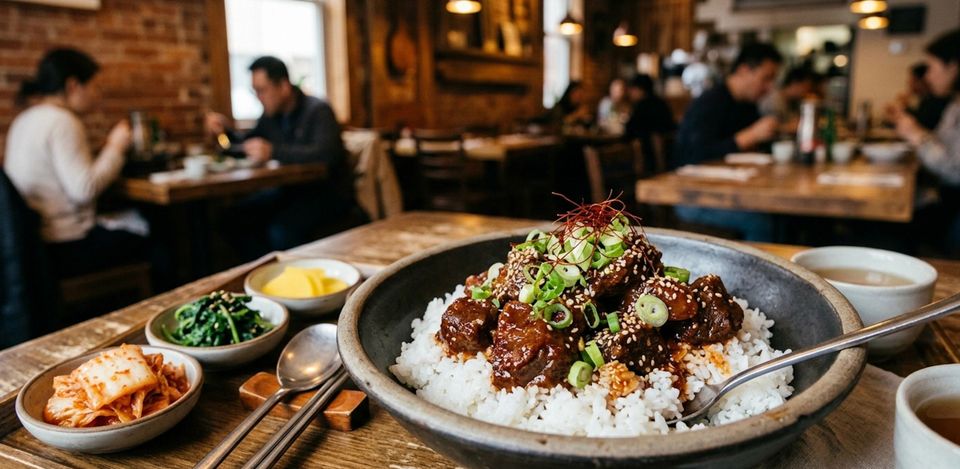
Korean-inspired braised beef with gochujang, soy, and sesame over steamed rice. A professional kitchen recipe with technique notes from 35+ years in hospitality.
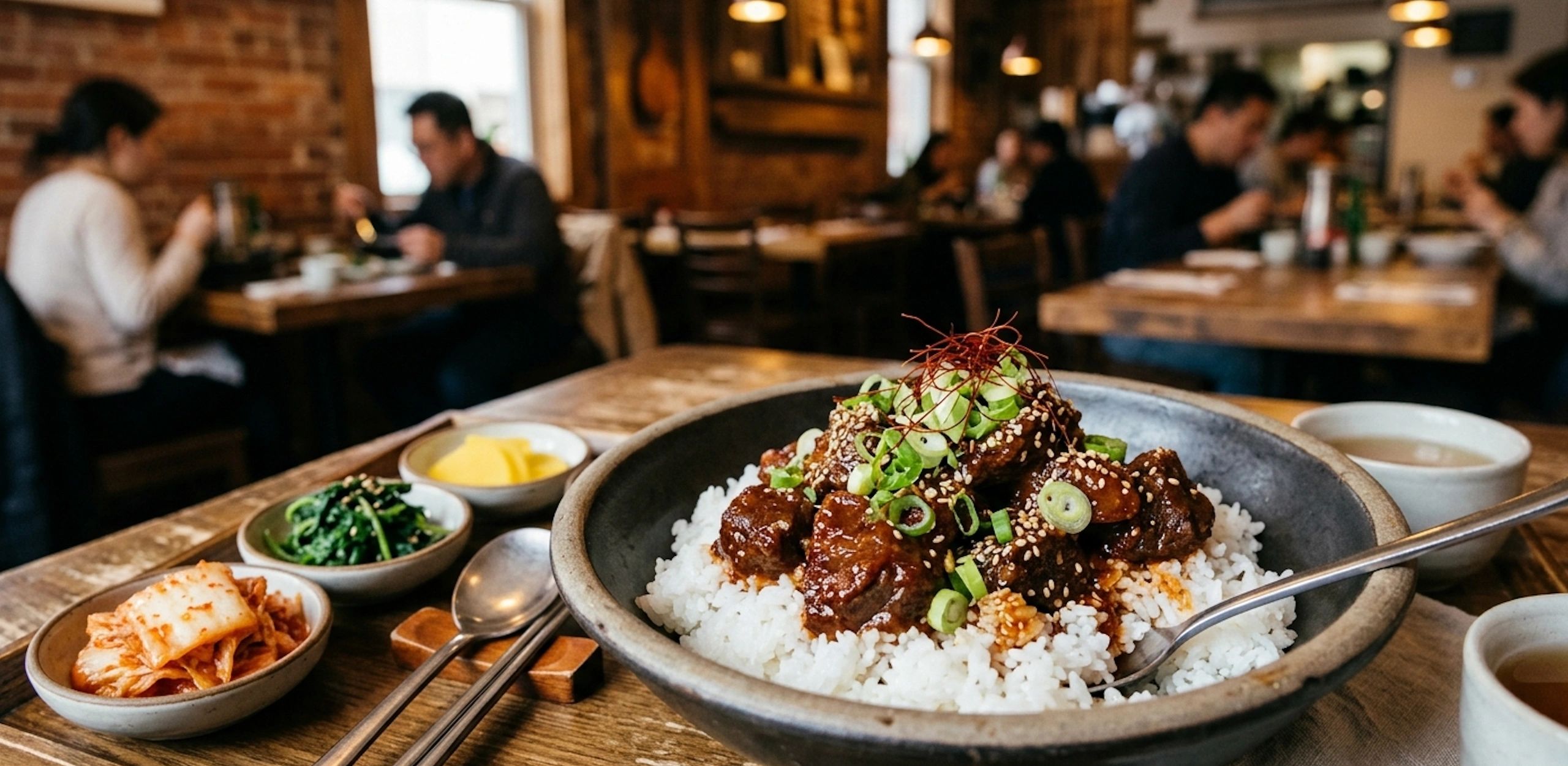
Korean food has been trending in the UK for a few years now, and I think it's past the point of being a trend. It's staying. The flavours make sense — sweet, salty, heat that builds rather than hits, and the kind of umami depth that keeps people coming back for a second bowl.
I've been playing around with a braised beef version that works just as well in a professional kitchen as it does at home. The technique is simple. The flavour is anything but. It's the kind of dish that earns its place on a menu because it holds well, scales without trouble, and costs sensibly when you buy the right cut.
Here's how I do it.
Serves: 4
Prep time: 20 minutes
Cook time: 2 hours 30 minutes (low and slow)
Best cut: beef short rib, bone-in, or thick-cut beef cheek
Ingredients
For the braise:
- 1.2kg beef short rib (bone-in) or beef cheek, trimmed
- 30ml neutral oil (rapeseed or sunflower)
- 80ml gochujang (Korean chilli paste — available in most Asian grocers and large supermarkets)
- 60ml soy sauce (light)
- 40ml rice wine vinegar
- 30ml sesame oil
- 30g fresh ginger, grated fine
- 6 cloves garlic, minced
- 2 tbsp soft brown sugar
- 400ml beef stock (good quality — this is the base of your sauce)
- 1 tsp ground black pepper
To serve:
- 400g jasmine or short-grain white rice, steamed
- 2 spring onions, sliced fine on the bias
- 1 tbsp sesame seeds, toasted
- ½ cucumber, sliced thin and dressed with a splash of rice wine vinegar and a pinch of salt
- Optional: a fried egg per portion (this is worth doing — the yolk runs into the sauce and it's excellent)
Method
1. Preheat your oven to 160°C fan (or set your combi to 160°C convection). Get your braising vessel — a heavy-bottomed casserole or a deep hotel pan with a tight lid.
2. Season your beef well with salt and pepper on all sides. Get your pan or casserole hot with the oil over a high heat. Sear the beef in batches — don't overcrowd the pan. You want deep colour, not grey steaming. This step builds the base of your flavour, so give it time. Roughly 3–4 minutes per side.
3. While the beef is searing, mix together the gochujang, soy sauce, rice wine vinegar, sesame oil, grated ginger, garlic, and brown sugar. Don't taste it yet — it'll be very intense at this point, which is exactly what you want. It mellows significantly in the braise.
4. Remove the seared beef to a tray. In the same pan, add a splash of the stock and scrape up all the caramelised bits from the base — that's flavour, don't leave it behind. Add your sauce mixture and the rest of the stock. Bring to a gentle simmer.
5. Return the beef to the pan, ensuring the liquid comes approximately halfway up the sides of the meat. Cover tightly (use foil under the lid if the fit isn't perfect) and transfer to the oven.
6. Braise for 2 hours to 2 hours 30 minutes. Check at 2 hours — you're looking for the meat to be yielding and starting to pull away from the bone or falling apart at the edges if using cheek. It should offer no resistance to a probe.
7. Remove the beef carefully and set aside. If the braising liquid is too loose, reduce it on the hob over a medium heat for 10–15 minutes until it coats the back of a spoon. Taste and adjust — a little more soy if it needs salt, a splash more vinegar if it needs lifting.
8. Pull the beef into generous chunks or, if using short rib, leave on the bone for presentation.
9. Serve over steamed rice. Spoon the sauce generously over the beef. Finish with spring onion, sesame seeds, and the quick-pickled cucumber on the side. Add the fried egg if you're serving it — it makes a good dish into a great one.
Chef's Notes
On the cut: Beef cheek is often cheaper than short rib and gives a silkier result due to the higher collagen content. Either works here. If you're running this in a professional kitchen, beef cheek is the smarter buy.
Make-ahead: This dish is better the next day. The beef can be braised, cooled in its liquid, and refrigerated overnight. Reheat gently covered in the oven at 150°C for 25 minutes. The fat will have set on top and can be skimmed off before reheating — the sauce will be richer and more developed.
Scaling for service: The sauce ratio scales directly. For larger batches, braise in a single layer — don't stack the meat or it steams rather than braises.
Gochujang heat level: Brands vary. Start with 60ml and taste your sauce before braising if you're unsure. It should be noticeably spiced but not punishing.
Enjoyed this? Subscribe above and I'll send you a new recipe every Friday — always practical, always from a professional kitchen perspective.
Recipe created by Chef René Chapman