Food Allergens
Food Allergens in Catering: Ensuring Safety and Compliance
In the fast-paced world of catering, delivering delicious food is only part of the job. Ensuring customer safety, particularly when it comes to food allergens, is paramount. With food allergies on the rise— affecting an estimated 1-2% of adults and up to 8% of children in the UK—caterers must be vigilant to prevent allergic reactions and comply with regulations. This blog post explores the key considerations for managing food allergens in catering, offering practical tips to keep your customers safe and your business compliant.
Understanding Food Allergens
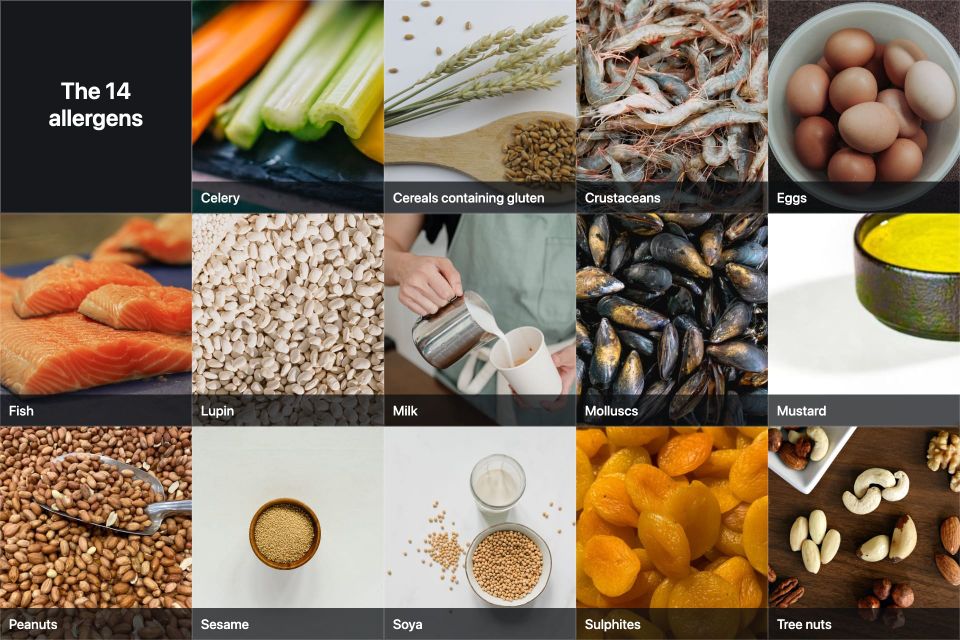
Under UK and EU law, caterers must be aware of 14 major allergens that must be declared if present in food. These include:
- Cereals containing gluten (e.g., wheat, barley, rye)
- Crustaceans (e.g., prawns, crab)
- Eggs
- Fish
- Peanuts
- Tree nuts (e.g., almonds, hazelnuts)
- Soybeans
- Milk / Dairy
- Celery
- Mustard
- Sesame seeds
- Sulphur dioxide and sulphites (at levels above 10mg/kg or 10mg/L)
- Lupin
- Molluscs (e.g., mussels, oysters)
Failure to identify and communicate these allergens can lead to severe allergic reactions, including anaphylaxis, and legal consequences for your business.
Legal Responsibilities
The Food Information Regulations 2014 and Natasha’s Law (introduced in 2021) mandate that caterers provide clear allergen information. For pre-packed food for direct sale (PPDS), such as sandwiches or cakes prepared on-site, full ingredient lists with allergens highlighted must be displayed on labels. For non-pre-packed food, such as buffet items or meals served at events, allergen information must be available in writing or verbally, with a sign prompting customers to ask staff.
Caterers must also ensure staff are trained to understand allergens and communicate risks accurately. The Food Standards Agency (FSA) offers free resources, including allergen training modules, to help businesses comply.
Best Practices for Allergen Management
1. Know Your Ingredients: Review all ingredients in your dishes, including sauces, garnishes, and pre-made products. Check with suppliers for allergen information and updates, as recipes can change.
2. Prevent Cross-Contamination: Use separate utensils, chopping boards, and storage areas for allergen-free dishes. For example, gluten-free items should be prepared away from flour-containing products. Clean equipment thoroughly to avoid traces of allergens.
3. Clear Communication: Display allergen information prominently on menus, labels, or signage. Train staff to handle allergen queries confidently and escalate complex questions to a manager or chef if needed.
4. Create Allergen-Free Options: Offer dishes that are free from common allergens, such as gluten-free or nut-free items. Clearly mark these on menus to build trust with customers.
5. Use Technology: Consider digital menu boards or apps that allow customers to filter dishes by allergen. This can streamline communication and reduce errors.
6. Regular Staff Training: Ensure all staff, including temporary or event-based workers, are trained in allergen awareness. Role-play scenarios to prepare them for customer questions.
Handling Allergen Requests at Events
Catering for events, such as weddings or corporate functions, presents unique challenges. Customers may have specific dietary needs, and buffets increase the risk of cross-contamination. To manage this:
- Pre-Event Planning: Collect allergen information from guests in advance through RSVP forms or direct communication with the event organiser.
- Label Clearly: Use clear signage for buffet items, listing allergens for each dish. Consider separate tables for allergen-free options.
- Monitor Service: Assign staff to oversee buffet areas to prevent cross-contamination from shared utensils or accidental mixing.
Building Customer Trust
Transparency is key to reassuring customers with allergies. A 2023 survey by Coeliac UK found that 70% of people with food allergies avoid eating out due to safety concerns. By demonstrating robust allergen management—through clear labelling, trained staff, and open communication—you can build confidence and loyalty among these customers.
Staying Compliant and Competitive
Allergen management isn’t just about compliance; it’s a chance to stand out in a competitive industry. By prioritising safety and inclusivity, you can attract a broader customer base, including those with dietary restrictions. Regularly review your processes, stay updated on FSA guidelines, and engage with customers to ensure their needs are met.
Conclusion
Managing food allergens in catering requires diligence, training, and clear communication. By understanding the 14 major allergens, adhering to legal requirements, and implementing robust safety measures, caterers can protect their customers and enhance their reputation. Whether you’re running a small café or catering a large event, prioritising allergen safety is not just a legal obligation—it’s a commitment to your customers’ well-being.
For more resources, visit the Food Standards Agency website at www.food.gov.uk or explore their free allergen training tools. Let’s make dining safe and enjoyable for everyone.