The Purchasing Trap: How UK Caterers Overspend on Food
By On The Pass Consultancy | Category: Kitchen Efficiency | Reading time: 6 min | Keywords: catering food purchasing UK, reduce food costs restaurant, supplier management catering, food specification catering
There are two types of catering operator when it comes to food purchasing. The first knows their spend by supplier, by category, and roughly by dish. They have product specifications. They read their invoices. When a price changes, they know about it before it hits their GP. The second type orders what they ordered last week, from the same suppliers they've always used, at whatever price comes through on the delivery note.
The gap between those two operators — in margin, in consistency, and in the control they have over their own business — is enormous. And in more than 35 years in the industry, including years spent on the wholesale buying and selling side of the trade, I've seen that gap cost operators tens of thousands of pounds a year they didn't know they were losing.
This article is about the purchasing side of your food cost — the decisions made before anything reaches your kitchen — and why it's the most consistently underestimated profit lever in UK catering.
Why Purchasing Is the Most Overlooked Cost Lever
Most catering operators spend the majority of their energy on the selling side of the business — menu pricing, covers, upselling, table turn. That's understandable. Revenue is visible. But for every £1 you reduce your food buying costs, you get £1 straight back into your gross profit. No additional covers required. No menu changes. No marketing spend.
A 5% reduction in food purchasing costs on a business spending £150,000 a year on ingredients is £7,500. That's the equivalent of a meaningful increase in turnover — without the corresponding increase in labour, energy, or overhead that extra sales would bring.
The reason purchasing gets overlooked is partly because it happens before service, when there are a hundred other things demanding attention, and partly because the losses aren't visible in any single transaction. Price creep happens slowly. Portion drift is invisible on an individual plate. A supplier substituting a lower-grade product at the same price doesn't announce itself. These things accumulate quietly, and by the time the GP figures tell the story, the cause is already weeks in the past.
The Four Purchasing Traps
In working with catering businesses across South Wales, Bristol, Gloucester, and the wider UK, the same four purchasing problems appear consistently, regardless of the size of the operation.
Buying on price alone. This is the most common trap, and the most damaging. Price is one variable. Weight, yield, trim, grade, and consistency are others — and they matter more to your actual dish cost than the unit price. A chicken breast bought on specification — known weight range, known trim, known supplier and grade — has a predictable yield and a predictable cost per portion. A chicken breast bought from whoever was cheapest this week introduces variability at every level. Your recipe costing becomes unreliable. Your plate presentation becomes inconsistent. And your kitchen team spends time managing around quality issues instead of cooking.
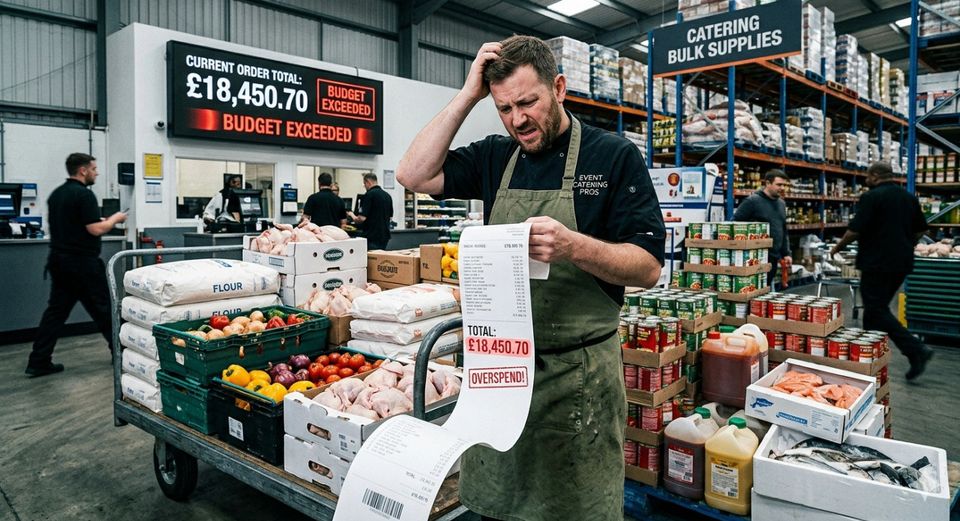
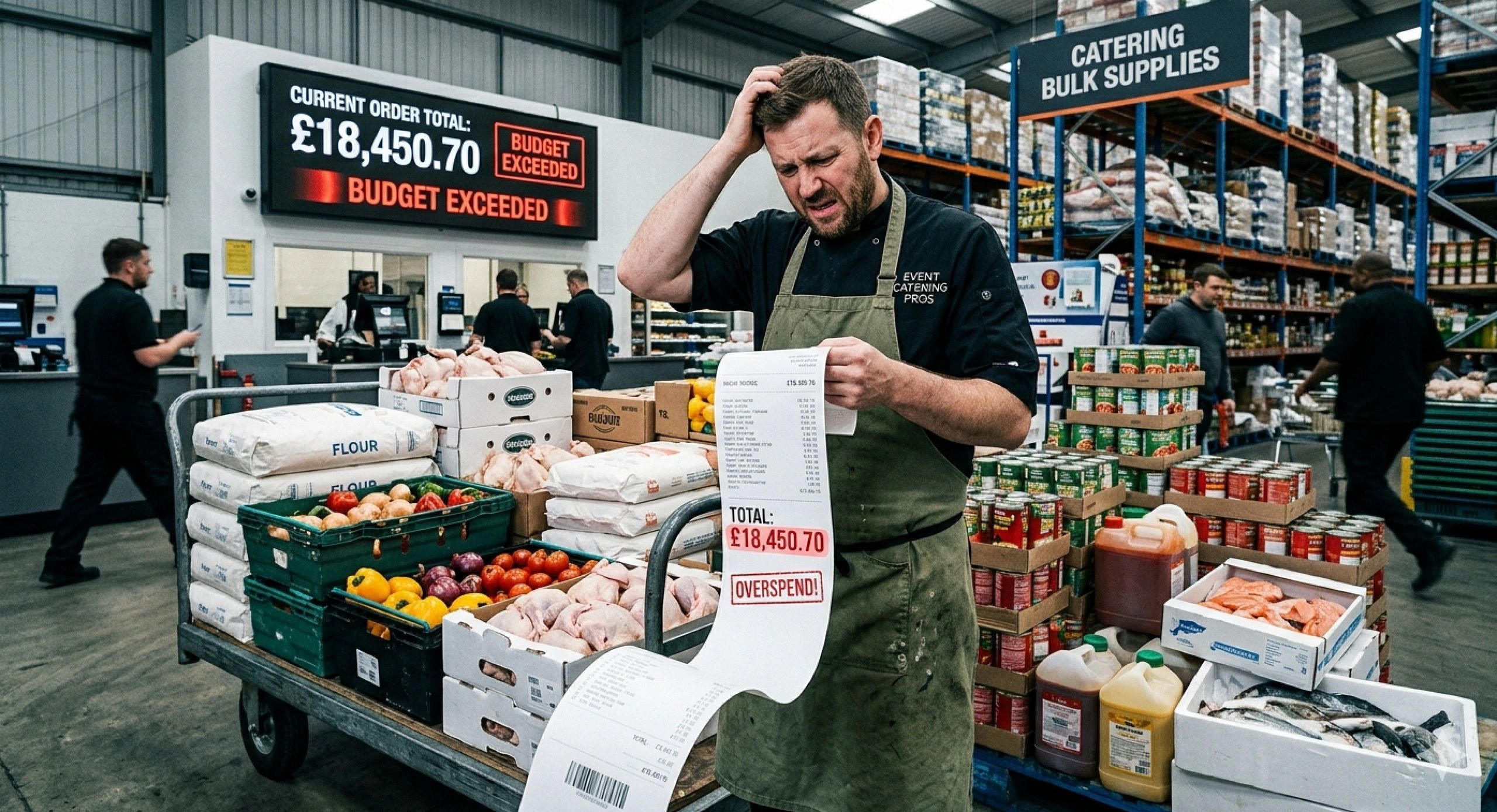
Too many suppliers. There's a common belief that using multiple suppliers keeps prices competitive. In practice, for most independent and small-group operations, spreading spend too thin eliminates the leverage you'd have with fewer, more consolidated relationships. If you're splitting £8,000 a month across nine suppliers, none of them has enough reason to look after you when shortages hit, prices are negotiated, or delivery priorities are set. Consolidating to three or four strong supplier relationships — where your spend actually matters to their business — typically delivers better pricing, better service, and far less administrative overhead.
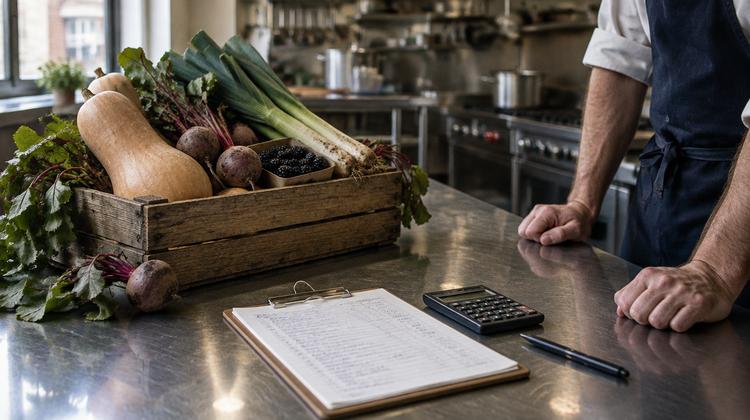
Not reading your invoices properly. This one surprises operators when I raise it, but invoice errors, price changes, and product substitutions are common, and they add up. A supplier raises the price of a product by 8p per kilo and doesn't flag it — the delivery note goes straight to accounts and nobody notices. A substitution goes through — a different grade of fish at the same price — and it's only when the kitchen team comments on the quality that anyone investigates. Building a habit of reviewing delivery notes against agreed pricing at the point of receipt is one of the simplest and most overlooked cost controls in catering.
Ordering by habit rather than by usage. Standing orders feel efficient. In reality, they're one of the most reliable routes to over-ordering, waste, and carrying stock you don't need. Ordering against actual usage data — what was sold, what was used, what's currently in stock — keeps your buying tight and your waste low. It also makes your cash flow more predictable, which matters particularly for smaller operations managing tight margins.
What a Product Specification Actually Is
A product specification sounds more complicated than it is. For most ingredients in a commercial kitchen, a useful specification covers four things: the product itself (including grade or quality standard where relevant), the unit size and weight, the acceptable weight tolerance, and the expected yield after preparation.
For a beef sirloin used in a restaurant main course, the specification might be: grass-fed British beef, 28-day minimum dry age, 250–260g trimmed weight per portion, less than 5% trim loss. For a block of cheddar used across multiple dishes, it might simply be: mature British cheddar, minimum 12 months, 5kg block, consistent supplier.
The purpose isn't bureaucracy. It's to give your purchasing team — or yourself — a clear standard to buy to, and to give your kitchen team and your supplier a shared reference point. When a delivery doesn't meet spec, you have grounds to query it or return it. When you're costing a recipe, you have a reliable cost per portion to work from. When you're comparing suppliers, you're comparing like for like rather than guessing whether the cheaper product will do the same job.
Specifications also make training easier. A new chef or kitchen assistant who knows exactly what a product should look like and weigh at the point of receipt is your first line of defence against cost creep entering through the back door.
Supplier Relationships — The Commercial Reality
Good supplier relationships are worth more than most operators realise, and they're built in the same way as any other business relationship — through reliability, clear communication, and mutual respect for how the other side operates.
From the supplier side of the trade, I know what a good customer looks like. They pay on time. They give clear, consistent specifications. They don't chase for quotes and then disappear. They communicate when their volumes change. And in return, a good supplier will go out of their way for those customers — prioritising them when stock is tight, flagging price changes before they hit the invoice, and working to resolve issues when something goes wrong.
The catering businesses that consistently get the best out of their suppliers are the ones that treat purchasing as a relationship rather than a transaction. That doesn't mean you don't negotiate — you absolutely should, and your consolidated spend gives you leverage to do so — but it means understanding that the supplier is also running a business, and that being easy to work with has a commercial value.
Reviewing your supplier relationships once or twice a year — not just on price, but on service level, consistency, and range — is a straightforward discipline that keeps your purchasing honest and ensures you're not staying with a supplier out of inertia rather than performance.
The Invoice Audit: What to Do This Week
If you want one immediate action from this article, it's this: pull your last four weeks of supplier invoices and check them against your agreed pricing.
Look for any lines where the unit price has changed without notification. Look for substitutions — products delivered that don't match what was ordered. Check that quantities on the invoice match what was actually received. And total your spend by supplier to get a clear picture of where your purchasing budget is actually going.
In our experience, this exercise surfaces at least one or two pricing discrepancies in any operation that hasn't done it recently. It also gives you a clear baseline for any supplier conversations you want to have about pricing or consolidation.
It takes two to three hours. The return is almost always worth it.
Building a Purchasing System That Holds
The operators who manage their food costs consistently haven't found clever suppliers or negotiated exceptional deals. They've built simple systems that keep purchasing disciplined week to week.
The fundamentals are: product specifications for your key ingredients, an order schedule tied to usage rather than habit, a brief delivery check process at point of receipt, and a monthly review of supplier invoices against agreed pricing. None of this requires expensive software. A spreadsheet and a consistent routine are sufficient for most operations.
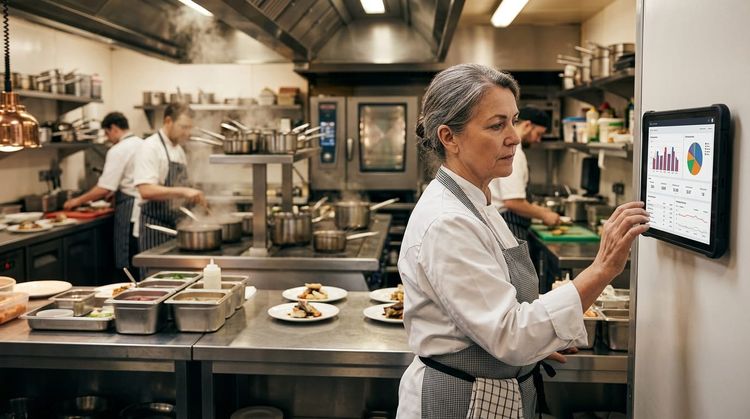
Where technology helps is in usage tracking — connecting your sales data to your ordering process so you're buying to actual demand rather than guesswork. Several UK catering management platforms do this well, and for higher-volume operations the time saving and waste reduction justify the investment. But the discipline of buying to spec, from the right suppliers, with proper invoice checking, is something any operation can implement today.
How We Approach Purchasing at On The Pass Consultancy
Our menu development service includes a full review of your purchasing structure — what you're buying, from whom, at what price, and against what specification. We map your ingredient spend against your recipe costings to identify where the gap between what you're paying and what you should be paying is widest, and we work with you to close it.
For clients going through a broader kitchen or operational review, purchasing is almost always one of the first areas where meaningful improvements can be made quickly. The changes required are operational rather than capital — no equipment to buy, no significant disruption to service — and the GP improvement flows through immediately once the new approach is in place.
If you haven't reviewed your purchasing in the last twelve months, there's almost certainly margin sitting in your supply chain that you're not capturing.
Is your purchasing working as hard as your kitchen does?
Get in touch for a free initial consultation — we'll look at your food buying honestly and show you exactly where the opportunities are.