How AI Is Cutting Food Waste in Commercial Kitchens
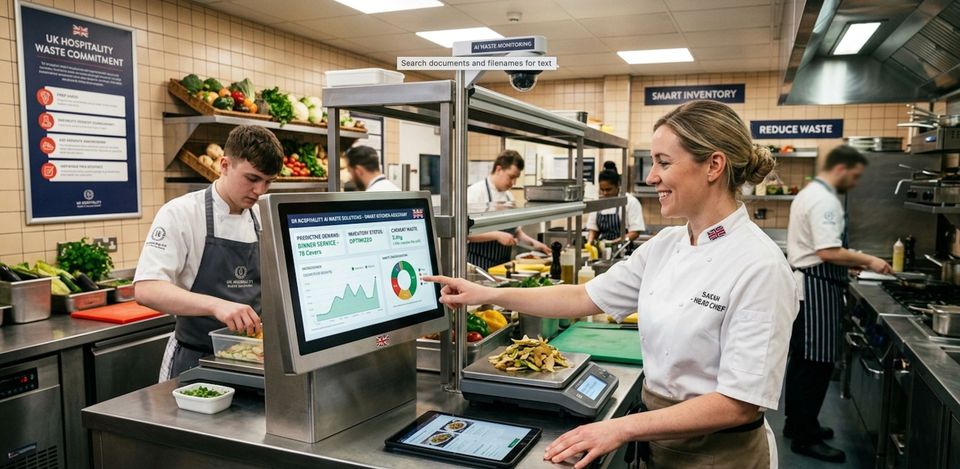
A London hotel cut food waste by 67% in six months using AI. Here's what that actually means for café owners and kitchen operators who don't have an enterprise budget.
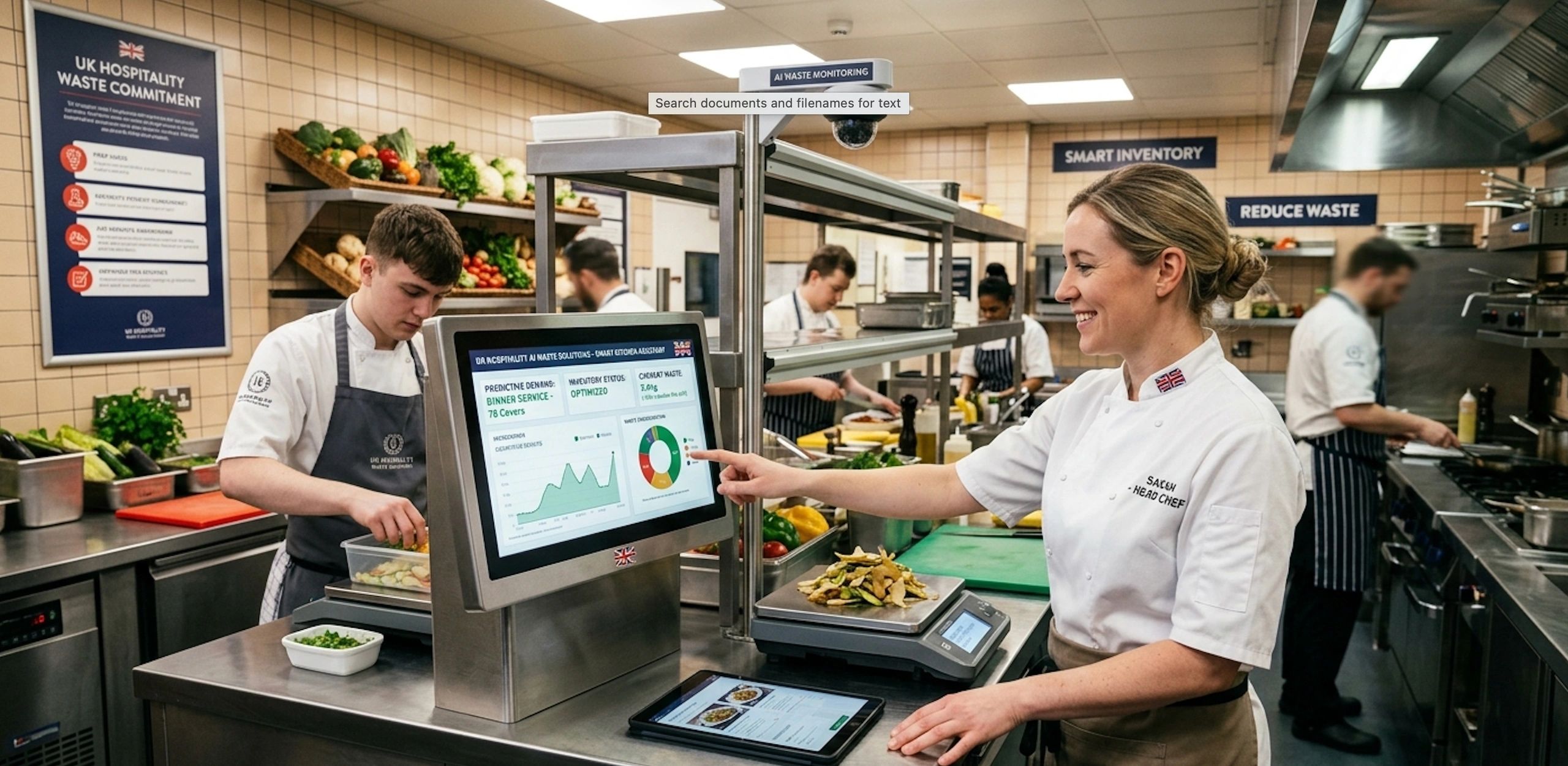
How AI Is Cutting Food Waste in Commercial Kitchens — And What Smaller Operators Can Learn From It
A hotel in London cut its food waste by 67% in six months. Same kitchen, same team, same menu. The difference was data.
Marriott's UK, Ireland, and Nordics division rolled out an AI-powered waste tracking system called Winnow across their portfolio. The results were striking: a 50% reduction in food waste across the group, with one London site saving 20,000 meals and 33 tonnes of CO₂e in just six months. Those aren't projections. They're recorded outcomes from an operation that was already, by any measure, running professionally.
If you own a café, manage a contract catering operation, or run a central production kitchen, your first instinct might be to file this under "interesting but irrelevant." Enterprise technology for enterprise hotels. Not for us.
I'd push back on that — not because I think you should go out and buy an AI system this week, but because what the Marriott results actually reveal is something every kitchen in the UK is dealing with, regardless of size: most of us don't know precisely where our food waste is going, and that gap is costing us money every single day.
The Problem Isn't Unique to Big Hotels
I've spent over 35 years in commercial kitchens, and food waste has always been one of those costs that gets accepted rather than addressed. It goes in the bin at the end of service. Nobody logs it properly. It becomes background noise in the P&L — "waste" as a category rather than "52 portions of chicken breast mis-portioned across the week" or "35 covers' worth of prep trim going out with the rubbish every Tuesday."
Large operators feel this at scale. But proportionally, smaller kitchens often feel it harder. A central production kitchen running at 60% efficiency on a tight margin doesn't have the buffer that a hotel group does. A café over-ordering fresh produce and throwing away three days' worth every Friday isn't just being wasteful — it's undermining the very margin that keeps the business running.
The Winnow system Marriott uses works by tracking what gets thrown away at every point in the kitchen — prep waste, spoilage, plate returns — and over time builds a picture of exactly when and why waste happens. It then uses that data to inform production decisions, purchasing quantities, and prep schedules.
That's the part worth paying attention to. Not the AI. The visibility.
What "Visibility" Actually Means in a Working Kitchen
The word data gets thrown around a lot in hospitality right now, usually in the context of technology that most operators can't afford and don't need. But the underlying principle — that you can only manage what you measure — is as old as the industry itself.
Think about what you actually know about your own waste right now.
You probably have a rough sense of which items go off most frequently. You might know that Mondays are your worst day for over-prep because the weekend always throws your forecasting off. You'll have a feel for which dishes generate the most kitchen waste. But do you have it written down, tracked consistently, and reviewed against your purchasing? For most kitchens operating under real pressure, the honest answer is no.
That's not a criticism. It's the reality of running a busy service. But it is fixable, and it doesn't require a £50,000 enterprise system to fix it.
The Version That Works for Smaller Kitchens
The Marriott approach is instructive precisely because of what it's doing underneath the technology: it's creating a closed loop between what's produced, what's sold, and what's discarded. You can build a version of that loop in your own operation starting this week, with nothing more than a consistent process and someone taking ownership of it.
Start at the end of service. Before the bins go out, have someone — a senior chef, a manager, whoever closes the kitchen — do a thirty-second visual log. What's going? How much? Where did it come from? Prep offcuts, overproduced dishes, spoiled deliveries, plate returns. It doesn't need to be precise to the gram. It needs to be consistent.
Do that for four weeks and you'll have something more valuable than any AI can give you in month one: a pattern. You'll see the days you over-prepare. You'll see the menu items that generate disproportionate waste. You'll start to see the link between your ordering habits and what ends up in the bin three days later.
From there, the conversation changes. Instead of waste being an accepted cost, it becomes a variable you're actively managing. You start cross-referencing it with your purchasing log. You adjust your prep quantities based on what the previous week actually looked like rather than what you hoped it would look like.
For a kitchen doing £5,000 a week in food purchasing, a 10% reduction in waste through better tracking and production discipline is worth £500 a week. That's £26,000 a year. No technology subscription required.
Where Technology Does Add Value
I'm not dismissing the role of proper kitchen management systems, and for operators at a certain scale, tools like Winnow or its competitors make genuine commercial sense. If you're running a multi-site operation, a large contract catering setup, or a central production kitchen supplying multiple outlets, the manual approach has real limits. The labour cost of tracking manually across volume starts to exceed the cost of automating it, and the data gets richer the more consistently it's gathered at scale.
If you're at that stage, or approaching it, it's absolutely worth a conversation. These systems have come down significantly in cost and complexity over the last few years. The integration with existing kitchen management software has improved. And as the Marriott figures show, the ROI when they're implemented properly is not marginal — it's transformational.
But the most important thing the AI is doing in those kitchens isn't some mysterious algorithmic calculation. It's making waste visible in real time. It's removing the friction from logging. It's turning something that used to require discipline and memory into something automatic. The intelligence in the system is ultimately a means to an end: better decisions, made faster, with less guesswork.
That end is achievable in every kitchen, at every scale.
The Mindset Shift That Matters Most
The hospitality industry has spent years treating food waste as a sustainability issue — something to care about for the planet, for the brand, for the right reasons. And those reasons are real. Saving 33 tonnes of CO₂e from a single hotel is not nothing.
But the more immediate argument for most operators is financial. Food cost is typically the largest controllable expense in any kitchen operation. Waste sits inside that cost and compounds it silently. The kitchens I've worked with that get this under control aren't doing anything radical — they're just being honest about what they don't currently know, and then doing something about it.
The technology Marriott is using is impressive. The principle it's built on is ancient. Know what's going out the door. Match it to what came in. Close the gap.
If you're running a commercial kitchen and food waste is something you know is costing you but haven't tackled in a structured way, that's exactly the kind of problem On The Pass Consultancy works through with clients. Whether it's a simple tracking process, a production review, or a broader look at your kitchen efficiency — it all starts with a conversation to get an overview of your Catering Operations.
Get in touch using the form below. The initial consultation is free and we cover Newport to Bristol, Swansea to Gloucester, and UK-wide for the right projects.