Hot Honey Harissa Chicken Recipe for Summer Menus
By On The Pass Consultancy | Category: Weekly Recipe | Serves: 20 | Prep: 40 minutes (plus overnight) | Cook: 25 minutes | Skill Level: Intermediate |
Why This Dish — and Why Now
Hot honey has been on the up for a while now, and it's earned its place rather than just riding a wave. Honey cut with chilli and a little vinegar does something a sweet glaze on its own never manages: it carries heat, sweetness and acid in one spoonful, and it sits beautifully against anything charred. Pair it with harissa and the Middle Eastern store cupboard — labneh, dukkah, cumin — and you've got a plate that feels current without being a gimmick.
What stops it being trend-chasing is what goes underneath. Early June is the best the British larder offers all year: Jersey Royals still in their short window, the first broad beans and peas worth podding, courgettes just coming good. So this is a hot honey harissa chicken recipe built on seasonal produce — the trend sits on top, the season does the work, and the whole thing lands as a proper summer main rather than a passing fad. I've built it around boneless thigh because it's the cut that survives a busy service. Here's how it goes on the plate, and how to run it at twenty covers without it falling apart on a Saturday night.
Serves 20 | Prep: 40 minutes (plus overnight) | Cook: 25 minutes
Ingredients
Chicken and marinade
| Ingredient | Quantity |
|---|---|
| Chicken thighs, boneless, skin-on | 40 (approx. 5.6 kg) |
| Rose harissa paste | 300 g |
| Olive oil | 150 ml |
| Garlic, crushed | 6 cloves |
| Ground cumin | 2 tbsp |
| Lemon zest | from 2 lemons |
| Sea salt | to season |
Hot honey
| Ingredient | Quantity |
|---|---|
| Runny honey | 400 g |
| Aleppo pepper (pul biber) or chilli flakes | 2–3 tbsp |
| Cider vinegar | 50 ml |
| Sea salt | 1 pinch |
Labneh (make the day before)
| Ingredient | Quantity |
|---|---|
| Full-fat Greek yoghurt | 2 kg |
| Sea salt | 20 g |
| Lemon juice | from 1 lemon |
Warm Jersey Royal, courgette, pea and broad bean salad
| Ingredient | Quantity |
|---|---|
| Jersey Royal new potatoes | 3 kg |
| Courgettes, sliced on the angle (approx. 1 cm) | 2 kg |
| Broad beans, podded weight | 1.5 kg (approx. 4 kg in pod) |
| Peas, podded weight (fresh or frozen) | 1 kg |
| Spring onions, sliced | 2 bunches |
| Mint, picked and torn | 1 large bunch |
| Flat-leaf parsley, picked | 1 large bunch |
| Lemon | 3 |
| Extra virgin olive oil | 150 ml |
| Sea salt and black pepper | to season |
Dukkah
| Ingredient | Quantity |
|---|---|
| Hazelnuts, toasted | 150 g |
| Pistachios | 100 g |
| Sesame seeds | 75 g |
| Coriander seeds | 30 g |
| Cumin seeds | 20 g |
| Sea salt and black pepper | to season |
Method
Stage 1 — The day before
1. Make the labneh. Mix the Greek yoghurt with the salt and lemon juice, spoon it into a muslin-lined colander or a clean cloth, tie it up and hang it over a bowl in the fridge overnight. This isn't optional timing — it needs twelve hours minimum for the whey to drain so you get a thick, spreadable, tangy base rather than a runny one. You'll lose roughly a third of the weight to whey, which is exactly the point.
2. Marinate the chicken. Blend the harissa, olive oil, garlic, cumin and lemon zest with a good pinch of salt, then coat the thighs and leave them covered in the fridge overnight. The marinade is oil-based, so time lets the spice carry into the meat, and the salt works as a light cure — you'll get juicier, better-seasoned chicken than a thirty-minute coating ever gives you.
3. Make the dukkah. Toast the hazelnuts, pistachios, sesame, coriander and cumin separately — they brown at different rates and burnt seeds will ruin the batch. Cool, then pulse to a coarse rubble, not a powder; you want texture and crunch on the plate. Season and store airtight.
4. Make the hot honey. Warm the honey gently with the Aleppo pepper, cider vinegar and a pinch of salt — barely a simmer, never a boil. Gentle heat infuses the chilli without caramelising the honey and turning it bitter. The vinegar is what stops it being cloying: it makes a glaze, not a syrup. Cool and keep at room temperature.
Stage 2 — Day of service, prep
5. Boil the Jersey Royals whole and skin-on in well-salted water until just tender, 12–15 minutes. Don't peel them, the skin is half the point of a Jersey Royal — drain, cool, then halve. Cooking them whole stops them water logging.
6. Double-pod the broad beans. Blanch the podded beans for 2 minutes in boiling water, refresh in ice water, then slip off the grey skins. Past the very start of the season those skins turn tough and bitter, and double-podding is what gives you that bright green sweetness worth charging for. Blanch the peas for a minute if fresh, refresh, and set aside with the beans.
7. Chargrill the courgettes. Oil and season the slices, then griddle in batches, 1–2 minutes a side, until well marked. The char drives off water and adds smoke — both of which stop the courgettes turning the finished salad to mush.
Stage 3 — To order / service
8. Colour the chicken skin-side down on a hot chargrill plate or in a heavy pan to render the fat and crisp the skin, 4–5 minutes. For volume, do this in batches, then lay the thighs skin-up on trays and finish in the combi at 180°C until the core hits 75°C. Render first, finish in the oven — that's how you get crisp skin and cooked-through meat at twenty covers without burning anything.
9. Glaze at the very last moment. Brush the hot honey over the cooked thighs and flash under the salamander for 30–60 seconds, or brush off the heat. Honey burns fast and turns acrid — glaze early and you'll be scraping trays. This is a to-order job, every time.
10. Dress the salad warm. Toss the potatoes, courgettes, beans, peas and spring onions with lemon juice, extra virgin olive oil, the torn herbs, salt and pepper. Warm, not hot — it should still have life in it.
Plating
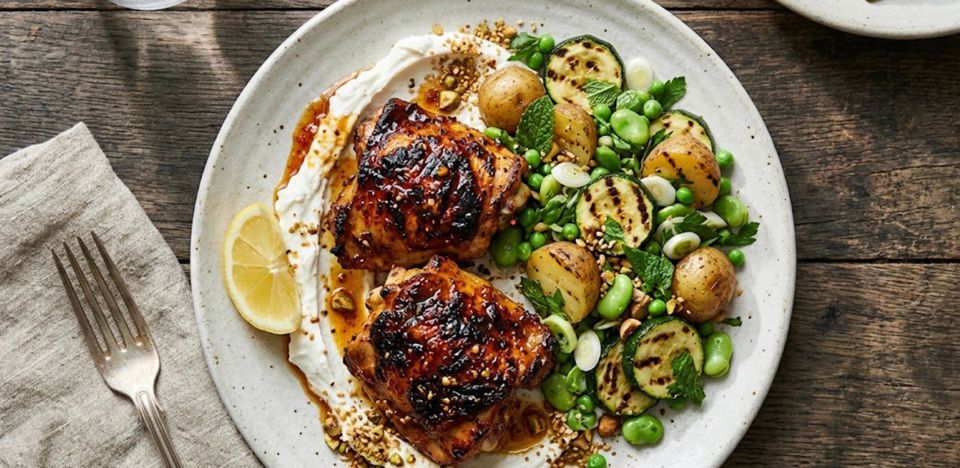
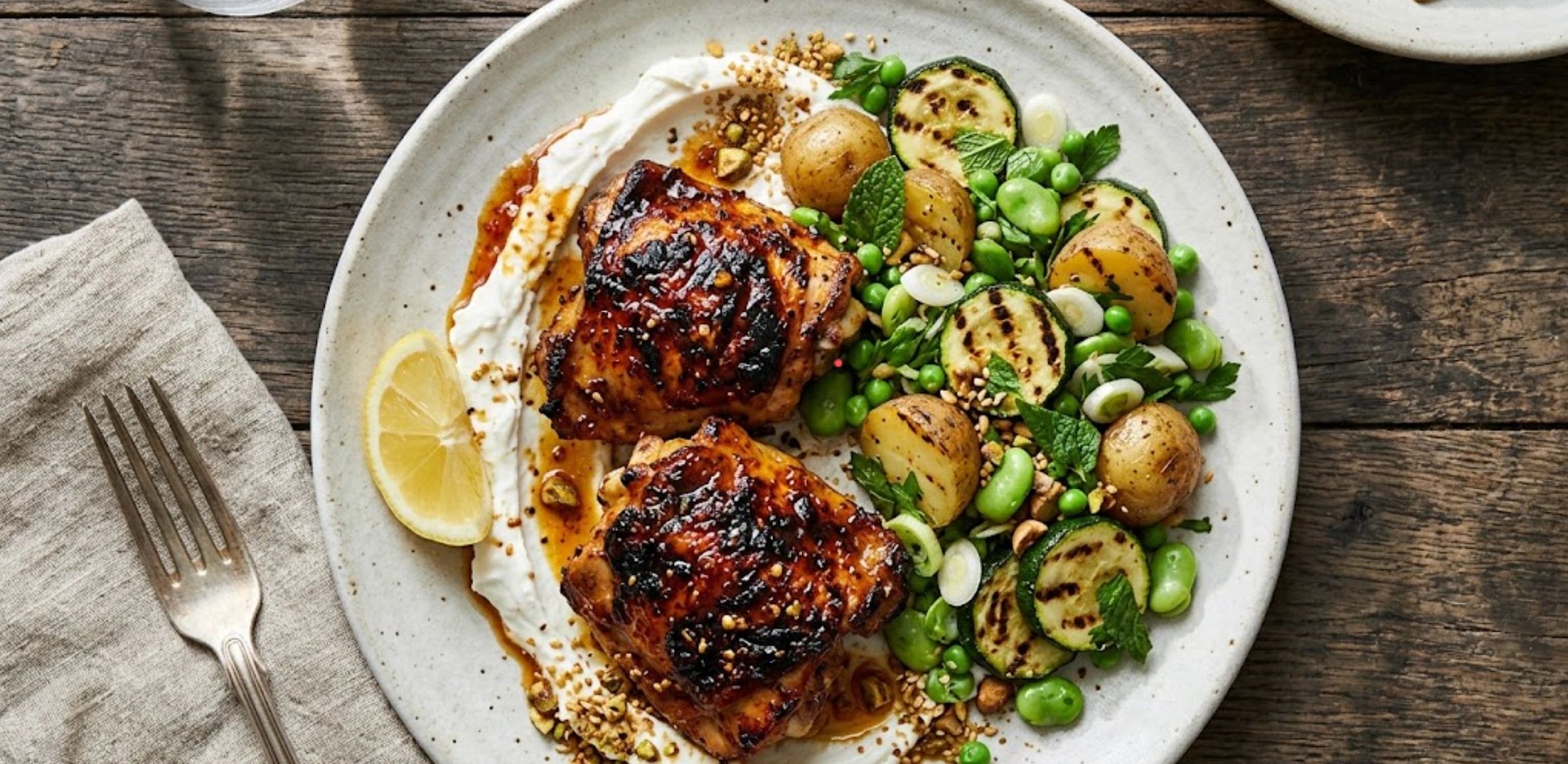
Smear a generous spoon of labneh across the base of a warm plate and drag it with the back of the spoon. Pile the dressed warm salad alongside, keeping it loose and high rather than flat. Lay two glazed thighs over the top, skin up, then spoon a little more hot honey over so it runs into the salad. Scatter dukkah across the lot, finish with torn mint and a wedge of lemon. The plate should read green and gold with the dark char of the chicken cutting through.
Chef's Notes
On the cut: Ask the butcher supplier for boneless, skin-on thighs and keep the skin — it's where the crisp and the flavour live. I'd take thigh over breast every time for a dish like this: it's cheaper, it's forgiving when service backs up, it stays moist held in the combi, and it stands up to bold harissa and honey in a way breast never will.
On the hot honey: The balance is everything. Without the vinegar and salt it's just sweet, and sweet alone is dull against chicken. Taste it and push the acid until it makes you sit up. Use rose harissa or Aleppo pepper if you can — they bring a rounder, fruitier heat than straight chilli flakes.
On running at volume: Front-load nearly all of it. Labneh, dukkah and hot honey the day before; marinade overnight; potatoes boiled, beans and peas blanched, courgettes grilled in the morning. By service the only live jobs are colouring the thighs, finishing them in the combi, glazing to order and dressing the salad warm. Built right, twenty covers is calm.
On the GP: This one's kind to you. Thigh is among the cheapest proteins on the board, yoghurt and seasonal veg cost little, and a batch of dukkah spreads across dozens of plates for pennies a portion. Plated and priced as a summer main, it sits comfortably in the gross-profit territory you'd want from a headline dish — without tasting like you've cut a corner anywhere.
Make-ahead summary:
- Labneh → the day before (needs overnight to hang)
- Chicken marinade → the day before (overnight)
- Dukkah → the day before, store airtight
- Hot honey → the day before, keep at room temperature
- Potatoes, beans, peas, courgettes → morning of service
- Colour, finish, glaze and dress → to order
Enjoyed this recipe? Subscribe below and get a new professional recipe delivered every Friday — built for commercial kitchens, written from more than 35 years on the pass.
More Summer Recipes can be found here
Not sure how to cost for Maximum GP, please see our GP Blog article here