Induction Cooking for Commercial Kitchens
Your gas range heats the room more than the pan. Here's what 35+ years in hospitality taught me about cutting kitchen energy costs with induction.
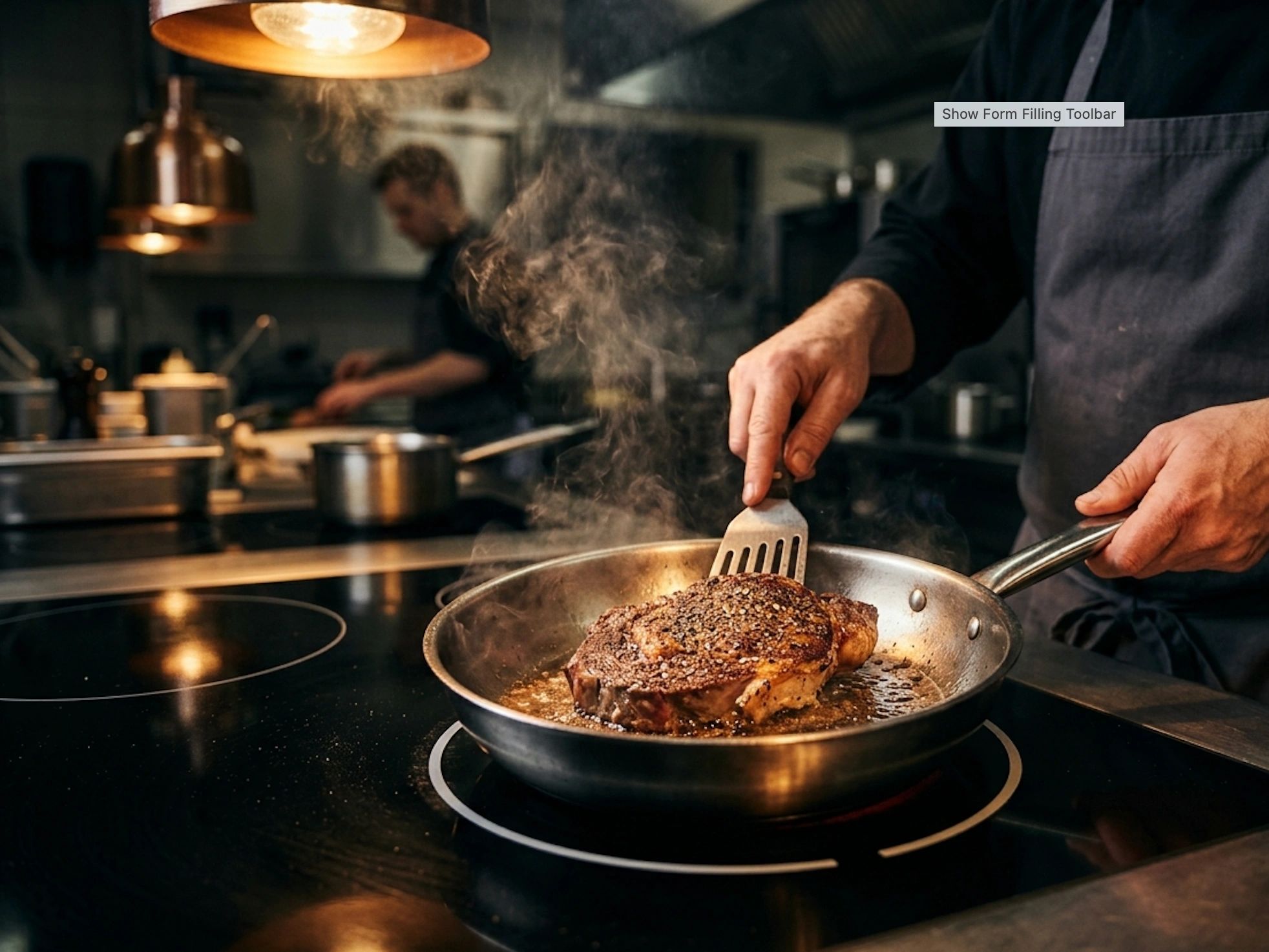
Stand next to a gas range on a busy service and put your hand near the side of it. Feel that wall of heat coming off? That's your money, leaving the building. The burner is throwing energy at the air, at the back of the pan, at the bloke working the section next to you — everywhere except into the food. After 35+ years in hospitality, that's the thing I wish someone had shown me earlier. We get so used to the roar and the heat of a gas line that we stop seeing it for what it is: waste, running all day, every day, dressed up as the way things have always been done.
I want to talk about that waste honestly, because it matters more now than it has at any point in my career. And I want to talk about induction — not as a shiny gadget, but as a tool that does a specific job: it puts the heat where you want it and stops paying for the heat you don't.
Why this is the year to look at your energy bill
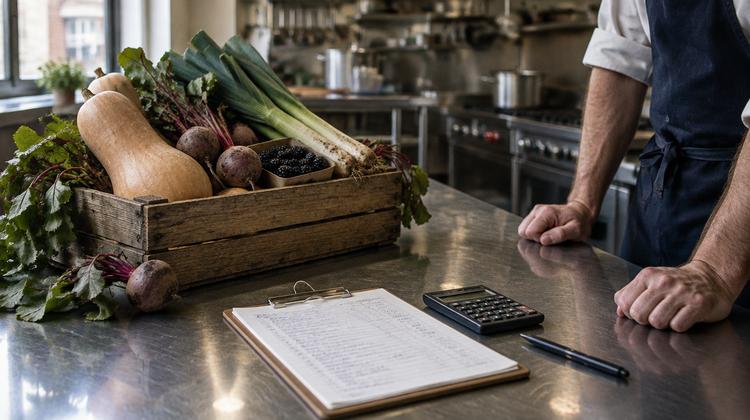
You don't need me to tell you the numbers are moving in the wrong direction. Wages went up again in April. Business rates have been revalued. Suppliers have crept their prices up quietly across the board, and energy itself is nobody's idea of cheap. Every line on the P&L is heavier than it was, and for a lot of operators the maths has got genuinely tight.
Here's the uncomfortable part: most of those costs aren't yours to control. You can't set the minimum wage. You can't argue the council out of a revaluation. You can trim a supplier here and there, but there's a floor to how far that goes before quality suffers. So when an owner asks me where the room to breathe is, I point at the one big cost line that's usually been sitting there for years, completely unexamined — energy, and specifically the energy a kitchen throws away without anyone noticing.
That's not a small thing. A commercial kitchen is one of the most energy-intensive spaces in any building. Cooking, refrigeration, extraction, hot water — it all draws hard, and a lot of it draws whether or not you're actually producing food. The good news is that waste is the easiest cost to attack, because cutting it doesn't mean cutting corners. You're not serving smaller portions or dropping a section. You're just stopping the bleed.
What induction actually does differently
Let's be clear about the mechanism, because it's the whole reason this works. A gas burner makes heat and then hopes some of it ends up in your food. The flame heats the air, the air heats the pan, the pan heats the food, and an enormous amount escapes around the edges on the way. It's a leaky chain. Anyone who's worked a gas line in August knows exactly how leaky — you're cooking in a sauna by mid-service.
Induction skips most of that chain. It uses a magnetic field to make the pan itself the heat source. The energy goes straight into the steel, not into the air around it. The hob surface stays relatively cool, the kitchen stays cooler, and far less of what you're paying for disappears into the room.
The figures the industry quotes are striking. Direct-pan heating is reported to cut electricity use by up to around 35% compared with traditional methods. Now, I'll always tell you to treat a number like that with a bit of caution — it depends on your kitchen, your supply, how you cook and what you're cooking, and you should check it against your own bills rather than take it as gospel. But the principle behind it is sound, and it matches what I've seen on every line I've ever stood at. Less wasted heat means a lower bill and a cooler, more comfortable place to work. That second part matters more than people give it credit for; a kitchen that isn't punishing to stand in is a kitchen that holds onto its staff.
Speed is part of the saving
People expect induction to be efficient. What surprises them is how fast it is. A good induction hob can take a pan from cold to a hard sear in well under 90 seconds — far quicker than waiting for a gas burner and a heavy pan to come up to temperature. In a busy kitchen, speed isn't just convenience. It's covers. It's tighter control over a sauce that wants to split. It's less time idling between orders with a burner roaring away under an empty pan.
That idling is its own hidden cost. On a gas line, burners tend to stay lit through the quiet stretches because nobody wants to relight mid-rush. You're paying to heat nothing. Many induction units add zone control, so only the rings actually carrying a pan draw power, and they respond instantly when you need them — no warm-up, no wasted minutes. The reported saving from cutting that idle draw sits somewhere around 15 to 20 percent, which doesn't sound dramatic until you stack it up across every quiet hour of every service across a year.
Control is the part chefs fall in love with. Induction responds the moment you turn it down, the way an electric kettle stops the instant you flick the switch. No lag, no residual flame creeping your butter past the point of no return. For delicate work — tempering, holding a hollandaise, anything where a few degrees decides whether the dish goes out or in the bin — that responsiveness pays for itself in waste you never create.
The honest drawbacks
I'm not going to sell you induction as a miracle, because it isn't, and you'd see through it anyway. There are real trade-offs, and you should weigh them properly before you spend a penny.
First, the pans. Induction only works with ferrous, flat-bottomed, magnetic cookware. If your current set won't take a magnet on the base, it won't work on an induction hob, and re-kitting a busy kitchen with the right pans is a genuine upfront cost. It's not the end of the world, but it belongs in the budget from the start, not as a nasty surprise after install.
Second, the electrical supply. A serious bank of induction draws real current, and not every kitchen's wiring is ready for it out of the box. This is a conversation to have with an electrician and your equipment supplier before you buy — what your incoming supply can handle, whether you need work doing, and what that work costs. I've seen operators fall in love with a spec sheet and then get caught out by the install bill. Get the full picture first.
Third, induction simply isn't right for every job. Flambé work needs a flame. Traditional wok cooking over a live fire is its own craft, and induction woks, while they exist, aren't the same animal. Charring directly on the heat, certain bits of theatre at the pass — gas still earns its place there. That's why most kitchens I advise don't rip everything out overnight. They go to a mix: induction where it does the most good, gas where it genuinely needs to stay. You get the savings without losing the tools you actually rely on.
It's part of a bigger shift
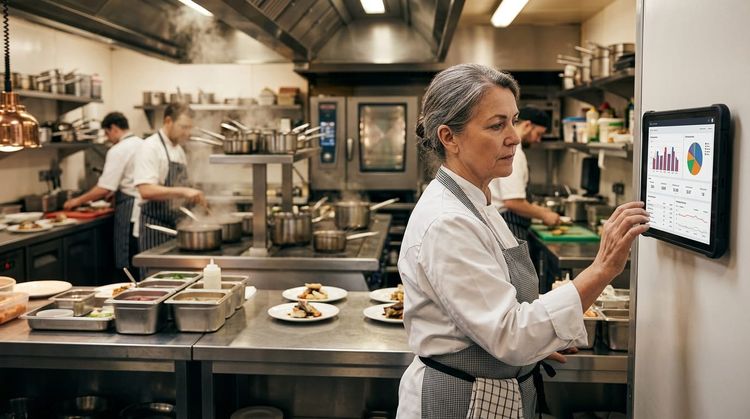
Induction isn't happening in isolation. A lot of the equipment coming through in 2026 is pulling in the same direction — toward putting energy where it's wanted and clawing back what used to be lost. Refrigeration is moving onto cleaner, more efficient refrigerants. Combi ovens are getting smarter about recovering and reusing their own waste heat. Sensors and monitoring kit can now tell you, appliance by appliance, what each piece is actually costing you to run, so you're making decisions on numbers instead of hunches.
That last point is the one I'd push hardest. For years, kitchen energy has been a single line on a bill — a lump sum you grumble at and pay. The tools now exist to break that lump open and see where it's really going. Once you can see it, you can do something about it.
Where to start
You don't need to commit to a full refit to begin. Start by watching your own line during a service, the way you'd watch a new commis. Notice what's running when nothing's actually cooking. Notice how much heat is going into the room rather than the food. Notice where you're waiting on equipment and where you're paying for idle. That's your shortlist, and it costs nothing to make.
The kit can fix the problems — induction included — but only once you know where the leak is. Money spent before you understand your own waste is money spent badly. Money spent after is an investment you can actually measure.
If you'd like a straight, no-pressure look at where your kitchen is wasting energy and what's genuinely worth changing, that's exactly what the free initial consultation at On The Pass Consultancy is for. Get in touch and we'll take a proper look at your line together — what to keep, what to change, and what it'll actually save you.
Let's start a free conversation about savings that can be made in your kitchen