Why Your FOH and BOH Teams Are Working Against Each Other
On The Pass Consultancy
ARTICLE 4 OF 6 · STAFF TRAINING SERIES
PEOPLE · FOH & BOH · STAFF TRAINING
Why Your Front-of-House and Back-of-House Teams Are Working Against Each Other (And How to Fix It)
"The most profitable catering operations aren't the ones with the best chefs — they're the ones where every person, from the pass to the table, is aligned. Here's how to get there."
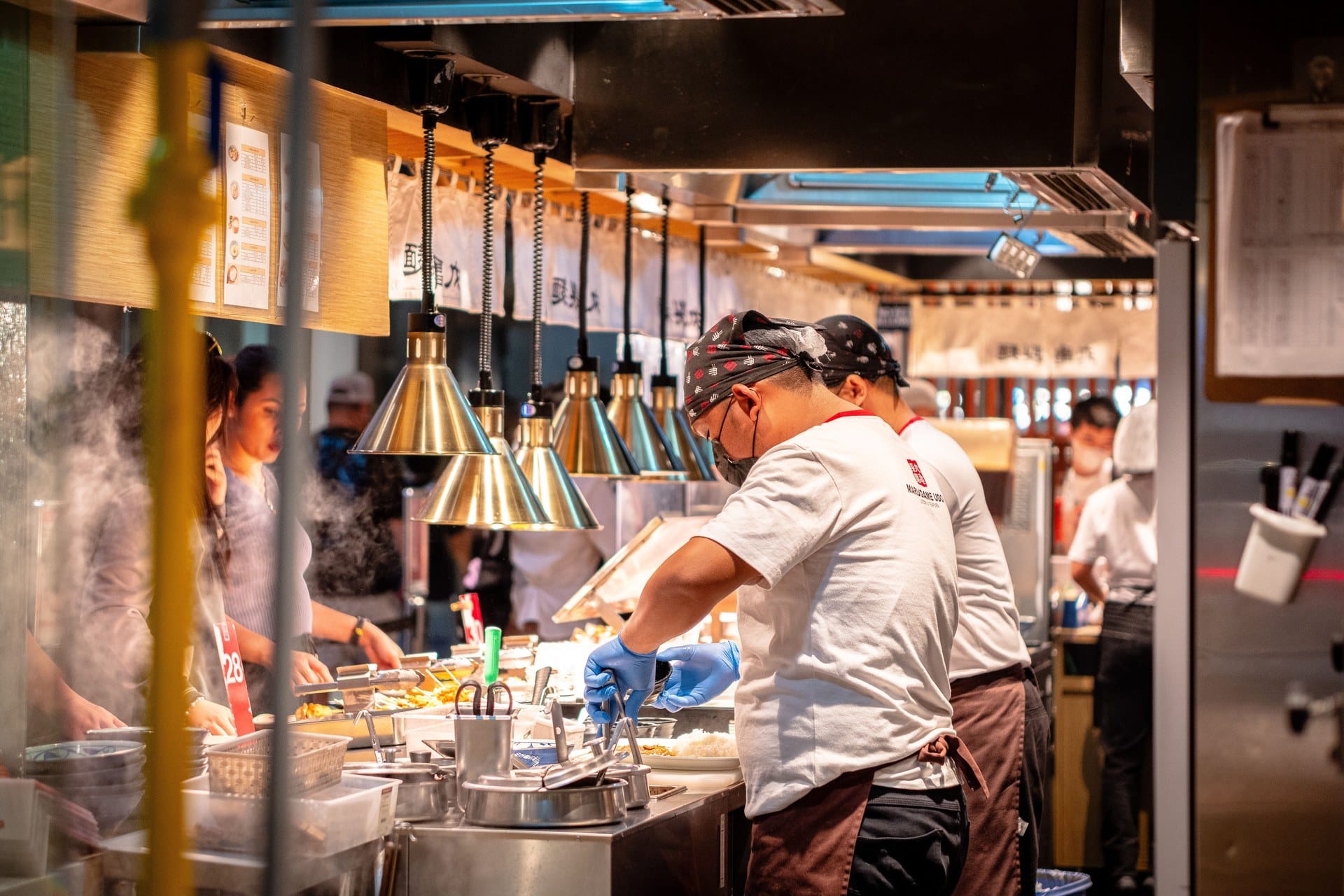
Walk into almost any busy kitchen service and you'll feel it — the silent tension between the pass and the dining room. A table waiting on a dish that's been sitting under the heat lamp for four minutes. Front-of-house staff who haven't been briefed on tonight's specials. A head chef firing courses before the previous one has been cleared. This isn't bad luck. It's a structural problem, and it's costing you money every single service.
In over three decades working with catering operations across Bristol, Cardiff, and the wider South West, I've rarely walked into a struggling business and found the problem to be purely about food quality. More often, the issue sits exactly here — in the gap between two teams who should be one.
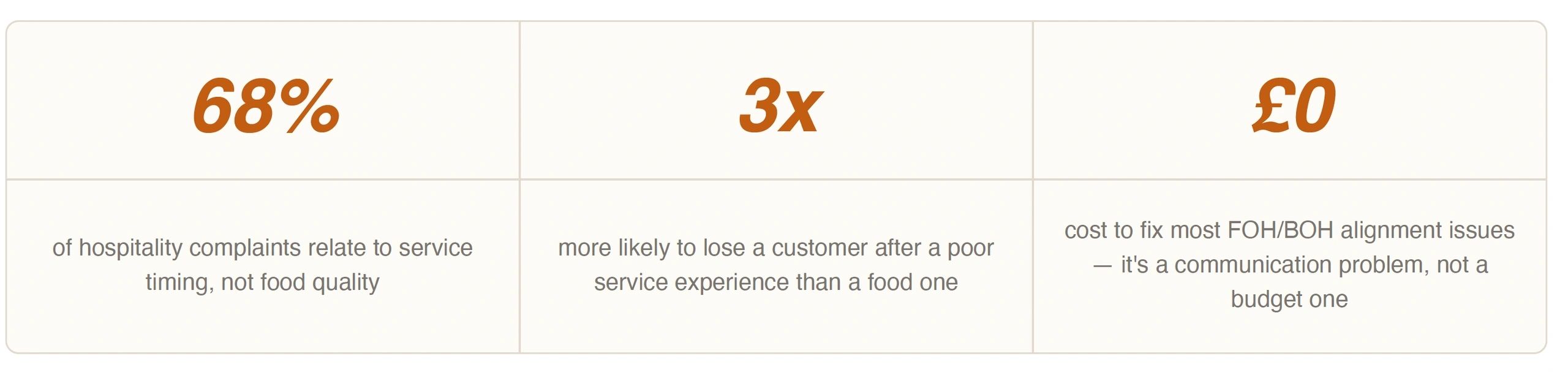
of hospitality complaints relate to service timing, not food quality
more likely to lose a customer after a poor service experience than a food one
cost to fix most FOH/BOH alignment issues — it's a communication problem, not a budget one
The Root Cause: Two Teams, Two Cultures
Front-of-house and back-of-house staff often come from different professional cultures. Kitchen teams operate in a high-pressure, hierarchical environment built around execution speed and consistency. FOH teams are customer-focused, emotionally intelligent, and constantly adapting to the room. Neither approach is wrong — but when they're not intentionally bridged, they become opposing forces.
The kitchen views the dining room as chaotic and demanding. The dining room views the kitchen as closed-off and unapproachable. Managers often sit between them, translating in both directions, absorbing friction that should never exist in the first place.
Real scenario
A Cardiff restaurant owner came to us after several weeks of declining Tripadvisor scores. The food hadn't changed — in fact, the chef had just introduced a new menu. The problem? FOH staff hadn't been briefed on the dishes, couldn't answer guest questions, and were seating tables faster than the kitchen could safely turn covers. A simple daily briefing and a revised covers pacing system resolved it within a fortnight.
Five Signs the Gap Is Affecting Your Business
Before you can fix the problem, you need to recognise it. Here are the most common symptoms we see:
→ Inconsistent pacing: Starters are cleared before mains are ready, or courses arrive too quickly for the guest experience to breathe.
→ Uninformed FOH: Waiting staff can't describe dishes with confidence, answer allergen questions quickly, or upsell wine pairings because no one has told them what's on the menu tonight.
→ No shared language at the pass: Miscommunication between kitchen and floor about table numbers, course status, or special requests — usually handled through shouting or guessing.
→ Post-service blame culture: When something goes wrong, teams point at each other rather than examining the system that let the failure happen.
→ High staff turnover in one or both teams: Unhappy teams leave. If your FOH retention is poor, look at whether the kitchen culture is part of the problem.
The Fix: It Starts with the Pre-Service Briefing
The single highest-impact change you can make — for free, starting today — is a structured 10-minute pre-service briefing that involves both teams together. Not separately, not via a handwritten sheet by the till. Together, in the same room, before every service.
This briefing should cover: today's menu highlights and how to describe them, any dishes 86'd or running low, known allergen considerations, VIP tables or special occasions, tonight's pacing expectations, and any operational changes the kitchen needs FOH to know about.
"The briefing isn't a management nicety. It's the moment you set a shared intention for the service ahead."
Operations that run this consistently report fewer mid-service miscommunications, more confident FOH staff, and better guest reviews around service pace and attentiveness. It also signals to your team that both parts of the operation matter equally.
Building the Structural Fixes
Beyond the briefing, sustainable FOH/BOH alignment requires a few structural changes that our training programmes help operators implement:
→ A shared covers plan: FOH and kitchen should agree before service on pacing targets — how many covers per hour, minimum turnaround time per table section.
→ Cross-training exposure: A waiting staff member who has spent even one session in the kitchen behaves differently on the floor. It builds empathy. The same works in reverse.
→ A single point of communication at the pass: Designate one person — often the head chef or kitchen manager — as the sole communication point during service. This removes the chaos of multiple voices.
→ Post-service debrief culture: Five minutes after close to note what went well and what to improve. No blame, just honest operational review.
Why This Matters More Than You Think
Guest experience is the cumulative product of everything that happens in your operation — the quality of your produce, the skill of your kitchen, the warmth of your welcome. But none of that lands properly if the timing is off and the teams aren't pulling in the same direction.
In a market where diners are increasingly discerning and your reputation can be shaped by a single Google review, operational alignment between FOH and BOH is no longer a nice-to-have. It's foundational.
The good news? This is one of the most fixable problems in hospitality. It doesn't require new equipment, a larger team, or a bigger budget. It requires better communication, intentional training, and a commitment from leadership to treat both teams as two halves of the same whole.
Takeaway for this week
Run a joint FOH/BOH briefing before your next service — even if it's just five minutes. Note what changes. Then make it a non-negotiable habit. If you want a structured training framework to build on that, we can help.
READY TO FIX THE GAP IN YOUR TEAM?
BOOK A FREE CALL
Free Initial Consultation
Tell us about your operation and the challenges you're facing. No obligation, no hard sell — just an honest conversation about where we can help.
→ Call: +44 (0) 7967 736372
STAFF TRAINING
Bespoke FOH & BOH Training
Our on-site training programmes are built around your specific team, your service style, and the real dynamics of your operation — not generic off-the-shelf content.
→ onthepassconsultancy.com/hospitality-training
WHATSAPP US
Get in Touch Directly
Prefer a quick conversation? Message us directly on WhatsApp. We respond fast and we keep things simple.
→ WhatsApp: +44 (0) 7967 736372
NEXT IN THE SERIES
Article 5 — How AI Is Quietly Changing the Way UK Catering Businesses Operate
→ Read at onthepassconsultancy.com/blog
On The Pass Consultancy · onthepassconsultancy.com · info@onthepassconsultancy.com · +44 (0) 7967 736372 · Newport, Wales