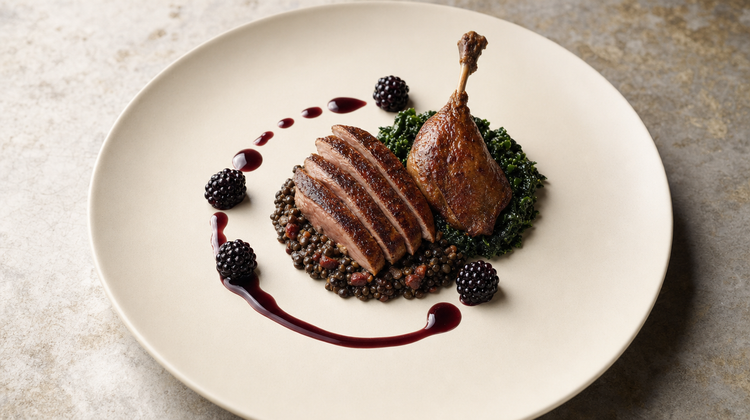
Miso & Honey Glazed Welsh Lamb Rump
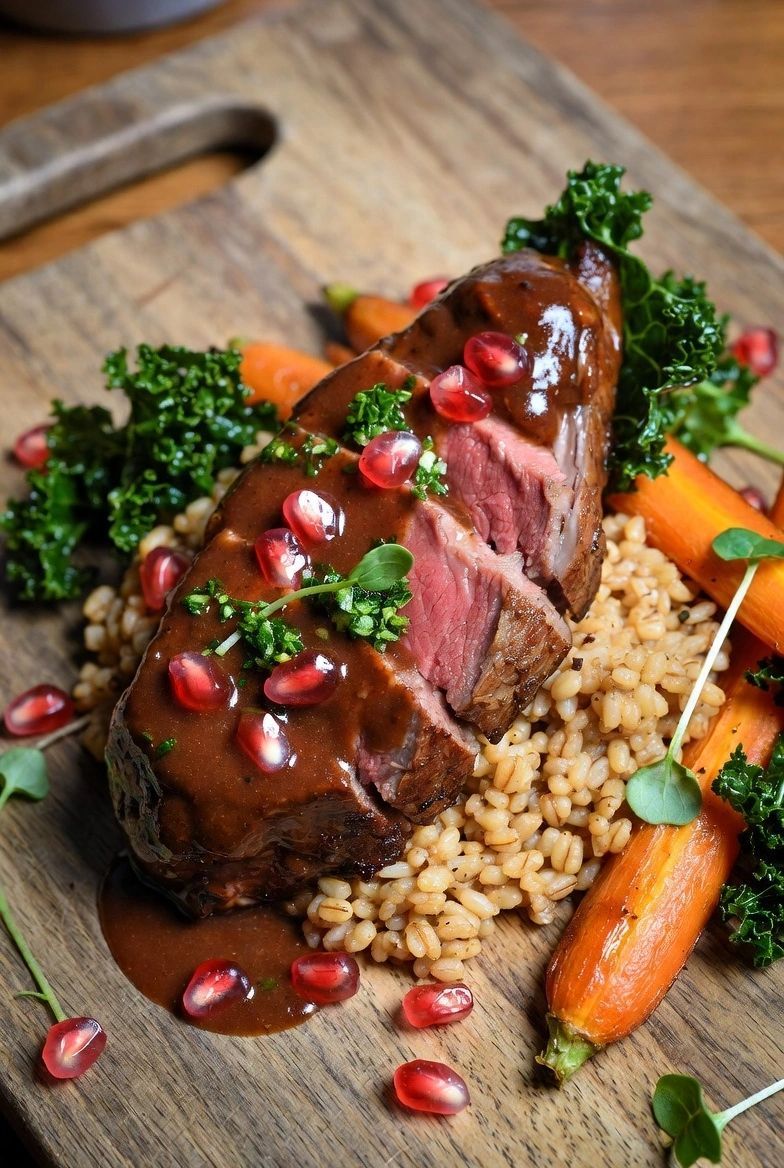
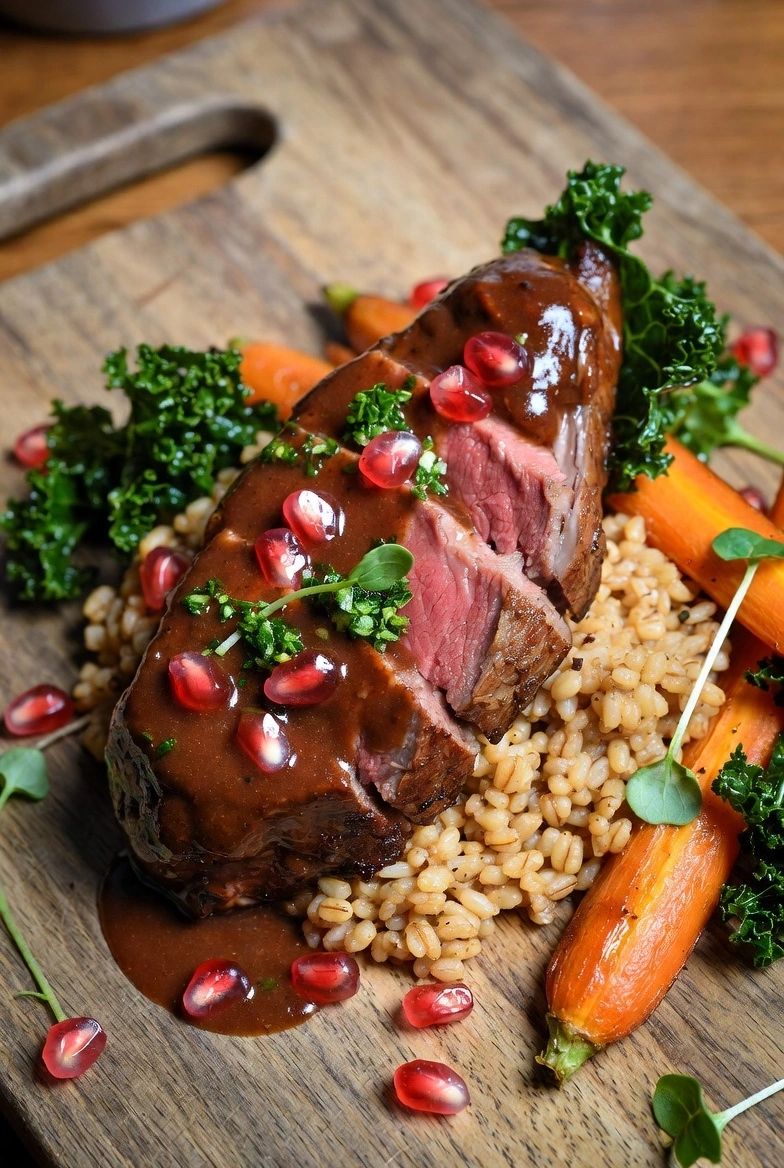
with Pearl Barley Risotto, Roasted Heritage Carrots, Crispy Kale & Pomegranate Gremolata
By On The Pass Consultancy | Category: Weekly Recipe | Serves: 4 | Prep: 25 min | Cook: 45 min | Skill Level: Intermediate | Keywords: Welsh lamb recipe, high protein dinner UK, pearl barley risotto, miso glazed lamb, healthy catering recipes UK, gut health recipes, seasonal UK recipes 2025
This is the kind of dish that earns its place on any menu in 2025. It leads with provenance — Welsh lamb is among the finest in the world, carrying a Protected Geographical Indication (PGI) status that tells a story your guests want to hear. It layers in a miso and honey glaze that brings deep umami, a touch of natural sweetness, and the fermented complexity that gut-health-conscious diners are actively seeking. And it grounds everything in a pearl barley risotto — a dish that rewards both the cook and the nutritionist, with fibre, protein, and a slow-release energy profile that no arborio rice can match.
As executive chef, this is the kind of recipe I return to when I want to demonstrate what modern British cooking actually looks like in practice. It's rooted in local ingredients, informed by global technique, built around nutrition without ever feeling worthy, and constructed so that every element on the plate is earning its place. Nothing is decorative. Everything is intentional.
This recipe also reflects the four biggest forces shaping UK menus right now: the growing consumer appetite for high-protein, nutrient-dense meals; the premiumisation of local and regional British ingredients; the integration of fermented and gut-health-positive elements; and the demand for dishes that photograph beautifully and tell a clear story. Tick all four and you don't just have a recipe — you have a menu anchor.
🏴 Why Welsh Lamb?
Welsh Lamb carries PGI (Protected Geographical Indication) status — one of the UK's most important food quality designations. Raised on the mineral-rich grasslands of Wales, Welsh Lamb is naturally higher in omega-3 fatty acids than grain-fed alternatives, with a flavour profile that's distinctly cleaner and more complex. Using it on your menu is both a provenance story and a genuine quality statement.
Why This Dish Is Built for the UK Market Right Now
The data behind this recipe is as deliberate as the cooking. Here's what's driving each element:
- Miso glaze: Fermented foods are one of the most significant dietary trends across all UK consumer age groups in 2025. Miso — a fermented soybean paste — provides probiotic benefit, glutamate-rich umami depth, and a natural sweetness when combined with honey that reduces the need for added sugar. It also forms a caramelised crust on protein under heat that most diners have never tasted but immediately love.
- Pearl barley: Ancient grains are moving from health food stores onto mainstream UK restaurant menus. Pearl barley has a GP-friendly food cost, holds exceptionally well in a catering environment (unlike arborio risotto), and delivers a nutritional profile that positions a dish as genuinely health-conscious without signposting it as a 'diet' option.
- Heritage carrots: Seasonal, colourful, visually striking, and increasingly available through UK farm direct suppliers. Heritage carrots are a simple way to demonstrate provenance, reduce food cost through seasonal buying, and add visual drama to a plate that guests will photograph and share.
- Pomegranate gremolata: The classic gremolata (lemon, garlic, parsley) gets a 2025 upgrade. Pomegranate adds antioxidant value, sharpness to cut through the richness of the lamb and barley, and a visual pop of deep jewel red that lifts the whole plate. It's a technique borrowed from Middle Eastern cooking — a cuisine that continues to grow rapidly in UK consumer affinity.
Ingredients — Serves 4
For the Lamb
| Quantity | Ingredient |
|---|---|
| 4 x 200g | Welsh lamb rump steaks (PGI certified where possible) |
| 3 tbsp | White miso paste |
| 2 tbsp | Raw Welsh honey (or good quality clear honey) |
| 1 tbsp | Rice wine vinegar |
| 1 tsp | Fresh ginger, finely grated |
| 1 clove | Garlic, minced |
| 1 tbsp | Rapeseed oil (cold-pressed, British if possible) |
| To season | Flaked sea salt and cracked black pepper |
For the Pearl Barley Risotto
| Quantity | Ingredient |
|---|---|
| 280g | Pearl barley (rinsed) |
| 1 litre | Hot lamb or vegetable stock (good quality) |
| 1 medium | White onion, finely diced |
| 2 cloves | Garlic, finely chopped |
| 150ml | Dry white wine |
| 60g | Parmesan or vegetarian hard cheese, finely grated |
| 30g | Unsalted butter |
| 2 tbsp | Cold-pressed rapeseed oil |
| 1 tbsp | White miso paste (ties the risotto to the lamb glaze) |
| Small handful | Fresh flat-leaf parsley, chopped |
| To season | Sea salt and white pepper |
For the Roasted Heritage Carrots
| Quantity | Ingredient |
|---|---|
| 600g | Heritage carrots (mixed colours — purple, yellow, orange) |
| 2 tbsp | Rapeseed oil |
| 1 tbsp | Raw honey |
| 1 tsp | Ground cumin |
| ½ tsp | Ground coriander |
| To season | Sea salt and black pepper |
For the Crispy Kale
| Quantity | Ingredient |
|---|---|
| 100g | Curly kale, tough stems removed, torn into pieces |
| 1 tbsp | Rapeseed oil |
| Pinch | Flaked sea salt |
For the Pomegranate Gremolata
| Quantity | Ingredient |
|---|---|
| 80g | Pomegranate seeds (fresh or from a pouch) |
| Zest of 1 | Unwaxed lemon |
| 1 clove | Garlic, finely minced |
| Large handful | Fresh flat-leaf parsley, finely chopped |
| Small handful | Fresh mint leaves, finely chopped |
| 1 tbsp | Extra virgin olive oil |
| Pinch | Dried chilli flakes (optional) |
| To season | Sea salt |
🛒 Sourcing Note for Catering Operations
All of these ingredients are available through UK wholesale suppliers. The heritage carrots, kale, and herbs can be sourced directly from regional farm suppliers — a provenance story worth putting on your menu. For catering operations scaling this dish, pearl barley holds well in a bain-marie (unlike arborio risotto), making it genuinely serviceable for volume catering without quality compromise.
Method
Step 1 — Marinate the Lamb (30 minutes minimum, up to 24 hours)
1. Whisk together the miso paste, honey, rice wine vinegar, grated ginger, and minced garlic in a small bowl until smooth and well combined.
2. Score the fat cap of each lamb rump lightly with a sharp knife — this allows the glaze to penetrate and the fat to render more evenly.
3. Coat the lamb rumps thoroughly in the miso-honey marinade. Cover and refrigerate for a minimum of 30 minutes. If time allows, marinate overnight — the fermented miso begins to tenderise the muscle fibres, and the flavour development is noticeably deeper.
4. Remove from the fridge 30 minutes before cooking to bring to room temperature. Pat dry lightly with kitchen paper before searing — excess moisture inhibits the Maillard reaction and the crust you're building.
Step 2 — Roast the Heritage Carrots (35–40 minutes)
5. Preheat the oven to 200°C / 180°C fan / Gas 6.
6. Scrub the heritage carrots (don't peel — the skin holds flavour and nutrients). Halve any larger ones lengthways so all pieces are roughly the same size for even roasting.
7. Toss in rapeseed oil, honey, ground cumin, ground coriander, salt, and pepper. Spread in a single layer on a large baking tray — do not overcrowd, or they'll steam rather than roast.
8. Roast for 35–40 minutes, turning once halfway through, until caramelised at the edges and tender throughout. The natural sugars in the honey and the carrot itself will char slightly — this is flavour, not a mistake.
Step 3 — Make the Pearl Barley Risotto (30–35 minutes)
9. Heat the rapeseed oil in a heavy-based pan over a medium heat. Add the diced onion and cook gently for 6–8 minutes until soft and translucent — do not rush this stage or allow colour to develop.
10. Add the garlic and cook for a further 2 minutes. Add the rinsed pearl barley and stir to coat in the oil and onion base for 1–2 minutes.
11. Pour in the white wine and stir continuously until absorbed.
12. Begin adding the hot stock one ladle at a time, stirring regularly and allowing each addition to absorb before adding the next. Pearl barley requires approximately 25–30 minutes and will absorb significantly more liquid than arborio — keep your stock hot and keep adding.
13. When the barley is tender with a slight bite and the consistency is creamy and flowing (not stiff), remove from the heat. Stir through the miso paste, cold butter, and grated parmesan. Taste and adjust seasoning.
14. Stir through the chopped parsley just before plating. Pearl barley risotto will thicken on standing — if it becomes too stiff, loosen with a splash of warm stock.
Step 4 — Cook the Lamb
15. Heat a heavy-based ovenproof frying pan (cast iron is ideal) over a high heat until very hot. Add the rapeseed oil.
16. Season the marinated lamb rumps with a little flaked salt and cracked black pepper. Place fat-side down in the hot pan. Sear for 3–4 minutes without moving, until the fat has rendered and a deep golden-brown crust has formed.
17. Turn and sear on all other sides for 1–2 minutes each. The miso-honey glaze will caramelise and darken — watch it carefully, as honey burns quickly. If it colours too fast, reduce the heat slightly.
18. Transfer the pan to the preheated oven (200°C / 180°C fan) and cook for a further 8–10 minutes for medium (internal temperature of 60–63°C) or 6 minutes for medium-rare (55–58°C). Use a probe thermometer for consistency, especially in a catering environment.
19. Rest the lamb on a warm plate, loosely covered with foil, for a minimum of 5 minutes before slicing. Resting is non-negotiable — it allows the muscle fibres to relax and the juices to redistribute.
Step 5 — Crispy Kale
20. Reduce the oven to 170°C / 150°C fan. Toss the kale pieces in rapeseed oil and spread on a baking tray in a single layer.
21. Roast for 10–12 minutes until completely crisp. Season immediately with flaked sea salt. Watch carefully — kale goes from crisp to burnt very quickly.
22. Use immediately or store in an airtight container for up to two hours. It loses its crispness in humid environments.
Step 6 — Pomegranate Gremolata
23. Combine the pomegranate seeds, lemon zest, minced garlic, parsley, mint, olive oil, and optional chilli flakes in a small bowl.
24. Season with sea salt and mix gently. The gremolata should be bright, sharp, and herby — it's doing the job of cutting through the richness of every other element on the plate.
25. Make this last — the herbs will discolour and the pomegranate will bleed if made too far in advance. Maximum 30 minutes before service.
Plating — How to Build the Plate
Good plating at this level is about architecture, not decoration. Every element should have a clear position and a visual logic.
26. Spoon the pearl barley risotto slightly off-centre to create movement. Use the back of a spoon to spread it slightly rather than leaving it as a mound — this gives the plate depth and stops the risotto dominating visually.
27. Arrange three to four pieces of roasted heritage carrot against and partially over the risotto. Use the colour variation — the purple, yellow, and orange — deliberately. This is a main visual interest point.
28. Slice the lamb rump at a 45-degree angle into three thick slices. Fan them slightly and place on top of the risotto and carrot, allowing the caramelised miso glaze to catch the light.
29. Add the crispy kale in small clusters — not a pile, not scattered randomly. Three to four placements around the plate.
30. Spoon the pomegranate gremolata over and around the lamb. The red jewels of pomegranate and the bright green herbs should scatter naturally.
31. Finish with a small drizzle of good quality extra virgin olive oil and a final pinch of flaked sea salt directly on the lamb. Serve immediately.
🍽️ Chef's Catering Service Note
For catering and events service: The pearl barley risotto holds beautifully in a bain-marie for up to 90 minutes with no quality loss — unlike arborio, which becomes stodgy quickly. The lamb can be seared and rested, then finished to temperature in a low oven (80°C) for up to 20 minutes during service. The gremolata should always be made fresh on the day.
Nutritional Profile — Per Serving
Calculated per portion (1 x 200g lamb rump + full portion of barley risotto, carrots, kale, and gremolata):
Nutrient
Per Serving
% Daily Reference*
Notes
Calories
~680 kcal
34%
Balanced main course
Protein
~52g
104%
Exceeds daily RDA in one dish
Carbohydrates
~58g
22%
Slow-release from pearl barley
of which sugars
~12g
13%
Naturally occurring, no added sugar
Total Fat
~22g
31%
Predominantly unsaturated (rapeseed, olive oil)
Saturated Fat
~7g
35%
From lamb and butter — within guidance
Dietary Fibre
~9g
36%
Pearl barley is exceptionally high in beta-glucan fibre
Iron
~5.2mg
37%
Welsh lamb is a premium source of haem iron
Zinc
~8.1mg
81%
Critical immune function mineral
Vitamin B12
~3.8mcg
152%
Lamb is one of the richest B12 sources
Omega-3
~0.8g
—
Higher than grain-fed equivalents due to Welsh grassland rearing
Potassium
~920mg
46%
From carrots, kale, and barley
Vitamin C
~38mg
48%
From kale, pomegranate, and parsley
Antioxidants
High
—
Pomegranate (ellagic acid), kale (quercetin), miso (isoflavones)
* Based on UK NHS recommended daily reference intakes for an average adult. Figures are indicative and will vary based on exact ingredient weights and sourcing.
💪 Why This Dish Sells on Nutrition
This dish is a genuinely excellent choice for health-conscious diners and operators wanting to label menu items for nutritional benefit. The protein content (52g per portion) significantly exceeds the daily recommended intake in a single main course — a genuine selling point for the growing high-protein consumer segment. The pearl barley provides beta-glucan soluble fibre, which has strong evidence for supporting gut health and cholesterol management. Miso and pomegranate add antioxidant and probiotic value respectively.
Executive Chef's Tips
- Buy the right lamb: Look for PGI Welsh Lamb if you can — your butcher or wholesale supplier will be able to source it. The quality difference is real. If Welsh Lamb isn't available, any British grass-fed rump is a sound alternative.
- Don't skip the marinade time: The miso needs time to do its work. Thirty minutes is the minimum; overnight is transformative. In a catering context, marinate the day before and the prep time on service day drops significantly.
- Temperature control on the lamb: Use a probe thermometer, not intuition. The difference between 58°C and 68°C is the difference between a dish guests rave about and one they tolerate. In a busy service environment, probing is the only reliable method.
- The gremolata is a brightener, not a garnish: It should be generous. A teaspoon of gremolata doesn't do the job. A proper tablespoon, spooned over and around the lamb, transforms every mouthful. Don't be shy with it.
- Menu labelling opportunity: Label this dish with its key nutritional credentials — high protein, gut health, locally sourced Welsh lamb, seasonal vegetables. In 2025, UK diners actively look for this information and reward menus that provide it clearly.
Menu Variations & Adaptations
- Vegetarian version: Replace the lamb with a miso and honey glazed cauliflower steak (halve a whole cauliflower lengthways, roast at 200°C for 25 minutes before glazing). Use vegetarian hard cheese in the risotto. The gremolata and carrots remain unchanged. This version hits the flexitarian trend directly and photographs equally well.
- Dietary adaptation: The dish is naturally gluten-free if you substitute tamari for the miso or use a certified GF miso paste. Confirm with your specific miso supplier. It's dairy-free if you omit the butter and parmesan from the risotto (add a splash of good olive oil instead for richness).
- Cost management: For higher-volume service, lamb shoulder (slow-braised) can replace the rump for a significantly lower food cost, while maintaining the flavour profile. Braise at 140°C for 3.5 hours in a miso-honey stock, then portion and finish under the grill to glaze.
- Seasonal swap: Replace heritage carrots with roasted butternut squash in autumn/winter, or asparagus and broad beans in spring. The recipe skeleton stays the same — seasonal vegetables rotate through it throughout the year.
👉 Coming Up Next Week
Next week's recipe is equally on-trend: we're making a High-Protein Miso Salmon Bowl with Edamame, Pickled Cucumber, Brown Rice & Toasted Sesame Dressing — a lunch-forward dish built for the premium bowl trend that's driving significant growth in UK workplace and café catering. Subscribe to the On The Pass newsletter so you don't miss it.
About On The Pass Consultancy
On The Pass Consultancy brings over 30 years of executive chef and catering industry experience to restaurants, cafés, contract caterers, and food businesses across Wales, Bristol, Gloucester, and the UK. Our recipe series is created by working professionals for working professionals — dishes that are commercially viable, nutritionally credible, and built for real kitchens. Visit: onthepassconsultancy.com