Pan-Seared Sea Trout with Wild Garlic Butter Sauce Recipe
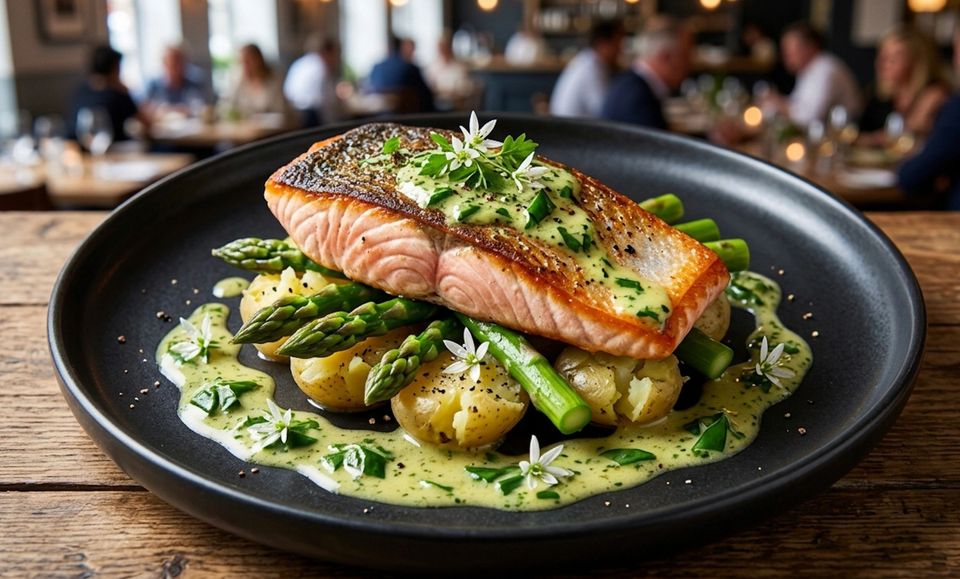
Served With Jersey Royals and Asparagus
By On The Pass Consultancy | Category: Weekly Recipe | Serves: 20 | Prep: 35 min | Cook: 40 min | Skill Level: Intermediate | Keywords: sea trout recipe UK catering, wild garlic butter sauce, Jersey Royal potato salad, spring menu ideas UK, seasonal fish recipes catering
April is the month that reminds you why British cooking can be genuinely world-class. Wild garlic is at absolute peak — if you're not using it right now, you're missing a three-week window that won't come back until next year. Jersey Royals are just arriving. Asparagus season is opening. And sea trout — the wild, ocean-running cousin of the brown trout — is coming into prime condition just as the spring runs begin.
This dish was built around that specific moment in the British food calendar. It's a plate that could sit on any serious restaurant menu, but it's structured for volume: every component holds, every element can be prepped ahead, and the sea trout itself takes under four minutes to cook per batch. On a 20-cover service, you can run this clean.
The wild garlic butter sauce is the anchor. It's a classic beurre blanc base — reduced shallots, wine and vinegar, cold butter mounted in — but with a generous handful of wild garlic leaves folded in at the end. The result is something that smells like spring, has the richness to stand up to the oily flesh of the trout, and provides a vivid green colour that photographs beautifully. For a seasonal menu, this is a dish that earns its place not just on flavour, but on the story it tells.
Why This Dish Is Right for April
Sea trout is one of the most underused premium fish on UK restaurant menus. It has the delicate, pink flesh of salmon, a cleaner flavour, and — when sourced from Scottish or Welsh rivers and coastal waters — genuine provenance that resonates with diners who care about where their food comes from. Its natural oil content makes it forgiving in service: it holds well rested, reheats cleanly, and sears to a perfect skin-on finish with minimal skill required from the section.
Wild garlic (Allium ursinum) peaks across the UK in April and early May. Unlike cultured garlic, it has a softer, greener flavour — grassy, aromatic, with genuine umami depth when wilted into a butter sauce. It's a menu story in itself. The leaves, flowers, and stems are all edible and all bring something different, which gives you flexible garnish options at no extra cost. Foraged British ingredients are exactly what the current UK market wants on a plate — and wild garlic delivers that positioning without inflating your food cost.
Jersey Royal potatoes carry PDO status (Protected Designation of Origin) — one of only a handful of UK vegetables to do so. Their reputation is earned: grown in the unique vraic-fertilised soils of Jersey, they have a flavour that no mainland potato matches. Serving them in a warm potato salad — dressed with rapeseed oil, capers and chives while still hot, so the dressing absorbs into the flesh — is a technique that turns a side dish into something guests remember.
British asparagus from Worcestershire, Wye Valley or Herefordshire is in early season in mid-April and is markedly better than imported asparagus in flavour, texture, and shelf life. Griddling rather than boiling concentrates the natural sweetness and adds char notes that lift the whole plate.
Why This Dish Works in a Commercial Kitchen
Mise en place is staged. The Jersey Royal potato salad can be dressed and held for up to two hours at room temperature without quality loss. The wild garlic butter sauce can be made in advance and reheated gently in a bain-marie. Asparagus is griddled to order in batches of ten, taking under two minutes per batch.
The protein section is fast. A skin-on sea trout fillet at 180g takes approximately three to four minutes in a hot pan. With two pans running, twenty covers is a fifteen-minute operation during service.
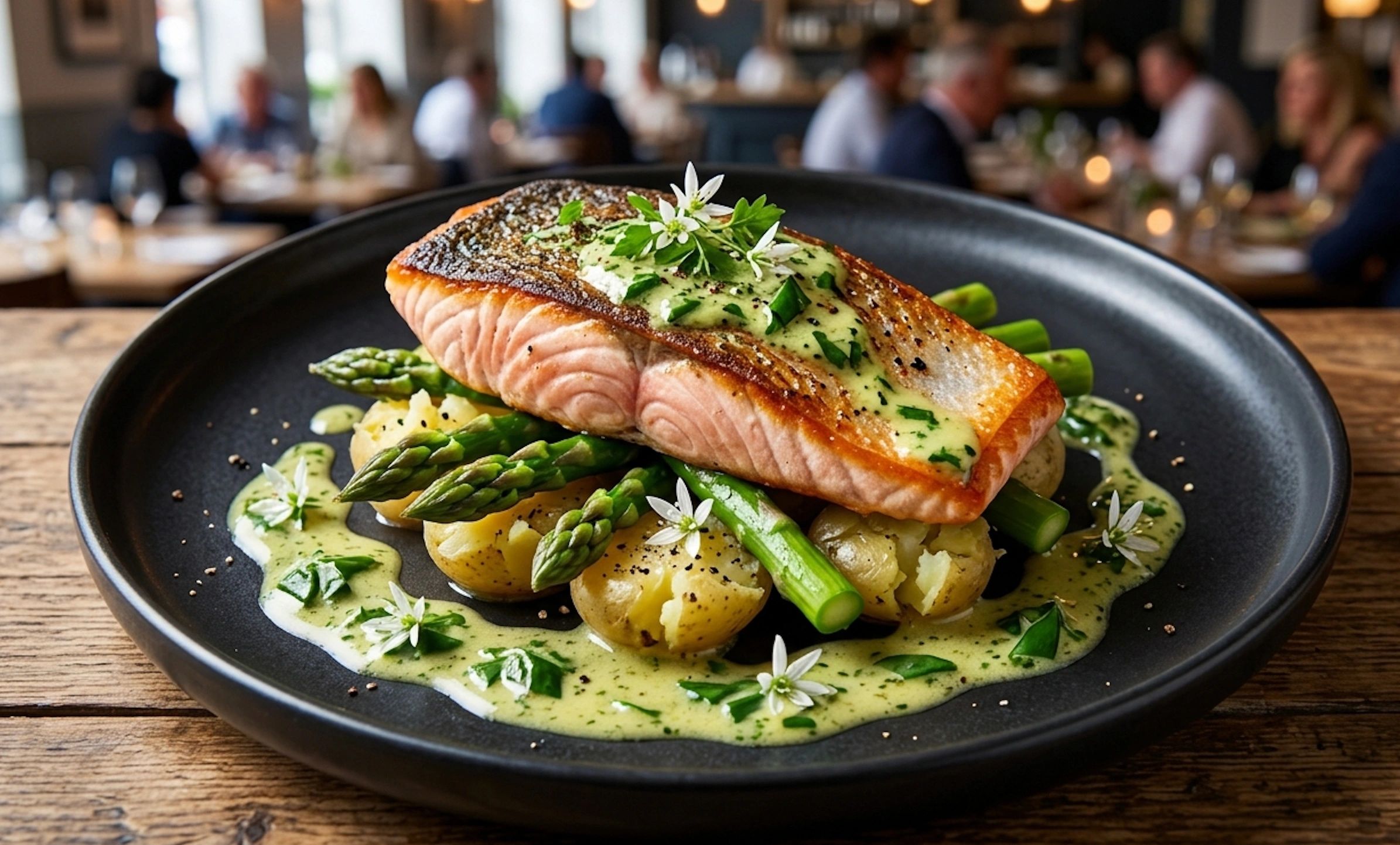
The dish photographs well without additional effort. The natural pink of the sea trout against the green of the wild garlic sauce, the white of the potato salad, and the char-marked asparagus creates visual contrast that works directly for social media content with no additional styling required.
Food cost at current UK wholesale pricing sits at approximately 27–31% depending on sea trout source — farmed Scottish sea trout brings this toward the lower end of that range while maintaining quality.
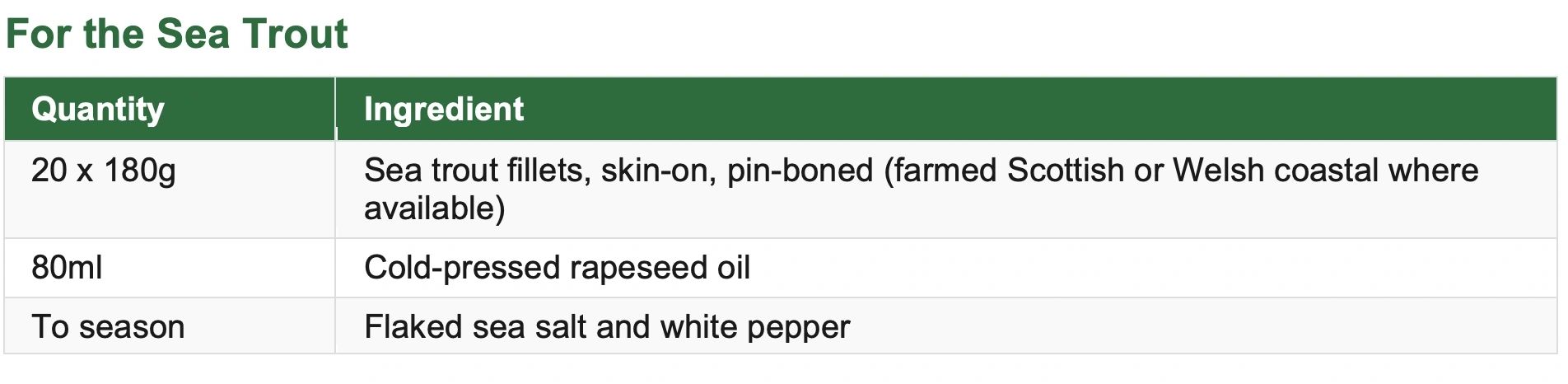
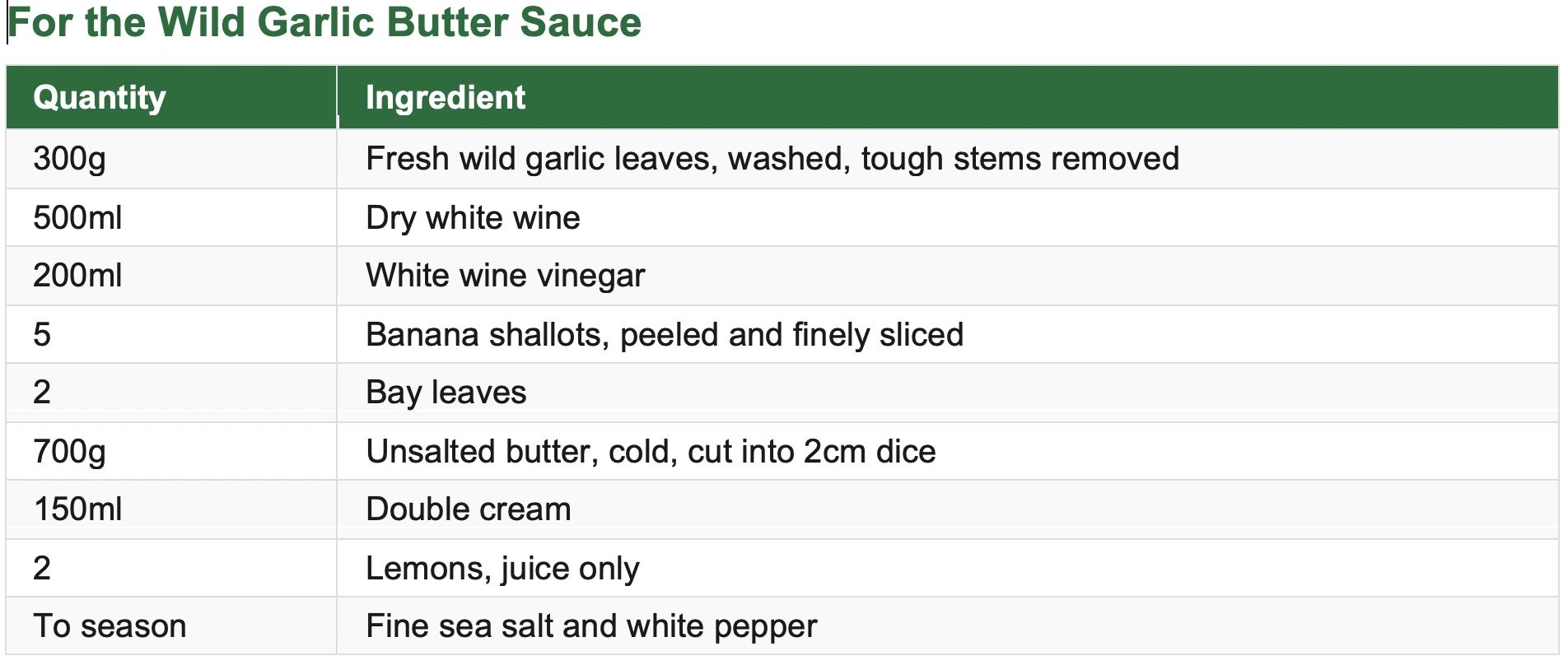
Ingredients — Serves 20
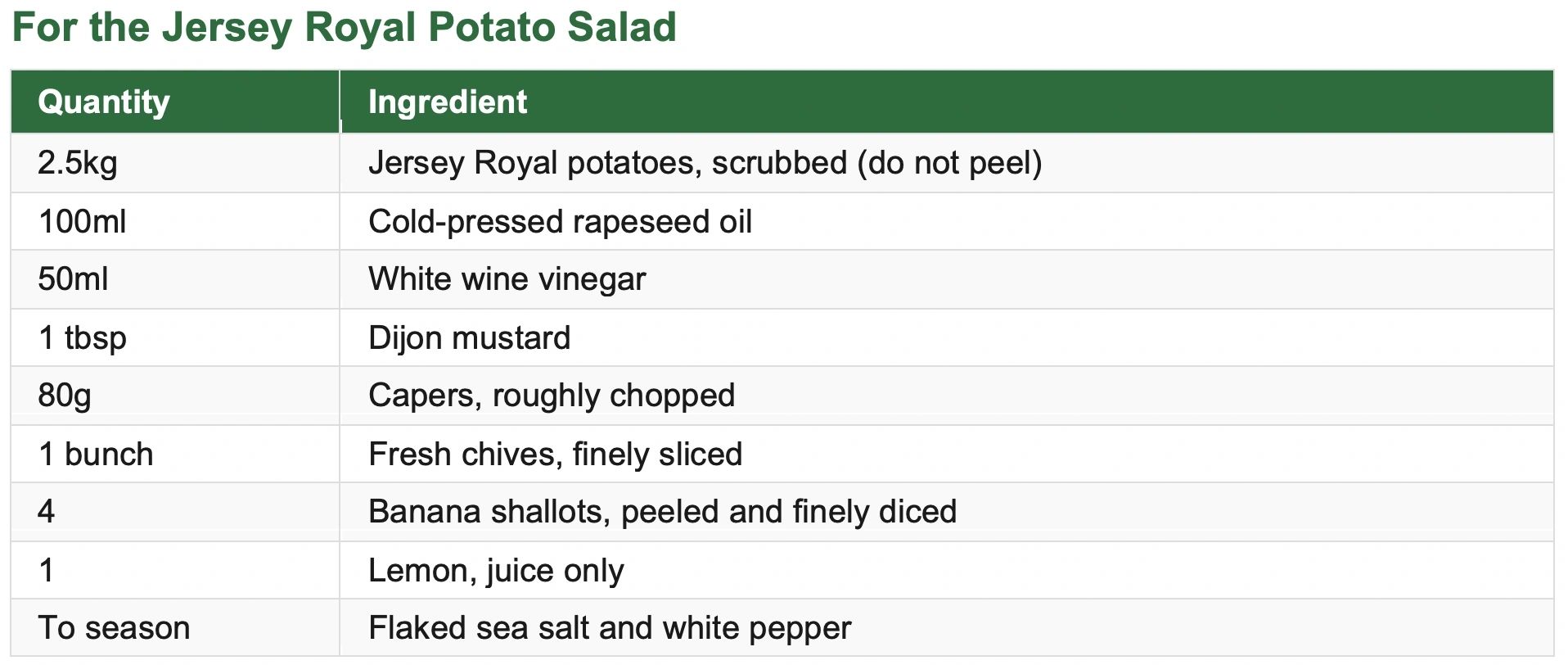
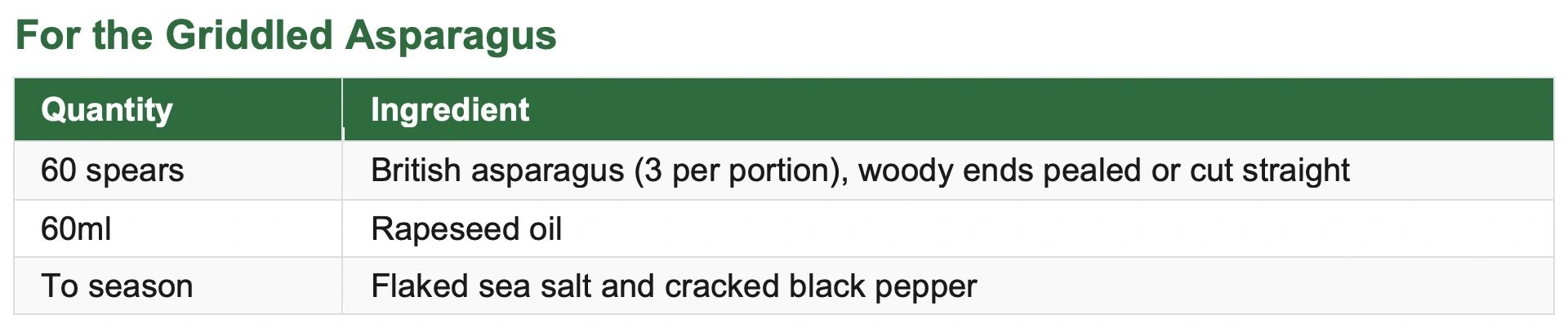
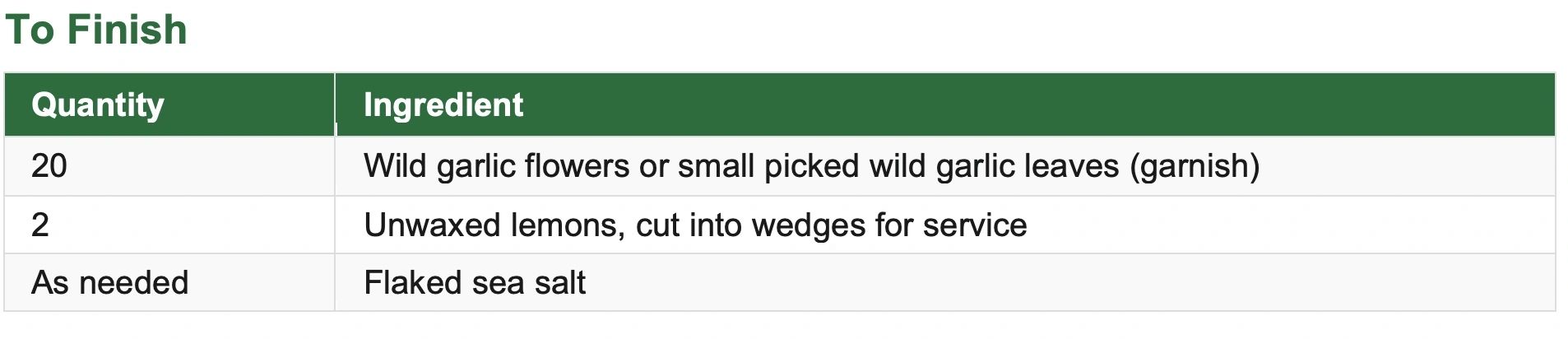
Method
Step 1 — Jersey Royal Potato Salad (40 minutes — make first)
1. Place the scrubbed Jersey Royals in a large pan of generously salted cold water. Bring to the boil and cook for 15–20 minutes, until a knife passes through without resistance. Do not overcook — they should hold their shape.
2. While the potatoes cook, make the dressing: whisk together the rapeseed oil, white wine vinegar, Dijon mustard, lemon juice, and diced shallots until emulsified. Season well with salt and pepper.
3. Drain the potatoes and allow to steam dry for two minutes. While still hot — this is critical — cut any larger potatoes in half and toss immediately in the dressing. The heat opens the flesh and allows the dressing to absorb properly. Cold potatoes dressed cold produce a flat, greasy result.
4. Fold through the chopped capers and chives. Check seasoning. Hold at room temperature for service — do not refrigerate, as the fat in the dressing will solidify and the texture will suffer.
Step 2 — Wild Garlic Butter Sauce (30 minutes — make in advance, hold in bain-marie)
5. Place the sliced shallots, white wine, white wine vinegar, and bay leaves in a heavy-based saucepan. Bring to the boil and reduce by two-thirds — you should have approximately 200ml of strongly flavoured liquid remaining. Remove the bay leaves.
6. Add the double cream and reduce by half again. The cream stabilises the emulsion and gives the sauce body for volume service.
7. Over a low heat, begin mounting the cold diced butter into the reduction a few pieces at a time, whisking constantly. Never let the sauce boil once the butter is going in — you're building an emulsion, and heat above 85°C will break it. Work steadily, adding each batch of butter as the previous one is incorporated.
8. Once all the butter is mounted and the sauce has a smooth, glossy, coating consistency, remove from the heat. Fold in the wild garlic leaves — they will wilt immediately in the residual heat and release their flavour without losing their vivid green colour.
9. Season with lemon juice, fine salt, and white pepper. Pass through a fine sieve if a smoother finish is required, or leave with the garlic for a more rustic, textured result. Hold in a bain-marie at 60–65°C for service, whisking occasionally.
Step 3 — Griddled Asparagus (cook to order in batches)
10. Heat a cast iron griddle pan to high heat — it should be smoking before the asparagus goes in. Toss the asparagus spears in rapeseed oil and season with salt and cracked black pepper.
11. Griddle in batches of ten spears, turning once, until char marks appear and the spears are just tender — approximately 2–3 minutes total. They should retain a slight bite. Hold in a warm oven (70°C) while you complete the batch.
Step 4 — Sea Trout (cook to order, 4 minutes per cover)
12. Score the skin of each sea trout fillet three or four times diagonally with a sharp knife. This prevents the skin from curling in the pan and ensures even contact with the heat. Season the flesh side with flaked salt and white pepper.
13. Heat a heavy-based frying pan or stainless steel sauté pan over high heat. Add the rapeseed oil and allow it to reach smoking point. Lay the fillets skin-side down in the pan — do not move them. Press each fillet gently with a fish slice for the first 15 seconds to maintain skin contact.
14. Cook skin-side down for 2–3 minutes, until the skin is deeply golden and crisp and the flesh has turned opaque approximately two-thirds of the way up. Flip and cook for a further 30–45 seconds on the flesh side. The fillet should be just cooked through at the centre, with a faint blush of pink remaining.
15. Rest for one minute before plating. Do not cover — covering steams the skin and destroys the texture you've worked to build.
Plating
16. Spoon approximately 80ml of the wild garlic butter sauce into the base of a wide, shallow bowl or onto a warm plate. Arrange a portion of Jersey Royal potato salad to one side. Lay three asparagus spears across the potatoes. Place the sea trout fillet skin-side up on top of the sauce — never sauce over the skin.
17. Finish with a wild garlic flower or a few small picked leaves, a pinch of flaked salt on the skin, and a wedge of lemon on the side.
Chef's Notes
Wild garlic sourcing: If foraging locally, identify carefully — wild garlic (broad, oval leaves, white star-shaped flowers, strong garlic scent) is occasionally confused with lily of the valley, which is odourless and toxic. When in doubt, buy from a trusted supplier. Most UK wholesale produce merchants’ stock wild garlic leaves from March through May.
Sea trout substitution: Farmed Atlantic salmon works as a direct substitute and reduces food cost by approximately 15–20%. The technique is identical. For a tighter GP, skin-on salmon portions at 160g achieve a comparable result.
Advance prep for high-volume service: The butter sauce can be made the morning of service and held in a bain-marie for up to four hours. The potato salad is best made two to three hours before service — it improves with resting time. The asparagus and fish must be cooked to order.
Sauce variations: The Beurre Blanc base works equally well with the addition of 60g of blanched and puréed watercress for a deeper green and more peppery finish, or with the garlic replaced by sorrel leaves for an acidic, sharp note that works particularly well with salmon.
Enjoyed this recipe?
Subscribe below and we'll send a new professional recipe to your inbox every Friday — built for commercial kitchens, tested at service volume.
→ Subscribe At the Top Of The Page
For more Weekly Recipes, you can find them here
spring catering menus, Pan-Seared Sea Trout with Wild Garlic Butter Sauce Recipe, Catering Blog