Slow-Roasted Leg of Lamb For Easter
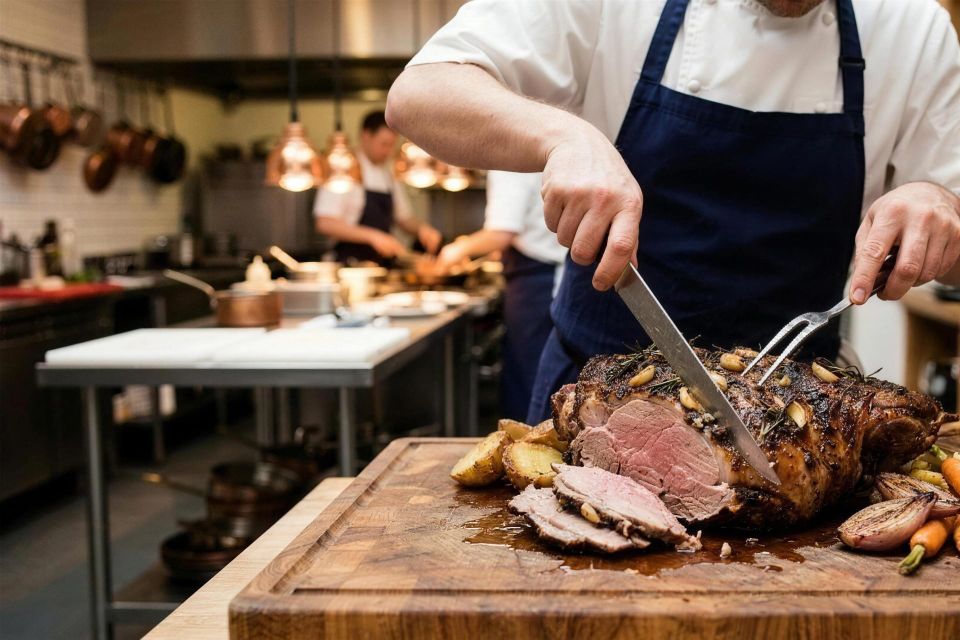
with Rosemary, Garlic and Anchovy — the Easter centrepiece, worth the wait !
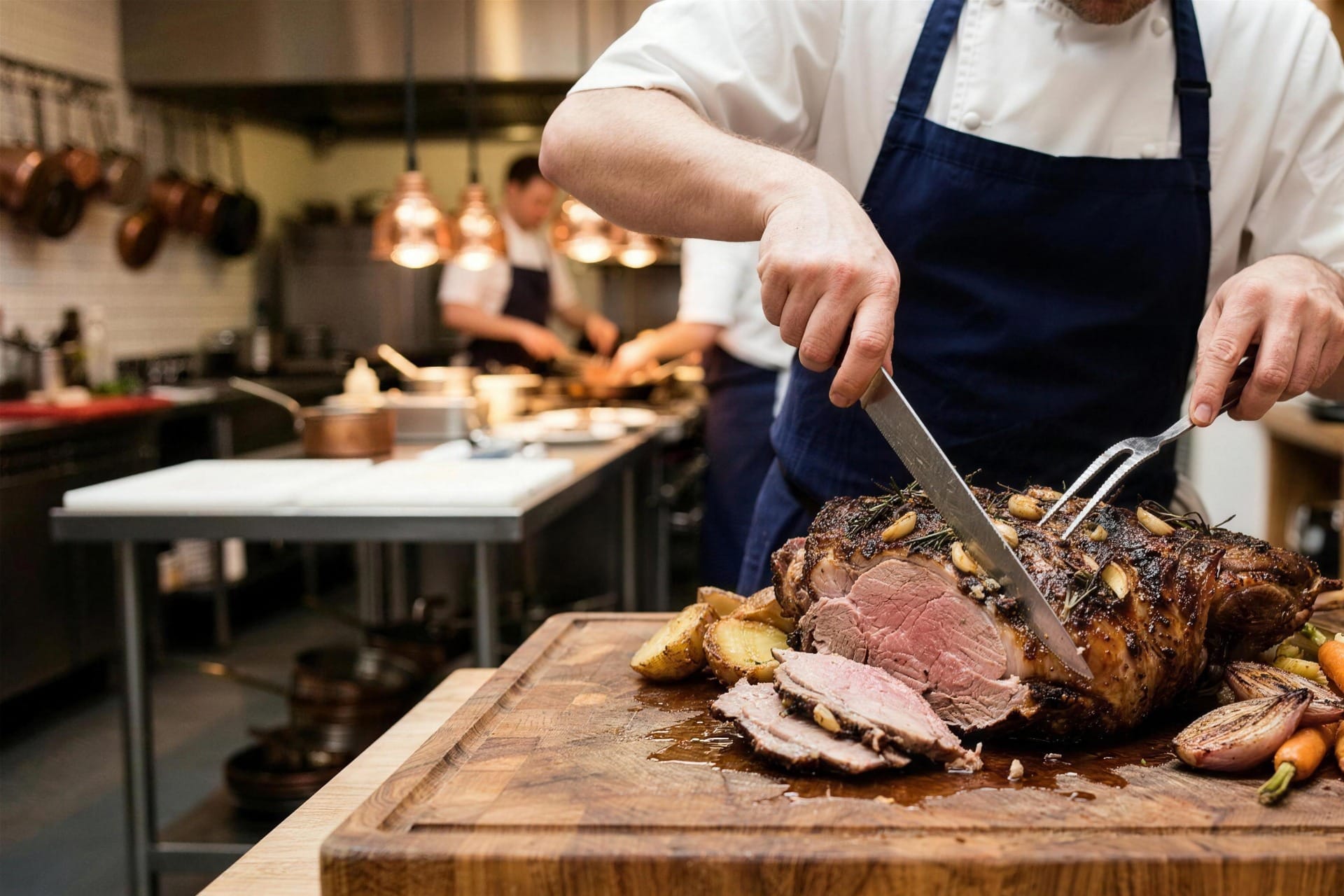
A shoulder of lamb that falls apart at the table. Anchovies melt into the meat, rosemary and garlic do the rest.
This is Easter done properly.
The Story Behind the Dish
Easter weekend in a professional kitchen means one thing above everything else — lamb. I've cooked it
in hotel kitchens, for large-scale functions, for care home residents who looked forward to it all year. It's
one of those dishes that carries weight beyond the plate.
This version is built around a technique that puts a lot of home cooks off when they first hear it:
anchovies pushed into the meat before it goes in the oven. I understand the hesitation. But trust the process. After four to five hours at low heat, those anchovies dissolve completely into the fat and flesh.
There's no fishiness. What you get instead is a depth of flavour — a savouriness — that you can't
achieve any other way. It's a classic French technique that professional kitchens have used for
decades, and it makes a real difference.
Shoulder over leg, always, for this kind of cook. The extra fat and connective tissue mean it rewards the
low-and-slow treatment. By the time it comes out of the oven, it should pull apart with two forks. No
carving required.
Serves 4–6 Please scale up as required for Commercial Catering
Prep time 20 minutes (plus 1 hour to bring lamb to room temperature)
Cook time 4 hours 30 minutes – 5 hours
Rest time 30 minutes minimum
Ingredients
1 bone-in Leg of lamb or Shoulder, 2–2.5kg
6 anchovy fillets in olive oil, drained (Ortiz or similar — quality matters here)
4 garlic cloves, each cut into 3–4 thin slivers
2 large sprigs fresh rosemary, broken into small pieces
2 tbsp olive oil
1 lemon, zest only
250ml dry white wine or good chicken stock
250ml water
Flaked sea salt and freshly ground black pepper
Method
1. Remove the lamb from the fridge at least an hour before cooking. Cold meat going straight
into a hot oven gives you uneven cooking. This step is non-negotiable.
2. Preheat your oven to 220°C (fan 200°C / Gas 7).
3. Score the lamb. Using a small, sharp knife, make around 20 deep incisions all over the shoulder
— top, bottom and sides. You want the holes deep enough to properly stuff, not just scratch the
surface.
4. Stud the lamb. Into each incision, push a sliver of garlic, a piece of rosemary, and half an
anchovy fillet. Work methodically around the joint so the flavour distributes evenly. If any anchovy
is left over, press it onto the surface.
5. Dress the shoulder. Rub all over with olive oil, scatter the lemon zest across the top, and season
generously with flaked salt and black pepper.
6. Sear if you can. If your roasting tin can go on the hob, heat it on a high flame and brown the
shoulder well on all sides before it goes in the oven. If not, roast uncovered at 220°C for 20
minutes first to get colour on the fat. Either way, don't skip the colour — it builds flavour.
7. Set up the braise. Pour the wine (or stock) and water into the base of the roasting tin. The liquid
should come up around the lamb, not over it. Cover the whole tin tightly with two layers of foil,
crimped around the edges. You want it sealed.
8. Drop the temperature and let it go. Reduce the oven to 160°C (fan 140°C / Gas 3) and roast for
2.5 / 3 hours for the Leg, 4 hours for the Lamb Shoulder. Don't be tempted to open the foil before then.
9. Check for tenderness. After 3 / 4 hours of cooking the Leg or Shoulder, remove the foil carefully — watch the steam. The meat
should be starting to pull away from the bone. Give the joint a gentle tug with a pair of tongs. If
there's significant resistance, recover and return for another 30 minutes.
10. Finish uncovered. Once the meat is tender, remove the foil and return the lamb to the oven for a
final 30 minutes. This tightens and crisps the fat cap. Keep an eye on it — you want colour, not
char.
11. Rest properly. Lift the lamb onto a warm platter, cover loosely with foil and a clean tea towel, and
rest for at least 30 minutes. This is not optional. The meat will hold its heat and the juices will
redistribute.
12. Make the sauce. While the lamb rests, pour the pan juices into a small saucepan and reduce
over a medium-high heat until the liquid thickens slightly and the flavour concentrates. Taste,
adjust the seasoning, and pass through a fine sieve. You won't need thickening — the collagen
from the slow cook does that for you.
13. Serve by pulling, not carving. Use two forks to pull the meat apart in generous chunks directly
at the table. This is a dish that should look as good as it tastes — and pulled shoulder on a warm
platter always does.
Chef's Notes
On the anchovies: If you're cooking for guests who are wary, don't mention them until after. Every single
time I've served this, people ask what gives the lamb its depth. When you tell them, they never believe it.
The anchovy is invisible in flavour terms — all it does is amplify everything around it.
Make ahead: This is actually better made the day before. Cook it fully, let it cool in its juices, refrigerate
overnight, then reheat covered at 160°C for 45–50 minutes. The fat solidifies overnight and can be
skimmed before reheating — and the flavour deepens considerably.
Leftovers: If there's any left — and there usually isn't — pulled lamb flatbreads the next day are
exceptional. Warm the meat in a dry pan, pile into flatbreads with plain yoghurt, cucumber and a squeeze
of lemon. One of the better things you'll eat this Easter weekend.
Wine: A full-bodied red is the right call. Rioja Reserva, a good Côtes du Rhône, or a Merlot-forward
Bordeaux all work well. If you're cooking for a crowd who prefer white, a rich oaked white Burgundy or
Viognier holds up surprisingly well.
Temperature check: If you have a probe thermometer, you're looking for 75–85°C internal temperature
for fully pulled, fall-apart tenderness. This is different from the 52–60°C you'd aim for with a pink leg of
lamb or for slow shoulder, you want the collagen fully broken down. Make sure it has plenty of time to rest.
If you're working in a professional kitchen this Easter weekend — this recipe scales well. For a buffet or
carvery service, cook multiple shoulders in the same way, pull ahead of service and keep in the pan juices
in a bain marie. It holds beautifully.
Enjoyed this? Subscribe below for a new recipe every Friday, plus weekly posts on everything from kitchen
efficiency to industry trends.
If you would like to to speak about our Menu Development Services then please see the link below
https://onthepassconsultancy.com/menu-development
On The Pass Consultancy · onthepassconsultancy.com · info@onthepassconsultancy.com · Newport, Wales