Staff Training Essentials: Boost Efficiency & Retention in 2026


The UK hospitality sector continues to face one of its most persistent challenges: a severe skills shortage combined with stubbornly high staff turnover rates. As of early 2026, the industry grapples with around 132,000 vacancies—still 48% above pre-pandemic levels—while staff turnover, though showing signs of improvement, remains significantly elevated compared to the national average.
Recent data indicates that hospitality turnover has dropped from peaks of 75% in previous years to around 67% in some reports, yet it hovers between 38-52% across sub-sectors like restaurants, bars, pubs, and catering operations—far exceeding the UK-wide average of 34%. In high-pressure commercial kitchens, where long hours, intense service demands, and unsociable shifts are the norm, this churn translates to constant recruitment cycles, lost institutional knowledge, and escalating costs.
Labour expenses now routinely account for 30-35% of turnover in many UK hospitality businesses, with 55% of operators citing labour costs as a direct drag on profitability in late 2025 surveys. The hospitality skills shortage—exacerbated by Brexit, the pandemic exodus, and perceptions of the sector as temporary or low-reward—means operators cannot simply hire their way out of trouble. Instead, effective staff training emerges as the single most powerful lever for improving kitchen efficiency, reducing errors, and—crucially—enhancing staff retention to foster long-term career progression.
Investing in targeted training doesn't just plug immediate skills gaps; it builds loyalty, reduces sick days, and creates clear pathways for advancement. Employees who see a future in hospitality are far less likely to jump ship, turning high-turnover roles into stable, career-building positions.
High-Impact Training Areas Delivering Fastest ROI in 2026
In the fast-paced world of UK commercial kitchens, certain training topics stand out for their measurable return on investment (ROI). These focus on practical skills that cut waste, boost revenue, ensure compliance, and support wellbeing—directly addressing the drivers of staff leaving.
- Knife Skills and Prep Efficiency Mastering precise, safe knife techniques and streamlined prep workflows can reduce labour time by 15-25%. In busy kitchens, inefficient prep leads to bottlenecks during service, frustrated teams, and higher food waste. Comprehensive training—covering sharpening, cutting styles, portion control, and ergonomic handling—empowers chefs and commis to work faster and safer. This not only improves throughput but also boosts confidence, reducing the burnout that contributes to turnover. Operators report quicker onboarding for new hires and fewer accidents, saving on insurance and downtime.
- Allergen Awareness and Compliance With Natasha’s Law (the 2021 allergen information regulations) still fresh in operators' minds, robust allergen awareness training is non-negotiable. Staff must confidently identify the 14 major allergens, understand cross-contamination risks, handle customer queries, and maintain accurate records. Poor training risks prosecutions, fines, reputational damage, and—worst of all—customer harm. Effective programmes include practical scenarios, labelling drills, and emergency response protocols. Kitchens with strong allergen protocols see fewer incidents, greater team accountability, and improved trust from staff who feel equipped to protect guests and themselves.
- Upselling Techniques and Customer Service Excellence In an era of squeezed margins, upselling training can add 8-12% to average bills through subtle, value-focused recommendations (e.g., suggesting wine pairings or premium sides). Training covers product knowledge, timing, body language, and objection handling—without feeling pushy. When front-of-house and kitchen teams align on menu storytelling, it creates a cohesive guest experience. Staff who master these skills often feel more empowered and rewarded (via tips or bonuses), directly linking performance to personal earnings and motivating longer tenure.
- Mental Health First Aid and Wellbeing Support High-pressure environments breed stress, burnout, and absenteeism. Mental health first aid training equips managers and team leaders to spot signs of distress, offer initial support, and signpost resources. In hospitality, where shifts can be emotionally and physically draining, this reduces sick days and fosters a supportive culture. Businesses prioritising wellbeing report lower turnover, as staff feel valued beyond their output. Integrating mindfulness sessions, debriefs after busy services, and access to EAPs (Employee Assistance Programmes) further strengthens retention.
- Energy Awareness and Sustainable Practices With energy costs soaring, training staff to monitor usage—such as turning off combi ovens, blast chillers, and extraction when not needed—delivers immediate savings. It also appeals to younger workers who value sustainability. This "green skills" focus positions the kitchen as forward-thinking, enhancing employer branding and giving staff pride in contributing to efficiency goals.
Training Formats That Actually Work in Busy UK Kitchens
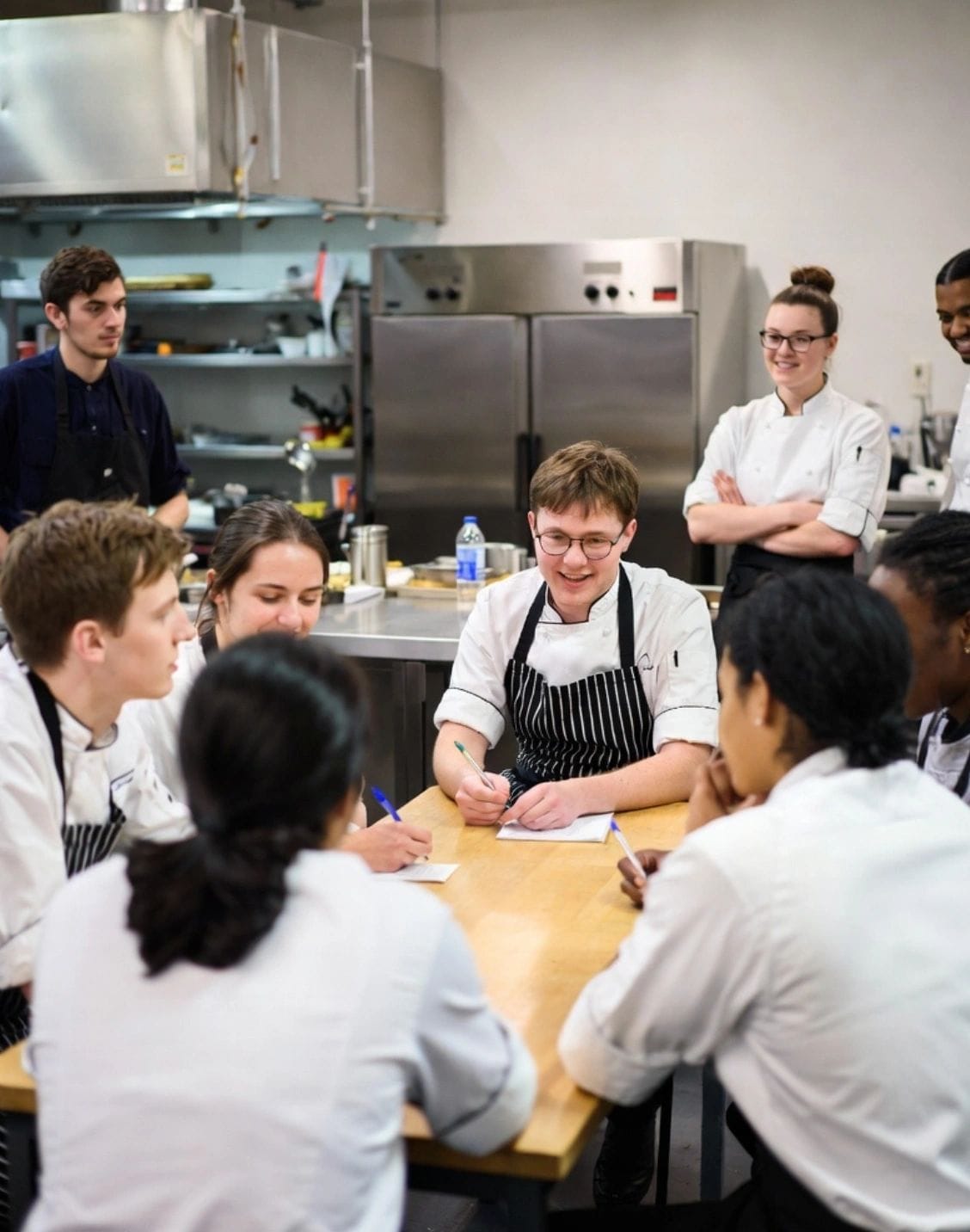
Traditional full-day classroom sessions often fail in hospitality due to scheduling conflicts and low completion rates. Modern, flexible formats yield far better engagement and results:
- 15-Minute Daily Line-Ups and Bite-Sized Sessions — Quick, focused huddles on one topic (e.g., knife sharpening demo) prove more effective than lengthy courses. They reinforce habits daily without disrupting service.
- Mobile Video Modules and Digital Platforms — Staff access short videos on phones during breaks or commutes, achieving 85% completion rates versus 30% for in-person only. Interactive quizzes and gamification boost retention of knowledge.
- Mystery Diner Feedback Loops — Real guest insights fed back weekly into targeted training sessions create accountability and continuous improvement.
- Apprenticeship Levy Funding — Many UK operators still leave thousands unclaimed annually. With reforms in 2026 (including full funding for under-25s at SMEs), levy-funded programmes offer cost-effective, accredited training. Hospitality-specific apprenticeships in chefing, management, and hospitality supervision provide structured career progression without full outlay.
Blending these formats ensures training fits around service demands while delivering measurable outcomes.
The Retention Powerhouse: Linking Training to Career Progression
The deepest impact of training lies in its role as a staff retention tool. Hospitality's high churn often stems from perceptions of limited growth—staff see roles as "just a job" rather than a career. Comprehensive training changes this narrative.
Structured programmes demonstrate investment in individuals. For example, starting with foundational skills (knife work, allergens) and progressing to advanced modules (leadership, menu innovation) creates visible ladders. Internal promotions rise when training builds competence—head chef roles filled internally jumped notably in recent studies.
Employees who access ongoing development feel valued, engaged, and purposeful. They gain transferable skills, confidence, and a sense of ownership. This reduces the urge to leave for "better opportunities" elsewhere. Managers trained in coaching and feedback further amplify this, creating supportive teams where people stay longer.
A compelling real-world example: A 12-site pub group in the South West partnered with specialists to build a bespoke digital training academy. Covering everything from compliance to leadership pathways, it slashed turnover from 140% to 78% in one year, yielding £187,000 in labour savings through reduced recruitment, onboarding, and lost productivity.
Why On The Pass Consultancy Stands Out for UK Commercial Kitchens
On The Pass Consultancy (onthepassconsultancy.com) specialises in tailored training programmes for UK hospitality venues—from intensive chef skills bootcamps to full digital academies. We focus on practical, high-ROI areas that drive efficiency while prioritising staff retention through clear career progression routes.
Our programmes often qualify for 100% apprenticeship levy funding, making professional development accessible even for tight budgets. Whether you're a independent restaurant, pub group, or contract caterer, we start with a no-obligation training-needs analysis to pinpoint gaps and opportunities.
Take the First Step Towards a More Efficient, Loyal Team
In 2026, the UK hospitality sector's path to profitability runs through its people. Investing in smart, flexible staff training isn't an expense—it's a strategic advantage that boosts kitchen efficiency, protects compliance, increases revenue, and—most importantly—turns transient roles into rewarding careers.
Don't let the skills shortage and turnover spiral control your business. Book a free training-needs analysis today and discover how customised programmes can transform your team.
Claim Your Free Training Audit Now – Contact On The Pass Consultancy