Summer 2026 Food Trends UK Kitchens Can Use
Sweet-heat, Korean street food, small plates and bowls are on every summer menu. Here's which 2026 food trends are actually worth your kitchen's time.
Every summer the same thing happens. A wave of trends rolls in, the trade press gets excited, and somewhere a kitchen with three people on the line is wondering whether any of it is worth the bother. After 35+ years in hospitality, in kitchens, on the floor, and buying and selling food at wholesale — I can tell you the question is never "what's trending?" It's "what's worth putting on my menu without blowing the prep time and the food cost?"
That second question is the one that actually pays your wages. A trend that looks brilliant on Instagram is no use to you if it adds an hour to your prep, ties up a section you can't spare, or sells three covers a week before it dies. The skill isn't spotting trends. Anyone can do that. The skill is reading a trend and knowing, almost on instinct, whether it fits your kitchen, your team and your numbers.
So let me do that for you. Here are the four summer 2026 trends I'd actually pay attention to, an honest word on each, and exactly how I'd bring them in without making your life harder. I'll also tell you what I'd leave well alone.
First, a word on why trends matter more than they used to
There was a time you could ignore most of this and trade on a solid, familiar menu. That's getting harder. Diners are eating out with more intention now — they'll spend, but they want a reason to choose you over the place down the road. A well-judged seasonal special or a flavour they've been reading about gives them that reason. It also gives you something to talk about on social media, which, if you're anything like most independents I work with, is where you need the most help getting noticed.
The trick is to treat trends as a tool, not a master. You don't rip up a menu that works. You add one or two sharp, current dishes that pull people in, photograph well, and — crucially — make you money. Used that way, a trend is just good marketing that happens to taste of something. Let's get into the four worth your time.
Sweet-heat is everywhere, and it earns its place
Sweet and spicy together — gochujang, hot honey, chilli laid over something sugary — is the flavour combination on most summer menus this year. The good news is this one's genuinely worth chasing, and not just because it's fashionable. It's cheap to build, it works across the menu, and it suits the warm weather.
Here's why I rate it. A single well-made sweet-heat sauce can lift three or four dishes you already serve. Glaze it over chicken wings or thighs. Spoon it through a slaw. Drizzle it on halloumi or a flatbread. Use it as a dip alongside something fried. That's the test I always apply to anything new: does it earn its keep across the menu, or is it one dish you'll bin in August? Sweet-heat passes with room to spare.
Cost-wise, you're looking at storecupboard economics — honey or sugar, a chilli element, something acidic to balance it, maybe soy or fish sauce for depth. Pennies per portion once you're batching it. And it's forgiving. You can tune the heat up or down for your clientele without rewriting the dish. My advice: make a proper batch on a quiet morning, get the balance right between sweet, heat and acid, and then put it to work in as many places as the menu sensibly allows. That's how you turn a trend into margin rather than just a talking point.
Korean-inspired street food: brilliant, but mind the prep
Korean street food is having a proper moment, and for good reason. The flavours are bold, the colours are vivid, and it photographs beautifully — which matters when you're trying to get noticed on a crowded high street or a busy feed. Kimchi, bulgogi, Korean fried chicken, loaded fries with a gochujang mayo: this is food people actively seek out and tell their mates about.
My caution is prep, and I'd be doing you a disservice if I dressed it up. Done properly, this style leans on fermenting, marinating and a longer mise en place than a lot of operators expect. Good kimchi takes time. A proper marinade wants hours, not minutes. Korean fried chicken lives and dies on a double fry and a sauce that has to be made fresh enough to stay glossy. If you treat it as a quick bolt-on, it'll show on the plate, and customers who know the real thing will notice.
So here's how I'd approach it if you're already stretched. Don't build a whole Korean section. Pick one or two hero dishes — say, a Korean fried chicken and one loaded side — and do them properly. Get your prep rhythm sorted so the fermenting and marinating happen on a schedule that doesn't collide with service. Source a good gochujang and gochugaru from a reliable wholesaler rather than chasing every authentic ingredient under the sun; you can build a convincing, honest version on a handful of core items. Nail two dishes and you've got the headline without the operational headache of ten.
Small plates and sharing: the format that actually fits the season
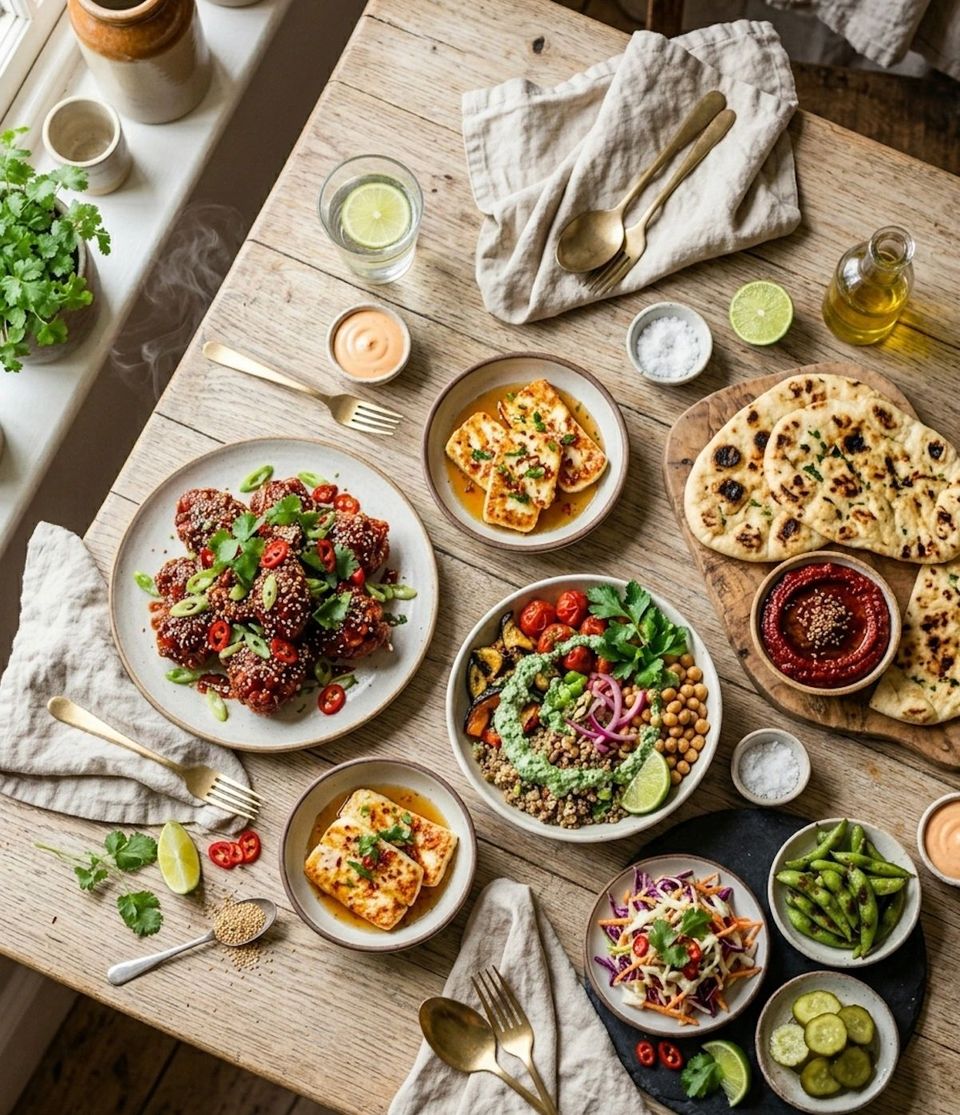
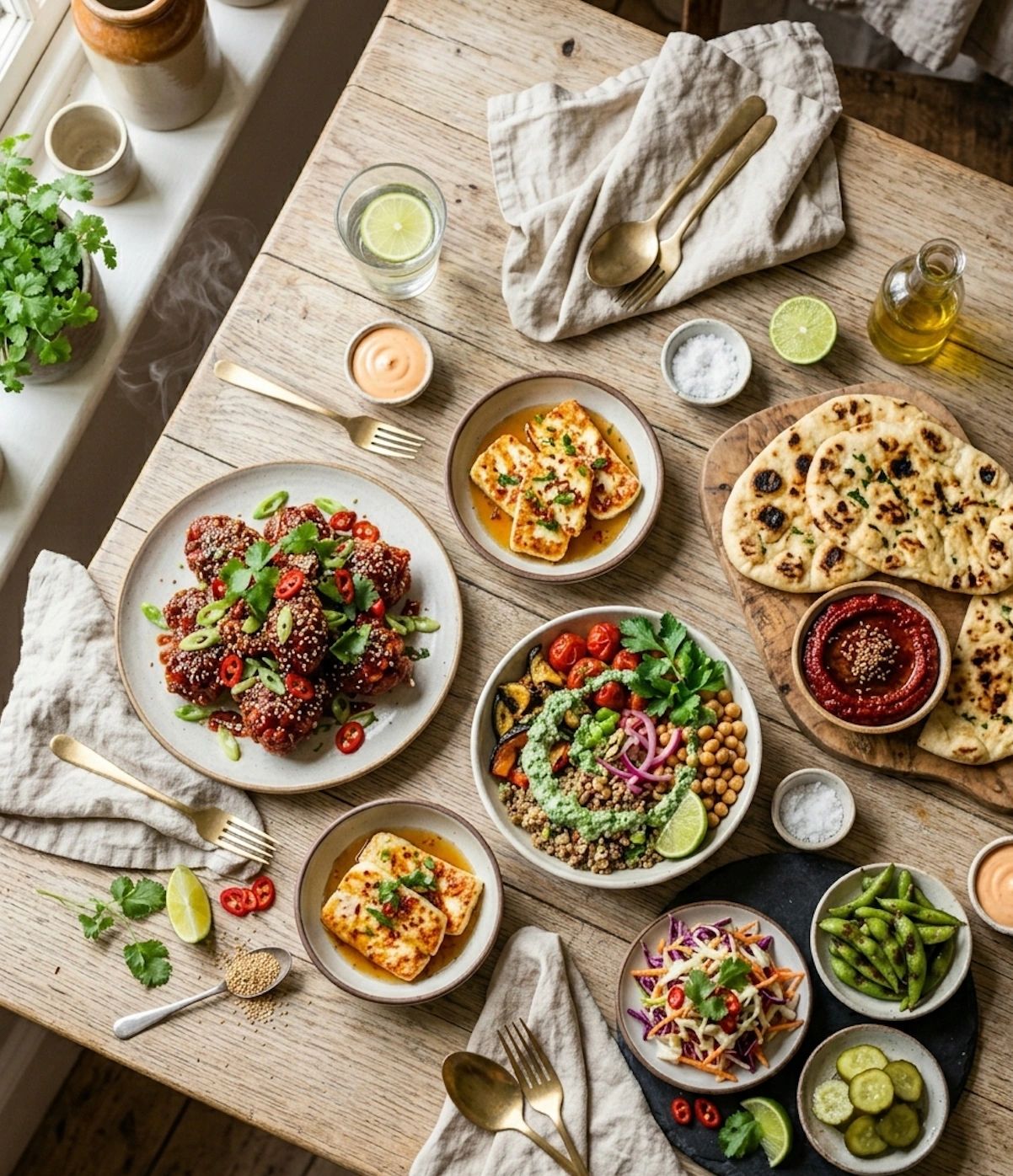
This one isn't really about a flavour. It's about how people want to eat — and that's the trend I'd put money on above all the others. Diners are after shared tables, sharing boards and grazing rather than three rigid courses. Groups are booking in to eat together, pick at things, and stay a while. The format suits summer, it suits the social way people are eating now, and — best of all — it suits a working kitchen.
For you, small plates are close to a gift. They let you flex your menu without committing to big, expensive plated mains. They let you use trim and offcuts intelligently, which is money straight back on your bottom line. They give you tight control over portion and cost, because a small plate is a defined, repeatable thing rather than a sprawling main that creeps in size every time a different chef plates it. And they turn tables over at a sensible pace, with people ordering in rounds rather than sitting on one course for an hour.
There's a margin story here that often gets missed. Small plates carry a higher perceived value for the food cost on the plate, and people order more of them than they think they will — three or four across a table adds up to a healthy average spend, often more than a single main and a side. The warning is menu sprawl. It's tempting to offer twenty small plates. Don't. A focused dozen, built so they share ingredients and prep, will run far more smoothly than a long list that scatters your section across the world. If you act on one thing from this whole article, look hard at whether part of your menu could move to this format.
Wholefood bowls: easy to do, easy to do badly
Elevated bowls — a base of grains, roast or charred veg, a good protein, something pickled, a proper dressing — are still strong going into summer, and they suit the lunchtime crowd and the health-minded diner especially well. They're warm-weather food, they travel well for takeaway and delivery, and they look generous and colourful in a takeaway box or on a table.
The danger is that they're so easy to throw together that a lot of places serve a dull one. A sad bowl of plain grains, a few cold roast vegetables and a dry chicken breast does nobody any favours, and it's the quickest way to make a customer feel short-changed at a fair price. The difference between a forgettable bowl and one people come back for is almost always three things: a dressing with character, a hit of acidity, and proper texture. Get a sharp, well-seasoned dressing right. Build in something pickled or citrusy to cut through. Add crunch — toasted seeds, crispy shallots, a crouton, whatever fits. Those small finishing touches cost very little and they're the whole game.
Done with care, a bowl is a high-margin dish that suits the season and flexes easily for vegetarians, vegans and the gluten-free without you running three separate specials. Done lazily, it's a wasted opportunity sitting on your menu. The ingredients are cheap. The attention is what makes it.
What I'd leave alone this summer
A quick word on restraint, because it's as important as the trends themselves. There's a lot of noise about heavily theatrical, multi-sensory dining — scent design, soundtracks, the full performance. For a high-end restaurant with the team and the budget, fine. For most independents and the kitchens I work with day to day, it's a distraction that swallows time and money you'd be far better spending on the food itself and on getting your existing dishes consistent. Don't chase spectacle when the fundamentals — flavour, value, speed, consistency — are what actually keep people coming back.
The same goes for any trend that demands a single piece of expensive kit or one specialist ingredient you can't get reliably from your usual supplier. If it can't survive a normal week in your kitchen, it isn't a trend worth having. It's a liability with good PR.
The honest takeaway
A trend is only worth your time if it survives contact with a real kitchen — your team, your kit, your margins, your Saturday night. Of these four, sweet-heat and small plates are the ones I'd move on first, because they cost little to introduce and they work across a menu rather than sitting in one corner of it. Korean street food and wholefood bowls are worth it too, as long as you go in with your eyes open about the prep on one and the execution on the other.
Whatever you pick, the rule doesn't change. Pick one. Do it properly. Cost it, prep it sensibly, and make sure your team can deliver it at pace when the room's full. That beats chasing all four and doing none of them well — and it's the difference between a menu that just follows the crowd and one that actually brings people through your door.
If you'd like a hand working out which of these fits your kitchen, your team and your numbers — and how to bring it in without disrupting service — that's exactly the kind of thing we do at On The Pass Consultancy.
If you'd like to speak to us about our Menu Development Services, then please feel free to get in contact here.